Change and Development in Rural Society — Study Plan
Madhya Pradesh Board · Class 12 · Sociology
A step-by-step study plan for Change and Development in Rural Society, Madhya Pradesh Board Class 12 Sociology: what to learn first, what to practise.
Interactive on Super Tutor
Studying Change and Development in Rural Society? Get the full interactive chapter.
Quizzes, flashcards, AI doubt-solver and a step-by-step study plan — built for study plan and more.
Free trial, no card needed.
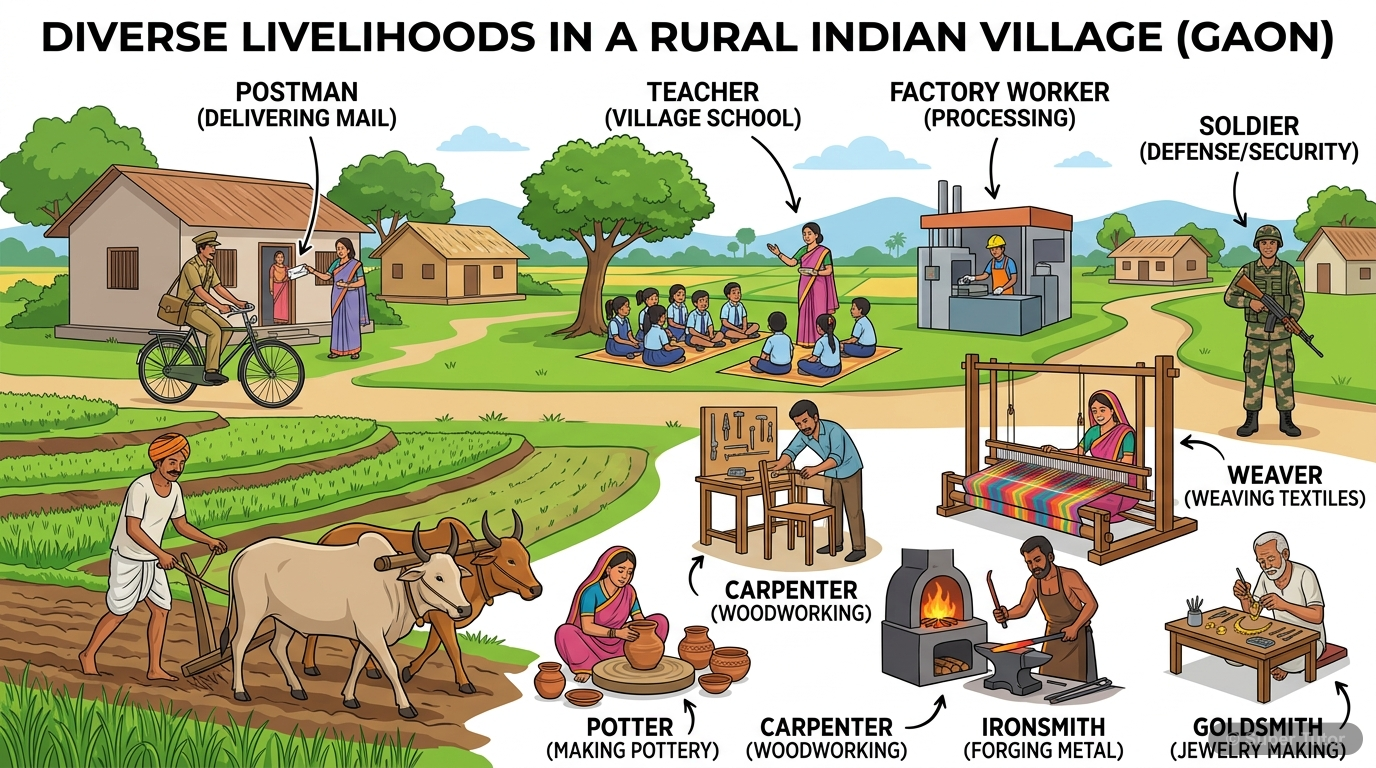
Learn better with visuals Super Tutor pairs illustrations like this with notes and quizzes for Change and Development in Rural Society.
Study Plan
Learn the Theory
Read the textbook chapter carefully. Note down definitions, formulas and key ideas. Focus on: 1. Rural Society, Land, and Livelihoods, 2. Caste, Class, and Land Ownership, 3. Colonial Land Systems and Their Effects.
Practise
Solve the textbook exercises and extra practice questions. There are 46 questions available for this chapter.
Revise & Test
Revise key points without looking at your notes. Take a practice quiz and mark weak areas for another pass.
Spaced Revision
Come back to Change and Development in Rural Society after a week. Use flashcards for quick recall and try past exam questions on this chapter.
What to Focus On
- Agriculture is the main livelihood source for most rural people.
- Land is the most important resource and property in rural society.
- Rural culture is deeply connected with agriculture and harvest seasons.
- Agrarian structure means the distribution of landholding in rural society.
- Landholding is highly unequal in many parts of India.
- Tenants may pay 50 to 75 per cent of crop income as rent.
- Zamindars were landlords and intermediaries under colonial rule.
- The British gave zamindars property rights and used them to collect revenue.
- In the raiyatwari system, cultivators paid tax directly to the government.
Common Mistakes to Avoid
The highest caste in a village is automatically the main landowning group.
Dominant caste means the highest caste in a region.
Zamindari and raiyatwari systems are just two names for the same colonial land settlement.
Memory Tips
Rural India is the main social base of agriculture
69 per cent of India's population lived in rural areas according to the 2011 Census
Agriculture is the most important source of livelihood for the majority of the rural population
Rural life is not only agriculture; it also includes artisans and rural non-farm work
Want a personalised study plan?
Super Tutor builds a day-by-day plan for Madhya Pradesh Board Class 12 Sociology that fits your exam date and pace.
Create My Study PlanFrequently Asked Questions
What are the important topics in Change and Development in Rural Society for Madhya Pradesh Board Class 12 Sociology?
How should I revise Change and Development in Rural Society for the Madhya Pradesh Board Class 12 board exam?
Sources & Official References
Content is aligned to the official syllabus. Refer to the board website for the latest curriculum.
More resources for Change and Development in Rural Society
Practice Quiz
Test yourself with a quick quiz
Important Questions
Exam-style questions with answers
Revision Notes
Key points for last-minute revision
Chapter Summary
Understand the chapter at a glance
Concept Maps
See how topics connect
Flashcards
Quick-fire cards for active recall
Syllabus
What topics to cover
NCERT Solutions
Every textbook question solved step by step
For serious students
Get the full Change and Development in Rural Society chapter — start free.
Quizzes, flashcards, an AI doubt solver and a study plan for Madhya Pradesh Board Class 12 Sociology. Free to start, no card needed.