Change and Development in Rural Society — Revision Notes
Madhya Pradesh Board · Class 12 · Sociology
Change and Development in Rural Society revision notes for Madhya Pradesh Board Class 12 Sociology: 4 topics in quick points.
Interactive on Super Tutor
Studying Change and Development in Rural Society? Get the full interactive chapter.
Quizzes, flashcards, AI doubt-solver and a step-by-step study plan — built for revision notes and more.
Free trial, no card needed.
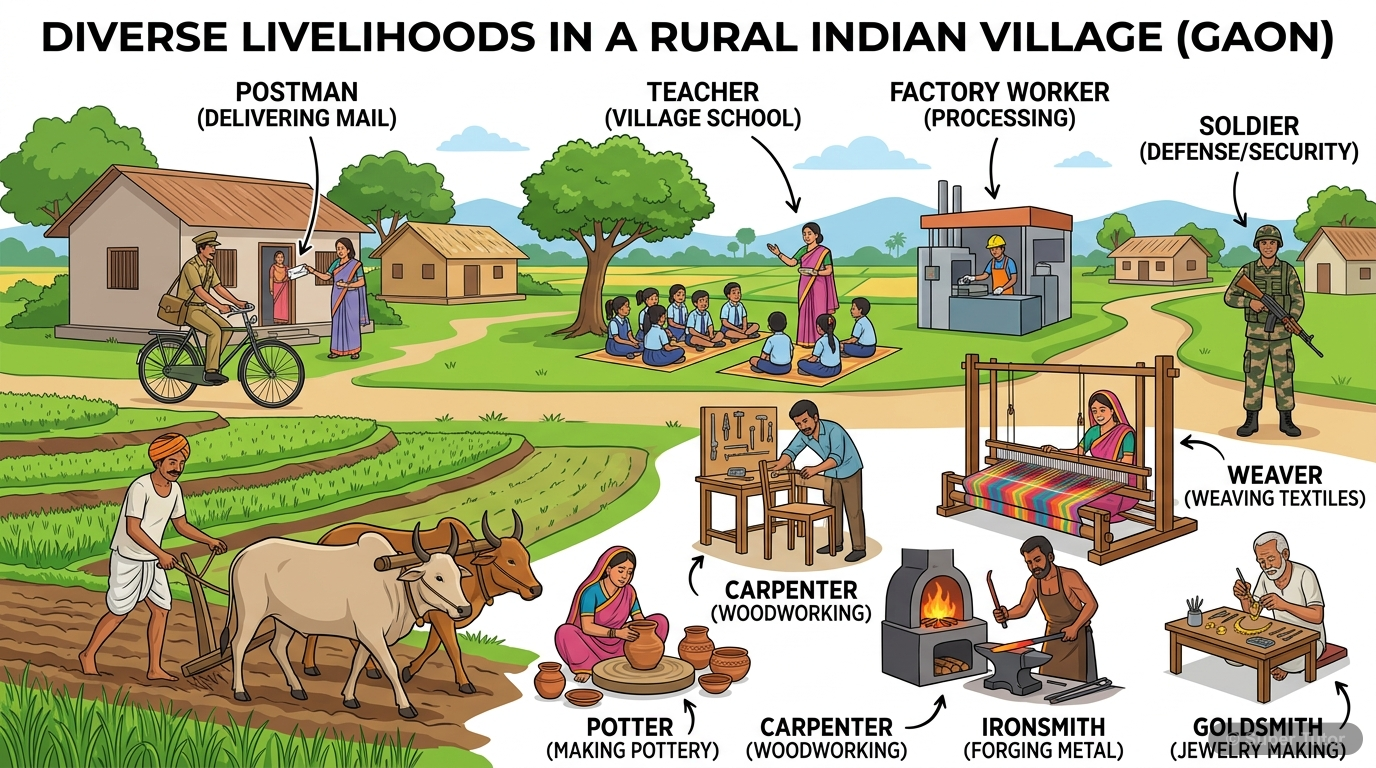
Learn better with visuals Super Tutor pairs illustrations like this with notes and quizzes for Change and Development in Rural Society.
Key Topics to Revise
1. Rural Society, Land, and Livelihoods
- India is primarily a rural society, and 69 per cent of the population lived in rural areas according to the 2011 Census.
- Agricultural land is the most important productive resource and also the main form of property in rural society.
- Rural life is not only agriculture. It also includes artisans, craft workers, service workers, and non-farm workers such as those in postal, education, factory, and army jobs.
2. Caste, Class, and Land Ownership
- Landholding in rural India is highly unequal, and in some regions 40 to 50 per cent of rural families own no land at all.
- Women are usually excluded from land ownership in many regions because of patrilineal kinship and inheritance patterns, even though law gives equal rights.
- Brahmins are the highest caste but are not major landowners in most areas, so they fall outside the agrarian structure even though they are part of rural society.
3. Colonial Land Systems and Their Effects
- Under the zamindari system, zamindars were landlords under colonial rule who collected revenue from cultivators and handed it over to the state, while keeping control over land.
- Zamindars usually belonged to Kshatriya or other high castes and were granted property rights by the British.
- Under the raiyatwari system, the actual cultivators, called raiyats, paid tax directly to the colonial government.
4. Land Reforms after Independence
- After Independence, planned development focused on agrarian reform because agriculture was weak, food grain production was low, and rural poverty was severe.
- The first important reform was the abolition of zamindari, which removed intermediaries and was probably the most effective land reform.
- Tenancy abolition and regulation acts aimed to outlaw tenancy or regulate rents, but were largely ineffective in most states.
Get complete notes with diagrams and examples
Full NotesKey Concepts
Frequently Asked Questions
What are the important topics in Change and Development in Rural Society for Madhya Pradesh Board Class 12 Sociology?
How should I revise Change and Development in Rural Society for the Madhya Pradesh Board Class 12 board exam?
Sources & Official References
Content is aligned to the official syllabus. Refer to the board website for the latest curriculum.
More resources for Change and Development in Rural Society
Practice Quiz
Test yourself with a quick quiz
Important Questions
Exam-style questions with answers
Chapter Summary
Understand the chapter at a glance
Concept Maps
See how topics connect
Study Plan
Step-by-step plan for this chapter
Flashcards
Quick-fire cards for active recall
Syllabus
What topics to cover
NCERT Solutions
Every textbook question solved step by step
For serious students
Get the full Change and Development in Rural Society chapter — start free.
Quizzes, flashcards, an AI doubt solver and a study plan for Madhya Pradesh Board Class 12 Sociology. Free to start, no card needed.