Change and Development in Rural Society — Chapter Summary
Madhya Pradesh Board · Class 12 · Sociology
Summary of Change and Development in Rural Society for Madhya Pradesh Board Class 12 Sociology. Rural India is shaped by agriculture, landownership.
Interactive on Super Tutor
Studying Change and Development in Rural Society? Get the full interactive chapter.
Quizzes, flashcards, AI doubt-solver and a step-by-step study plan — built for chapter summary and more.
Free trial, no card needed.
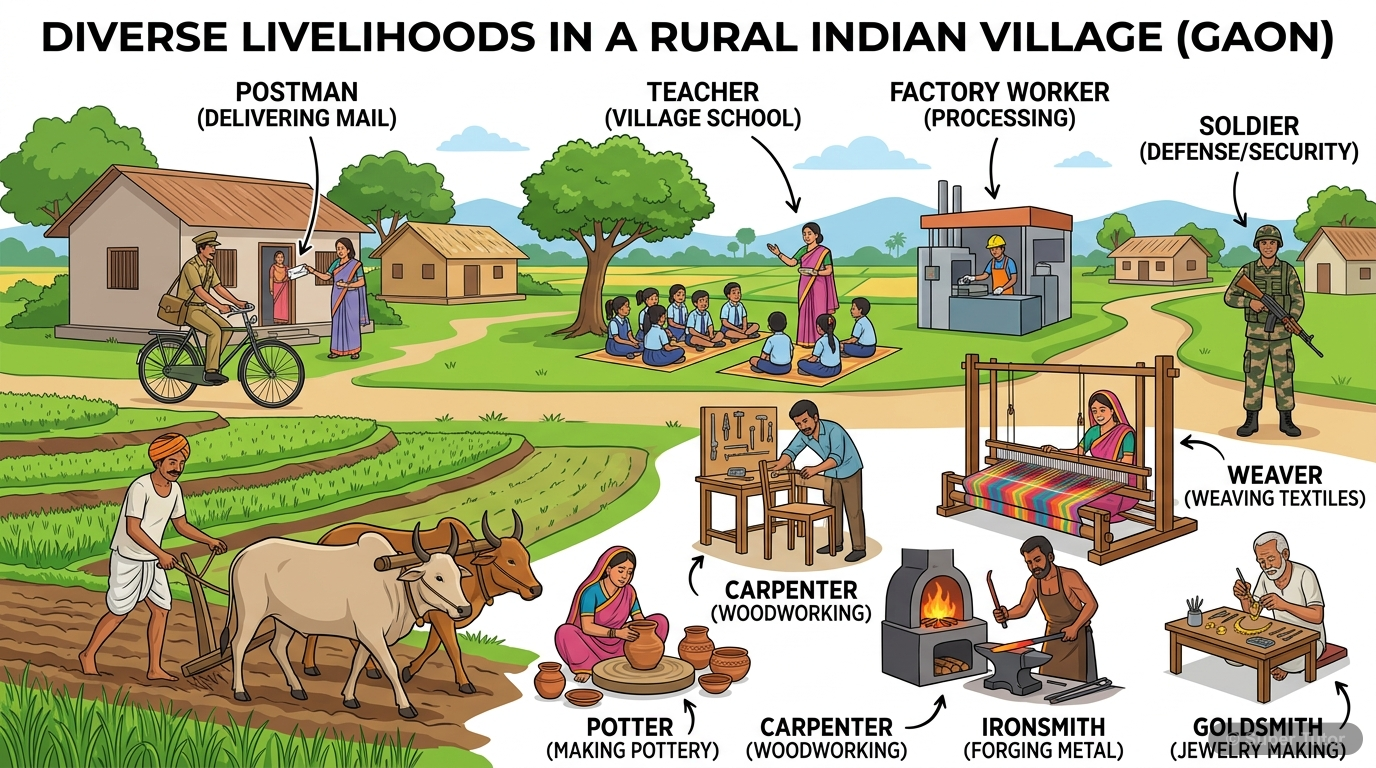
Learn better with visuals Super Tutor pairs illustrations like this with notes and quizzes for Change and Development in Rural Society.
Overview
Rural India is shaped by agriculture, landownership, caste, class, labour, and market forces. Agriculture is the single most important source of livelihood for the majority of the rural population, and land remains the most important productive resource and form of property. Rural society is not onl
Key Concepts
Agrarian structure refers to the distribution
Agrarian structure refers to the distribution of landholding in rural society. Because land is the main productive resource, access to land shapes cla
Caste and class are closely linked
Caste and class are closely linked but not identical. In many regions, major landowning groups come from upper castes, while many landless labourers b
Dominant castes are numerically large
Dominant castes are numerically large and economically and politically powerful landowning groups in a region. Examples include Jats and Rajputs in Ut
Under the zamindari system
Under the zamindari system, zamindars were intermediaries who collected revenue from cultivators and paid tax to the colonial state. They were usually
Under the raiyatwari system
Under the raiyatwari system, actual cultivators were responsible for paying land tax directly to the colonial government. The term raiyat means cultiv
Learning Objectives
- Understand the meaning of agrarian structure and its link with caste and class
- Explain colonial land revenue systems such as zamindari and raiyatwari
- Identify the main land reform measures after Independence and their outcomes
- Describe the Green Revolution and its social and regional effects
- Explain changes in rural labour, migration, and women’s work
Frequently Asked Questions
What are the important topics in Change and Development in Rural Society for Madhya Pradesh Board Class 12 Sociology?
How should I revise Change and Development in Rural Society for the Madhya Pradesh Board Class 12 board exam?
Sources & Official References
Content is aligned to the official syllabus. Refer to the board website for the latest curriculum.
More resources for Change and Development in Rural Society
Practice Quiz
Test yourself with a quick quiz
Important Questions
Exam-style questions with answers
Revision Notes
Key points for last-minute revision
Concept Maps
See how topics connect
Study Plan
Step-by-step plan for this chapter
Flashcards
Quick-fire cards for active recall
Syllabus
What topics to cover
NCERT Solutions
Every textbook question solved step by step
For serious students
Get the full Change and Development in Rural Society chapter — start free.
Quizzes, flashcards, an AI doubt solver and a study plan for Madhya Pradesh Board Class 12 Sociology. Free to start, no card needed.