Health — Practice Quiz
NIOS · Class 10 · Home Science
Try a 4-question quiz on Health for NIOS Class 10 Home Science: tap an answer to check it and see why. 41 questions in the full chapter test.
Interactive on Super Tutor
Studying Health? Get the full interactive chapter.
Quizzes, flashcards, AI doubt-solver and a step-by-step study plan — built for practice quiz and more.
Free trial, no card needed.
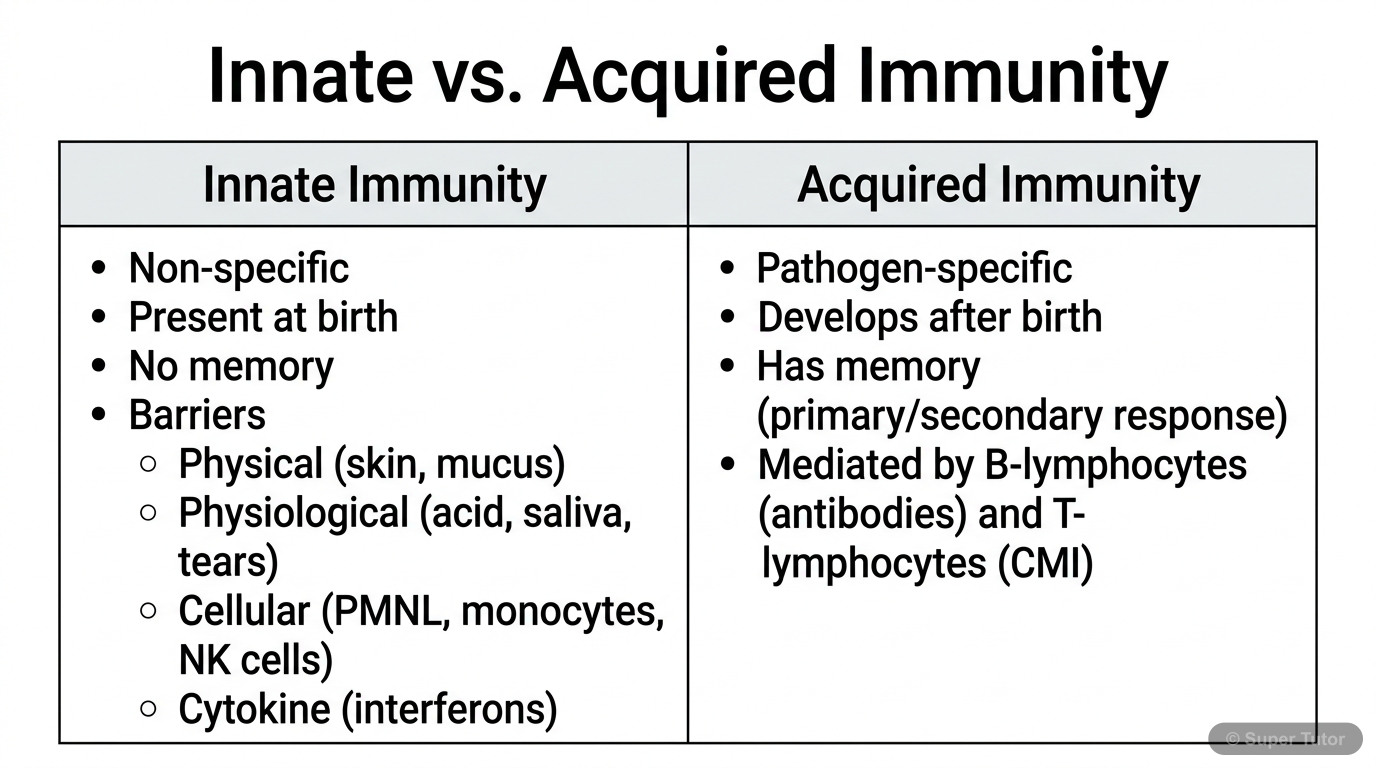
One of 3 illustrations for Health in Super Tutor — alongside flashcards, concept maps and practice questions.
Quick Quiz: Health
0/4Tap an answer to check it instantly. No sign-up needed for these 4.
According to the World Health Organization (WHO), health is defined as:
The three dimensions of health are often shown as a 'health triangle'. Which of the following correctly lists all three dimensions?
Which of the following is a sign of good PHYSICAL health?
Having 'control over your emotions' and 'confidence in your abilities' are signs of good:
Sample Questions
The word 'hygiene' comes from the Greek word 'hygiea', which means:
Show answer
Goddess of health
Step 1: The origin of words gives us clues about their meaning. Step 2: The chapter states that the word 'hygiene' comes from the Greek word 'hygiea'. Step 3: Hygiea was the Greek goddess of health. Step 4: This is why hygiene is closely related to health — the practices of hygiene help us maintain good health. Step 5: The other options are incorrect — hygiea does not mean goddess of cleanliness, god of medicine, or god of water.
Why should we wash our hands with soap before eating food?
Show answer
Because hands may carry disease-causing germs that can enter our body with food
Step 1: Our hands touch many surfaces throughout the day — doors, money, soil, and animals. Step 2: These surfaces may have invisible germs (bacteria and viruses) that stick to our hands. Step 3: If we eat without washing hands, these germs enter our body along with food and can cause diseases. Step 4: Soap is used because it breaks down the outer surface of germs and removes them effectively from our hands. Step 5: This simple habit prevents diseases like diarrhea, typhoid, cholera, and worm infections.
Which of the following is an example of FOOD hygiene practice?
Show answer
Washing fruits and vegetables in clean water before eating
Step 1: Hygiene is divided into personal, domestic, and food hygiene based on where it is practised. Step 2: Food hygiene involves keeping food clean, safe, and free from germs and harmful chemicals. Step 3: Fruits and vegetables may have pesticides (chemicals sprayed on plants) and germs on them. Step 4: Washing them in clean water removes these harmful substances before we eat them. Step 5: Sweeping the house is domestic hygiene, cutting nails is personal hygiene, and exercising is a health habit — not a food hygiene practice.
Community health focuses on:
Show answer
Preventing diseases and promoting health of the entire population
Step 1: Community health is about the health of a whole group of people, not just one person. Step 2: The chapter defines community health as the practice of preventing disease and promoting health of a population. Step 3: It is achieved through organized efforts by government, organizations, communities, and individuals. Step 4: The focus is on PREVENTION of diseases — stopping them before they happen — rather than only treating sick people. Step 5: Activities like clean water supply, garbage disposal, immunization drives, and awareness programmes are all part of community health.
+37 more questions on Health (NIOS Class 10 Home Science)
Practise AllFrequently Asked Questions
What are the important topics in Health for NIOS Class 10 Home Science?
How many practice questions are there for Health?
Sources & Official References
Content is aligned to the official syllabus. Refer to the board website for the latest curriculum.
More resources for Health
Important Questions
Exam-style questions with answers
Revision Notes
Key points for last-minute revision
Chapter Summary
Understand the chapter at a glance
Concept Maps
See how topics connect
Study Plan
Step-by-step plan for this chapter
Flashcards
Quick-fire cards for active recall
Syllabus
What topics to cover
For serious students
Get the full Health chapter — start free.
Quizzes, flashcards, an AI doubt solver and a study plan for NIOS Class 10 Home Science. Free to start, no card needed.