Periodic Classification of Elements — Study Plan
NIOS · Class 10 · Science & Tech
A step-by-step study plan for Periodic Classification of Elements, NIOS Class 10 Science & Tech: what to learn first, what to practise and when to revise.
Interactive on Super Tutor
Studying Periodic Classification of Elements? Get the full interactive chapter.
Quizzes, flashcards, AI doubt-solver and a step-by-step study plan — built for study plan and more.
Free trial, no card needed.
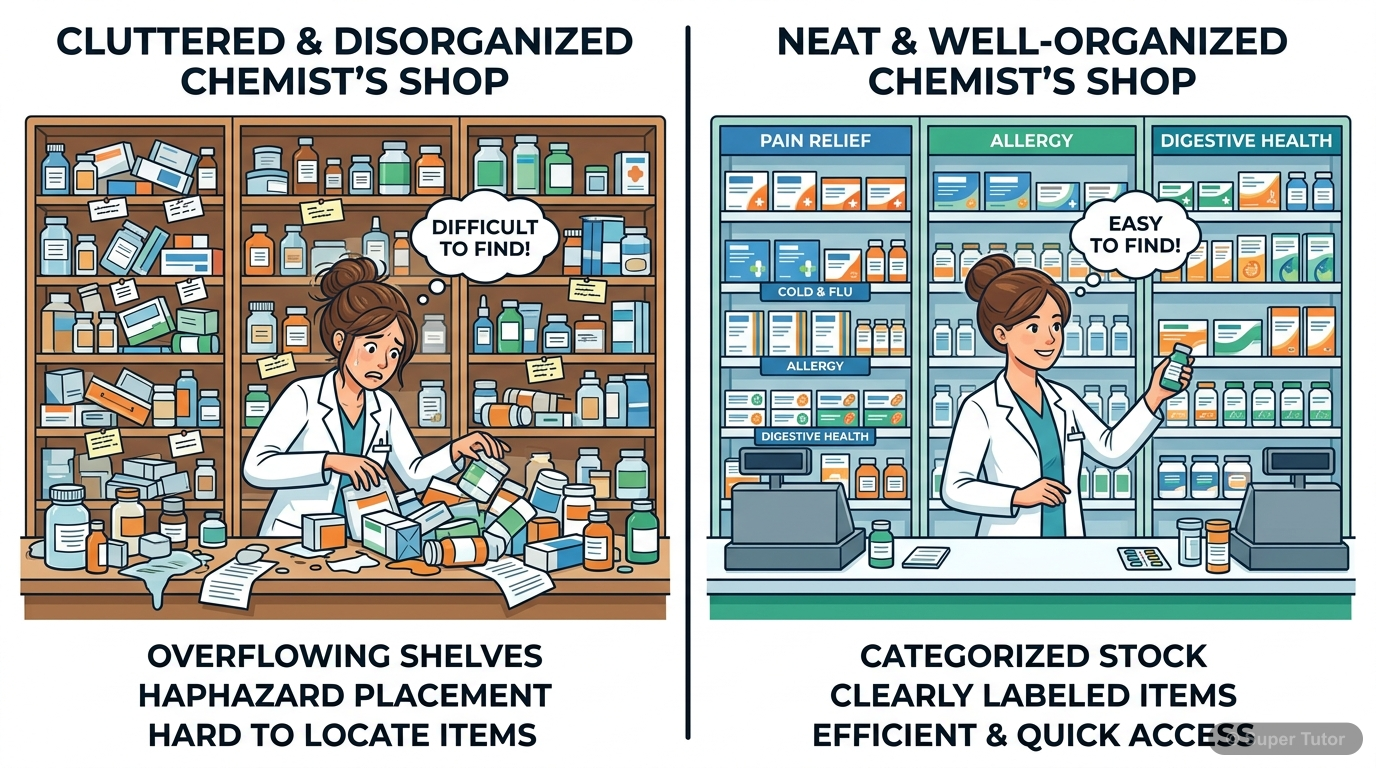
One of 15 illustrations for Periodic Classification of Elements in Super Tutor — alongside flashcards, concept maps and practice questions.
Study Plan
Learn the Theory
Read the textbook chapter carefully. Note down definitions, formulas and key ideas. Focus on: Development of Classification of Elements, Dobereiner’s Triads, Newlands’ Law of Octaves.
Practise
Solve the textbook exercises and extra practice questions. There are 44 questions available for this chapter.
Revise & Test
Revise key points without looking at your notes. Take a practice quiz and mark weak areas for another pass.
Spaced Revision
Come back to Periodic Classification of Elements after a week. Use flashcards for quick recall and try past exam questions on this chapter.
What to Focus On
- Nearly 60 elements were known by the middle of the nineteenth century.
- The first classification was into metals and non-metals.
- Germanium and antimony showed both metallic and non-metallic properties.
- J.W. Dobereiner proposed triads in 1829.
- Each triad contained three elements with similar properties.
- The middle element had atomic mass nearly equal to the mean of the other two.
- John Alexander Newlands proposed the Law of Octaves in 1864.
- Every eighth element showed properties similar to the first.
- The law worked only up to atomic mass 40 u.
Common Mistakes to Avoid
Elements in the modern periodic table are arranged by increasing atomic mass.
A period is a vertical column and a group is a horizontal row.
Hydrogen belongs clearly only to the alkali metals.
Memory Tips
Earliest classification of elements
Dobereiner's triads
Dobereiner's law of triads
Triad mean formulas
Want a personalised study plan?
Super Tutor builds a day-by-day plan for NIOS Class 10 Science & Tech that fits your exam date and pace.
Create My Study PlanFrequently Asked Questions
What are the important topics in Periodic Classification of Elements for NIOS Class 10 Science & Tech?
How should I revise Periodic Classification of Elements for the NIOS Class 10 board exam?
Sources & Official References
Content is aligned to the official syllabus. Refer to the board website for the latest curriculum.
More resources for Periodic Classification of Elements
Practice Quiz
Test yourself with a quick quiz
Important Questions
Exam-style questions with answers
Revision Notes
Key points for last-minute revision
Formula Sheet
The chapter's formulas in one place
Chapter Summary
Understand the chapter at a glance
Concept Maps
See how topics connect
Flashcards
Quick-fire cards for active recall
Syllabus
What topics to cover
For serious students
Get the full Periodic Classification of Elements chapter — start free.
Quizzes, flashcards, an AI doubt solver and a study plan for NIOS Class 10 Science & Tech. Free to start, no card needed.