Chapter 1 of 5
Concept Maps
The Living World — Concept Maps
Punjab Board · Class 11 · Biology
3 concept maps of The Living World for Punjab Board Class 11 Biology, each also written out as a text outline.
45 questions24 flashcards5 concepts
Interactive on Super Tutor
Studying The Living World? Get the full interactive chapter.
Quizzes, flashcards, AI doubt-solver and a step-by-step study plan — built for concept maps and more.
Free trial, no card needed.
Super Tutor
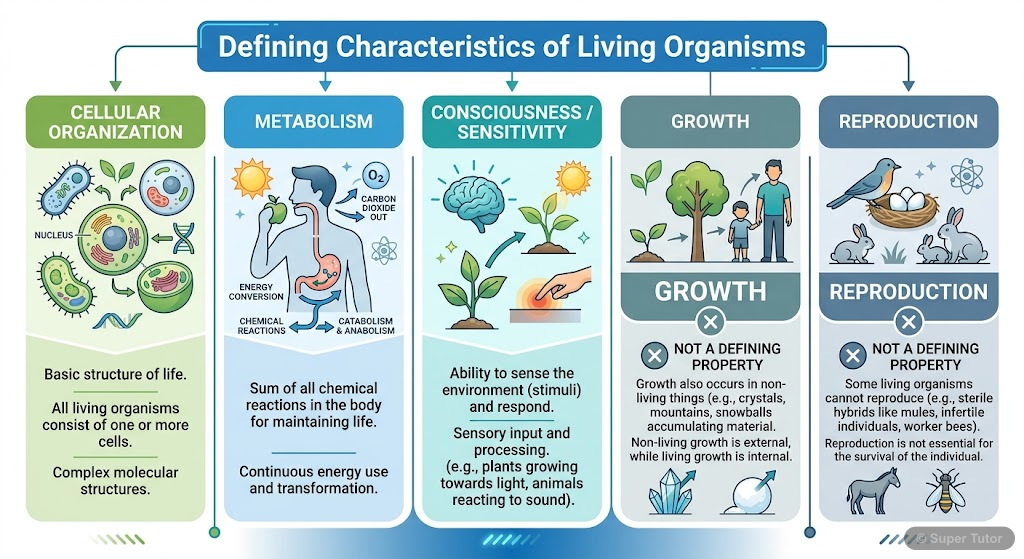
Learn better with visuals Super Tutor pairs illustrations like this with notes and quizzes for The Living World.
3 Concept Maps
Taxonomic Hierarchy Overview
The map in words
- Taxonomic Hierarchy
- Kingdom
- Broadest category
- Animalia/Plantae
- Few shared features
- Phylum/Division
- Major groups
- Chordata/Angiospermae
- More features
- Class
- Mammalia/Aves/Insecta
- Moderate features
- Order
- Carnivora/Primates
- Specific features
- Family
- Felidae/Canidae
- Many shared features
- Genus
- Related species
- Very similar features
- Species
- Most specific
- Individual organisms
- Maximum shared features
- Kingdom
The Living World – Complete Chapter Overview
The map in words
- The Living World
- Diversity
- Biodiversity
- 1.7 to 1.8 million species
- New species discovered daily
- Local Names Problem
- Vary place to place
- Cause confusion
- Solution
- Nomenclature
- Identification
- Biodiversity
- Naming Systems
- ICBN
- For Plants
- Botanical Code
- ICZN
- For Animals
- Zoological Code
- Binomial Nomenclature
- By Carolus Linnaeus
- Genus plus Species
- Latin language
- Italics or Underline
- ICBN
- Taxonomy
- Characterisation
- Identification
- Classification
- Nomenclature
- Systematics
- Diversity of organisms
- Evolutionary relationships
- Linnaeus Systema Naturae
- Taxonomic Hierarchy
- Kingdom Highest
- Phylum or Division
- Class
- Order
- Family
- Genus
- Species Lowest
- Key Examples
- Homo sapiens Human
- Mangifera indica Mango
- Panthera leo Lion
- Musca domestica Housefly
- Triticum aestivum Wheat
- Diversity
The Living World - Complete Concept Overview
The map in words
- The Living World
- Biodiversity
- 1.7-1.8 Million Species
- Various Habitats
- Diversity of Life
- Nomenclature
- Standardized Naming
- ICBN for Plants
- ICZN for Animals
- Latin Names
- Binomial Nomenclature
- Genus Name
- Specific Epithet
- Italicized Format
- Carolus Linnaeus
- Classification
- Grouping Organisms
- Based on Characters
- Convenient Categories
- Taxonomy
- Characterization
- Identification
- Classification
- Nomenclature
- Taxonomic Hierarchy
- Kingdom
- Phylum Division
- Class
- Order
- Family
- Genus
- Species
- Systematics
- Evolutionary Relationships
- Broader than Taxonomy
- Common Ancestors
- Biodiversity
Explore these maps interactively
Explore DiagramsFrequently Asked Questions
What are the important topics in The Living World for Punjab Board Class 11 Biology?
Key topics in The Living World include Diversity in the Living World, Rules of Binomial Nomenclature, Taxonomic Categories and Hierarchy, Taxonomic Table – Key Examples (Table 1.1). Study these first, then practise questions on each for Class 11 exams.
What do the concept maps for The Living World show?
The 3 maps show how the ideas in The Living World connect: Taxonomic Hierarchy Overview; The Living World – Complete Chapter Overview. Each map is also written out as an outline on this page.
How should I revise The Living World for Class 11 exams?
Learn the core ideas first, then work through the 45 practice questions on The Living World. Revise definitions regularly and use flashcards for quick recall before the exam.
Sources & Official References
Content is aligned to the official syllabus. Refer to the board website for the latest curriculum.
More resources for The Living World
For serious students
Get the full The Living World chapter — start free.
Quizzes, flashcards, an AI doubt solver and a study plan for Punjab Board Class 11 Biology. Free to start, no card needed.