Chemical Bonding and Molecular Structure — Syllabus
Punjab Board · Class 11 · Chemistry
What Chemical Bonding and Molecular Structure covers in Punjab Board Class 11 Chemistry: 4 topics, for the 2026-27 session.
Interactive on Super Tutor
Studying Chemical Bonding and Molecular Structure? Get the full interactive chapter.
Quizzes, flashcards, AI doubt-solver and a step-by-step study plan — built for syllabus and more.
Free trial, no card needed.
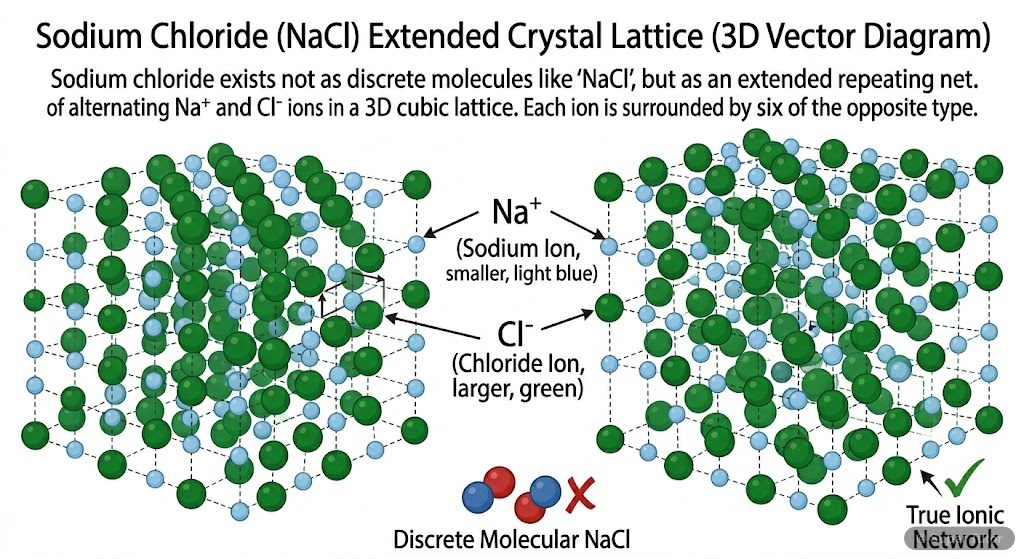
One of 17 illustrations for Chemical Bonding and Molecular Structure in Super Tutor — alongside flashcards, concept maps and practice questions.
Topics in Chemical Bonding and Molecular Structure
1. Kössel-Lewis Approach to Chemical Bonding
- Atoms combine to achieve the electronic configuration of the nearest noble gas (octet rule).
- Lewis pictured atoms as a positively charged 'Kernel' (nucleus + inner electrons) surrounded by an outer shell of up to 8 electrons.
- Lewis symbols represent valence electrons as dots around the chemical symbol of an element.
2. Ionic (Electrovalent) Bond and Lattice Enthalpy
- Ionic bond forms by transfer of electrons from a metal (low ionization enthalpy) to a non-metal (high electron gain enthalpy).
- Example: Na loses one electron to form Na⁺; Cl gains one electron to form Cl⁻. They attract each other electrostatically.
- Ionic compounds form a 3D crystal lattice structure (e.g., NaCl rock salt structure).
3. Bond Parameters: Length, Angle, Enthalpy, Order, and Polarity
- Bond Length: Equilibrium distance between nuclei of two bonded atoms. Measured in picometres (pm). Single bond > Double bond > Triple bond in length.
- Bond Angle: Angle between two adjacent bonds at the central atom. Determines molecular geometry.
- Bond Enthalpy: Energy required to break 1 mole of a bond in the gaseous state. Higher bond order = higher bond enthalpy.
4. Limitations of the Octet Rule
- The octet rule is useful but NOT universal. It mainly works for second-period elements.
- Exception 1 – Incomplete Octet: Central atom has fewer than 8 electrons. Examples: LiCl (2e on Li), BeH2 (4e on Be), BCl3 and BF3 (6e on B), AlCl3.
- Exception 2 – Odd-electron Molecules: Molecules with an odd number of electrons cannot satisfy the octet rule for all atoms. Examples: NO (11 electrons), NO2 (17 electrons).
Work through every topic in Chemical Bonding and Molecular Structure with notes and quizzes
Start This ChapterFrequently Asked Questions
What are the important topics in Chemical Bonding and Molecular Structure for Punjab Board Class 11 Chemistry?
How should I revise Chemical Bonding and Molecular Structure for Class 11 exams?
Sources & Official References
Content is aligned to the official syllabus. Refer to the board website for the latest curriculum.
More resources for Chemical Bonding and Molecular Structure
For serious students
Get the full Chemical Bonding and Molecular Structure chapter — start free.
Quizzes, flashcards, an AI doubt solver and a study plan for Punjab Board Class 11 Chemistry. Free to start, no card needed.