Chemical Bonding and Molecular Structure — Flashcards
Punjab Board · Class 11 · Chemistry
40 flashcards for Chemical Bonding and Molecular Structure (Punjab Board Class 11 Chemistry) to test yourself on key terms and facts.
Interactive on Super Tutor
Studying Chemical Bonding and Molecular Structure? Get the full interactive chapter.
Quizzes, flashcards, AI doubt-solver and a step-by-step study plan — built for flashcards and more.
Free trial, no card needed.
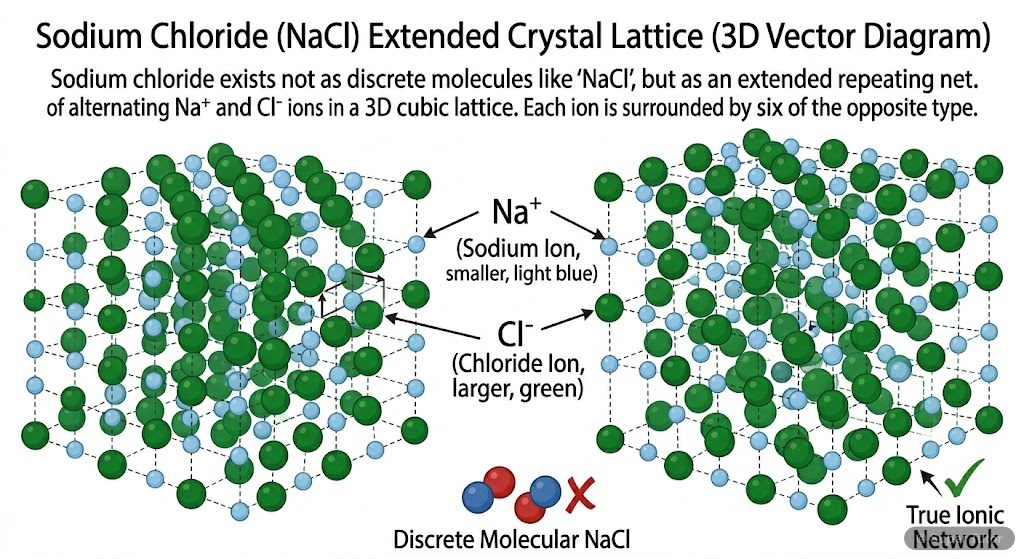
One of 17 illustrations for Chemical Bonding and Molecular Structure in Super Tutor — alongside flashcards, concept maps and practice questions.
What is a chemical bond and why do atoms form bonds?
Answer
A chemical bond is an attractive force that holds various constituents (atoms, ions, etc.) together in different chemical species. Atoms form bonds because every system tends to be more stable. Bondin…
State the Octet Rule and explain its significance in chemical bonding.
Answer
The Octet Rule states that atoms combine by either transferring or sharing valence electrons to achieve a stable octet (8 electrons) in their valence shell, similar to noble gas configurations. Signif…
What are Lewis symbols and what do they represent?
Answer
Lewis symbols are simple notations introduced by G.N. Lewis to represent valence electrons in an atom. They consist of the element's symbol surrounded by dots (one dot per valence electron). Example: …
Write the formation of NaCl from sodium and chlorine atoms according to Kössel-Lewis approach and explain.
Answer
Na → Na⁺ + e⁻ (ionization: [Ne]3s¹ loses 1 electron) Cl + e⁻ → Cl⁻ (electron gain: [Ne]3s²3p⁵ gains 1 electron → [Ar]) Na⁺ + Cl⁻ → NaCl Explanation: Both ions achieve stable noble gas configurations.
Show the formation of CaF₂ using the Kössel-Lewis approach.
Answer
Ca → Ca²⁺ + 2e⁻ (ionization: [Ar]4s² loses 2 electrons) 2F + 2e⁻ → 2F⁻ (electron gain: 2[He]2s²2p⁵ + 2e⁻ → 2[Ne]) Ca²⁺ + 2F⁻ → CaF₂ Explanation: Calcium is divalent (loses 2 electrons) while fluorine …
Explain covalent bond formation in Cl₂ molecule using electron dot structures.
Answer
Cl atom: [Ne]3s²3p⁵ (7 valence electrons, needs 1 more for octet) Cl : Cl formation: :Cl:·Cl: → :Cl-Cl: (or Cl=Cl with lone pairs) Explanation: Each chlorine atom contributes one unpaired electron. Th…
Show the formation of H₂O molecule with electron dot structure.
Answer
H atom: 1s¹ (1 valence electron) O atom: 2s²2p⁴ (6 valence electrons) Lewis structure: H:O:H (each line represents a shared pair) Explanation: Oxygen contributes 2 unpaired electrons, each hydrogen co…
Write the electron dot structure of CO₂ molecule and identify the bond types.
Answer
C: 2s²2p² (4 valence electrons) O: 2s²2p⁴ (6 valence electrons each) Lewis structure: O=C=O Explanation: Carbon forms two double bonds with oxygen atoms. Each C=O consists of one sigma and one pi bond…
+32 more flashcards
Practise AllFrequently Asked Questions
What are the important topics in Chemical Bonding and Molecular Structure for Punjab Board Class 11 Chemistry?
How many flashcards are available for Chemical Bonding and Molecular Structure?
How should I revise Chemical Bonding and Molecular Structure for Class 11 exams?
Sources & Official References
Content is aligned to the official syllabus. Refer to the board website for the latest curriculum.
More resources for Chemical Bonding and Molecular Structure
For serious students
Get the full Chemical Bonding and Molecular Structure chapter — start free.
Quizzes, flashcards, an AI doubt solver and a study plan for Punjab Board Class 11 Chemistry. Free to start, no card needed.