Chapter 5 of 5
Concept Maps
The Fundamental Unit of Life — Concept Maps
Punjab Board · Class 9 · Science
3 concept maps of The Fundamental Unit of Life for Punjab Board Class 9 Science, each also written out as a text outline.
45 questions30 flashcards5 concepts
Interactive on Super Tutor
Studying The Fundamental Unit of Life? Get the full interactive chapter.
Quizzes, flashcards, AI doubt-solver and a step-by-step study plan — built for concept maps and more.
Free trial, no card needed.
Super Tutor
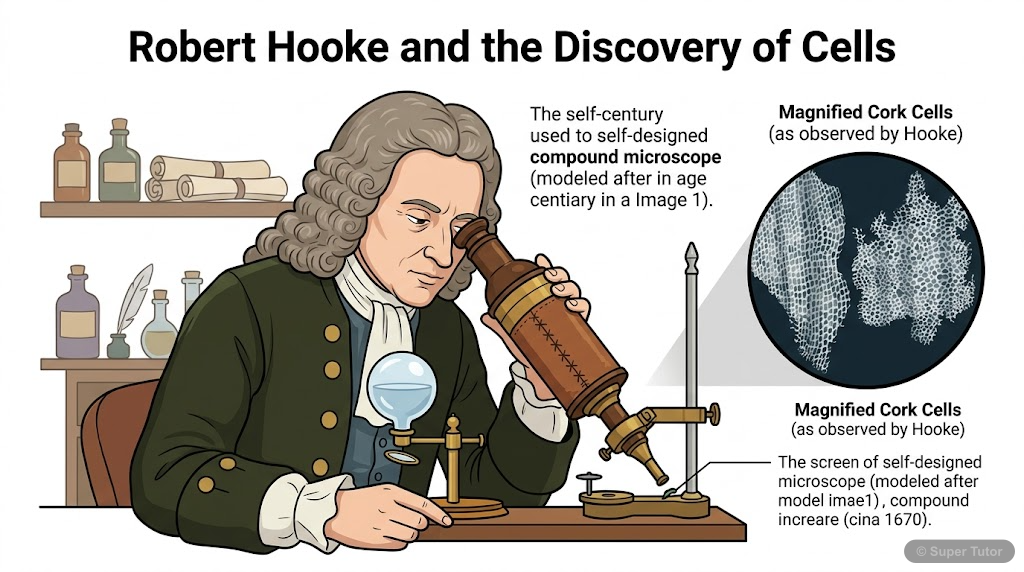
Learn better with visuals Super Tutor pairs illustrations like this with notes and quizzes for The Fundamental Unit of Life.
3 Concept Maps
The Fundamental Unit of Life – Complete Chapter Overview
The map in words
- The Cell
- Discovery
- Hooke 1665 Cork
- Leeuwenhoek 1674 Pond Water
- Brown 1831 Nucleus
- Schleiden and Schwann Cell Theory
- Virchow 1855 Cell from Cell
- Types of Organisms
- Unicellular
- Amoeba
- Bacteria
- Paramecium
- Multicellular
- Plants
- Animals
- Fungi
- Unicellular
- Cell Types
- Prokaryotic
- No Nuclear Membrane
- No Membrane Organelles
- Bacteria
- Eukaryotic
- True Nucleus
- Membrane Organelles
- Plants and Animals
- Prokaryotic
- Cell Structure
- Plasma Membrane
- Selectively Permeable
- Lipids and Proteins
- Cell Wall
- Plant Cells Only
- Cellulose
- Nucleus
- DNA and Chromosomes
- Controls Cell
- Cytoplasm
- Organelles
- Plasma Membrane
- Cell Organelles
- ER
- RER Protein Synthesis
- SER Lipid Synthesis
- Golgi Apparatus
- Packing and Dispatch
- Lysosomes
- Suicide Bags
- Mitochondria
- Powerhouse ATP
- Plastids
- Chloroplasts
- Leucoplasts
- Vacuoles
- Large in Plants
- ER
- Cell Division
- Mitosis
- 2 Daughter Cells
- Growth and Repair
- Meiosis
- 4 Daughter Cells
- Gamete Formation
- Mitosis
- Discovery
Timeline showing the major milestones in cell biology discovery from Hooke to modern electron microscopy
The map in words
- 1665
- Robert Hooke discovers cells in cork
- 1674
- Leeuwenhoek finds free-living cells in pond water
- 1831
- Robert Brown discovers nucleus
- 1839
- Schleiden and Schwann propose cell theory
- 1855
- Virchow expands cell theory
- 1940
- Electron microscope invention allows study of organelles
Mind map showing how all living organisms are composed of cells, divided into unicellular and multicellular categories with their characteristics
The map in words
- Living Organisms
- Unicellular Organisms
- Single Cell
- Complete Organism
- Examples: Amoeba, Bacteria
- Multicellular Organisms
- Many Cells
- Specialized Functions
- Examples: Plants, Animals
- Division of Labor
- Cell Characteristics
- Growth
- Reproduction
- Response to Environment
- Metabolism
- Unicellular Organisms
Explore these maps interactively
Explore DiagramsFrequently Asked Questions
What are the important topics in The Fundamental Unit of Life for Punjab Board Class 9 Science?
Key topics in The Fundamental Unit of Life include Discovery of the Cell and Cell Theory, Plasma Membrane (Cell Membrane), Cell Wall, Nucleus. Study these first, then practise questions on each for Class 9 exams.
What do the concept maps for The Fundamental Unit of Life show?
The 3 maps show how the ideas in The Fundamental Unit of Life connect: The Fundamental Unit of Life – Complete Chapter Overview; Timeline showing the major milestones in cell biology discovery from Hooke to modern electron microscopy. Each map is also written out as an outline on this page.
How should I revise The Fundamental Unit of Life for Class 9 exams?
Learn the core ideas first, then work through the 45 practice questions on The Fundamental Unit of Life. Revise definitions regularly and use flashcards for quick recall before the exam.
Sources & Official References
Content is aligned to the official syllabus. Refer to the board website for the latest curriculum.
More resources for The Fundamental Unit of Life
For serious students
Get the full The Fundamental Unit of Life chapter — start free.
Quizzes, flashcards, an AI doubt solver and a study plan for Punjab Board Class 9 Science. Free to start, no card needed.