The Fundamental Unit of Life — Chapter Summary
Punjab Board · Class 9 · Science
Summary of The Fundamental Unit of Life for Punjab Board Class 9 Science. Part of the Punjab Board Class 9 Science syllabus.
Interactive on Super Tutor
Studying The Fundamental Unit of Life? Get the full interactive chapter.
Quizzes, flashcards, AI doubt-solver and a step-by-step study plan — built for chapter summary and more.
Free trial, no card needed.
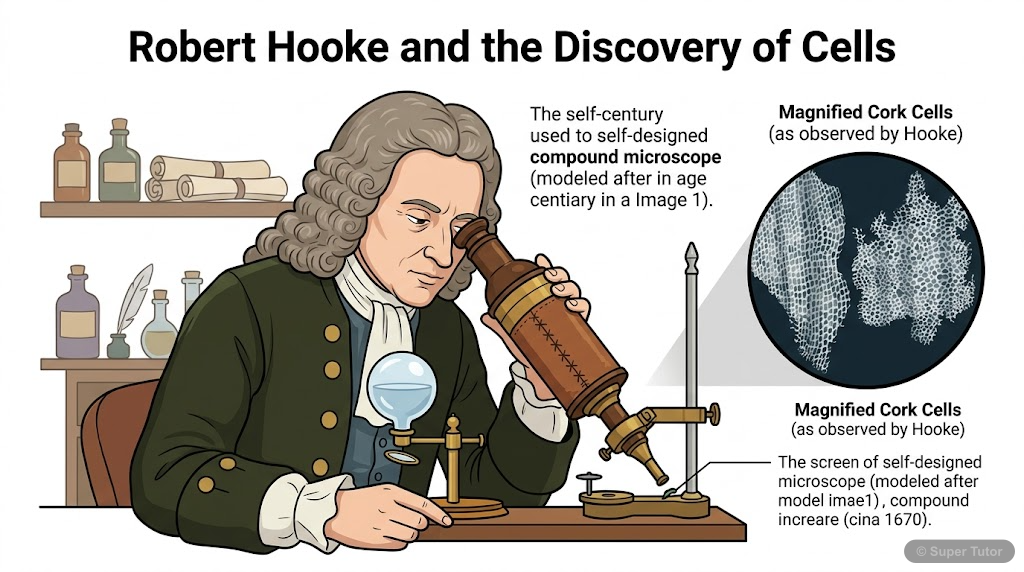
Learn better with visuals Super Tutor pairs illustrations like this with notes and quizzes for The Fundamental Unit of Life.
Overview
The cell is the basic structural and functional unit of all living organisms. This chapter explores the discovery of cells, their structure, organization, and functions. From Robert Hooke's observation of cork cells in 1665 to our modern understanding of cell biology, we learn how cells are the foun
Key Concepts
A cell is the smallest unit
A cell is the smallest unit of life that can perform all life functions independently. Robert Hooke discovered cells in 1665 when he observed cork tis
The plasma membrane is the outermost
The plasma membrane is the outermost covering of every cell that separates the cell's contents from the external environment. It is composed of lipids
The cell wall is a rigid
The cell wall is a rigid outer covering found in plant cells, fungi, and bacteria, located outside the plasma membrane. It is primarily composed of ce
The nucleus is a membrane
The nucleus is a membrane-bound organelle present in eukaryotic cells that contains the cell's genetic material. It has a double-layered nuclear membr
Cytoplasm is the fluid
Cytoplasm is the fluid-like substance filling the cell between the plasma membrane and the nucleus. It is mostly water with dissolved minerals, nutrie
Learning Objectives
- Understand what cells are and their significance in living organisms
- Learn about the structure and organization of prokaryotic and eukaryotic cells
- Identify and describe the functions of different cell organelles
- Understand how substances move across cell membranes through diffusion and osmosis
- Explain the roles of the nucleus and cytoplasm in cell function
Frequently Asked Questions
What are the important topics in The Fundamental Unit of Life for Punjab Board Class 9 Science?
How should I revise The Fundamental Unit of Life for Class 9 exams?
Sources & Official References
Content is aligned to the official syllabus. Refer to the board website for the latest curriculum.
More resources for The Fundamental Unit of Life
For serious students
Get the full The Fundamental Unit of Life chapter — start free.
Quizzes, flashcards, an AI doubt solver and a study plan for Punjab Board Class 9 Science. Free to start, no card needed.