Enterprise Planning — Study Plan
CBSE · Class 12 · Entrepreneurship
A step-by-step study plan for Enterprise Planning, CBSE Class 12 Entrepreneurship: what to learn first, what to practise and when to revise.
Interactive on Super Tutor
Studying Enterprise Planning? Get the full interactive chapter.
Quizzes, flashcards, AI doubt-solver and a step-by-step study plan — built for study plan and more.
Free trial, no card needed.
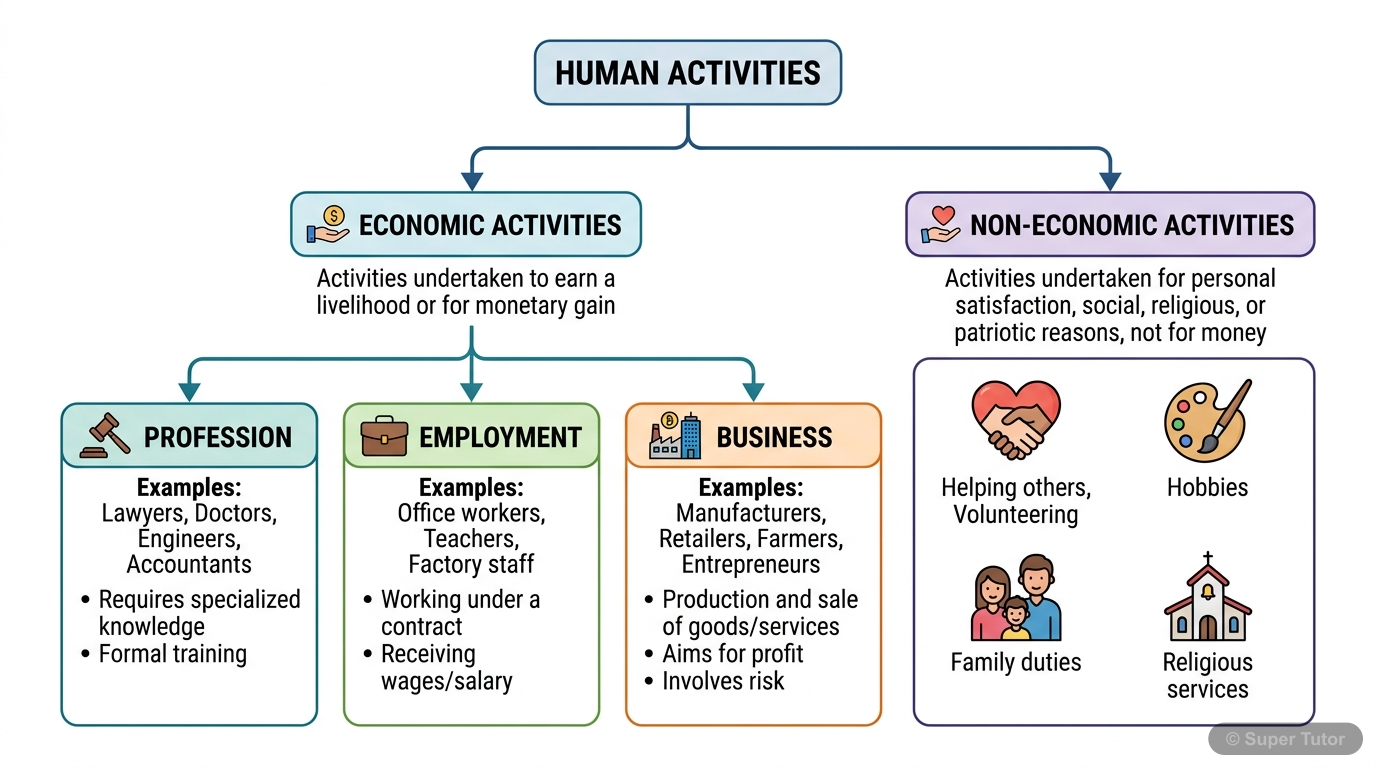
Learn better with visuals Super Tutor pairs illustrations like this with notes and quizzes for Enterprise Planning.
Study Plan
Learn the Theory
Read the textbook chapter carefully. Note down definitions, formulas and key ideas. Focus on: Economic Activities and Types of Business, Forms of Business Organization, Business Plan Components.
Practise
Solve the textbook exercises and extra practice questions.
Revise & Test
Revise key points without looking at your notes. Take a practice quiz and mark weak areas for another pass.
Spaced Revision
Come back to Enterprise Planning after a week. Use flashcards for quick recall and try past exam questions on this chapter.
What to Focus On
- Economic activities are divided into profession, employment, and business
- Business activities include manufacturing, service, and trading
- Manufacturing involves transforming raw materials into finished products
- Sole proprietorship offers complete control but unlimited liability
- Partnership combines resources and skills but requires shared decision-making
- Companies provide limited liability and easier fund raising
- Business plan is a comprehensive roadmap for entrepreneurial ventures
- Serves as a communication tool for stakeholders and investors
- Helps assess feasibility, viability, and potential risks
Common Mistakes to Avoid
A business plan is just a formal document required for getting loans - it has no practical value for the entrepreneur
Private Limited Company is always better than Partnership because it has limited liability
Sole Proprietorship is only suitable for very small businesses and has no advantages over other forms
Memory Tips
Three Types of Economic Activities: Profession, Employment, Business
Characteristics of Business: Regular dealings, Profit motive, Risk and uncertainty, Sale/exchange, Utility creation
Forms of Business: Sole Proprietorship, Partnership, Joint Hindu Family, Cooperative, Company
Sole Proprietorship has Unlimited Liability
Want a personalised study plan?
Super Tutor builds a day-by-day plan for CBSE Class 12 Entrepreneurship that fits your exam date and pace.
Create My Study PlanFrequently Asked Questions
What are the important topics in Enterprise Planning for CBSE Class 12 Entrepreneurship?
Sources & Official References
- NCERT Official — ncert.nic.in
- CBSE Academic — cbseacademic.nic.in
- CBSE Official — cbse.gov.in
- National Education Policy 2020 — education.gov.in
Content is aligned to the official syllabus. Refer to the board website for the latest curriculum.
More resources for Enterprise Planning
For serious students
Get the full Enterprise Planning chapter — start free.
Quizzes, flashcards, an AI doubt solver and a study plan for CBSE Class 12 Entrepreneurship. Free to start, no card needed.