Entrepreneurial Opportunity — Study Plan
CBSE · Class 12 · Entrepreneurship
A step-by-step study plan for Entrepreneurial Opportunity, CBSE Class 12 Entrepreneurship: what to learn first, what to practise and when to revise.
Interactive on Super Tutor
Studying Entrepreneurial Opportunity? Get the full interactive chapter.
Quizzes, flashcards, AI doubt-solver and a step-by-step study plan — built for study plan and more.
Free trial, no card needed.
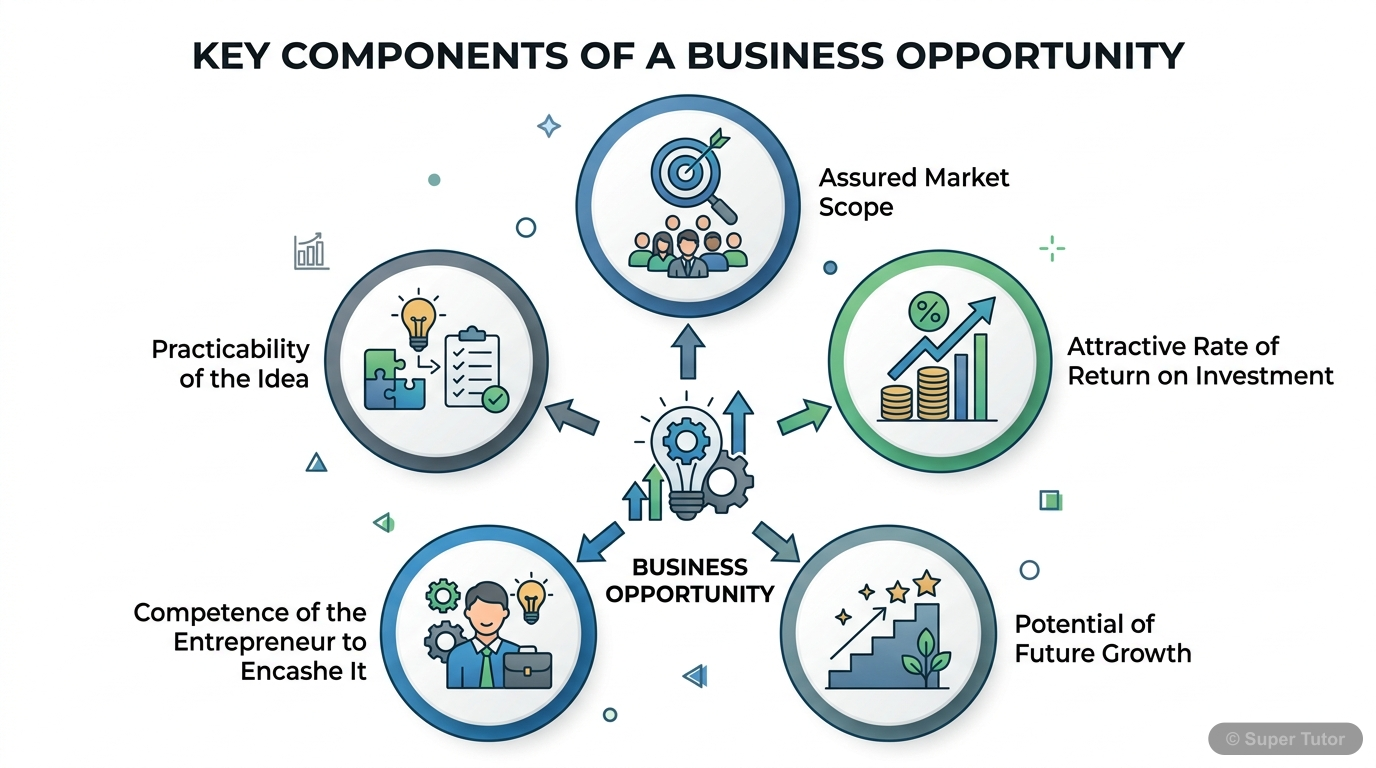
Learn better with visuals Super Tutor pairs illustrations like this with notes and quizzes for Entrepreneurial Opportunity.
Study Plan
Learn the Theory
Read the textbook chapter carefully. Note down definitions, formulas and key ideas. Focus on: Understanding Business Opportunities, Sensing and Perceiving Opportunities, Environment Scanning and Analysis.
Practise
Solve the textbook exercises and extra practice questions.
Revise & Test
Revise key points without looking at your notes. Take a practice quiz and mark weak areas for another pass.
Spaced Revision
Come back to Entrepreneurial Opportunity after a week. Use flashcards for quick recall and try past exam questions on this chapter.
What to Focus On
- Business opportunity is an economic idea implementable for profit
- Must have good market potential and attractive returns
- Requires thorough market analysis before implementation
- Assured market scope with sufficient customer base
- Attractive and acceptable return on investment
- Practicability and feasibility of implementation
- Problems create opportunities for innovative solutions
- Changes in society/technology open new business avenues
- Multiple information sources provide market insights
Common Mistakes to Avoid
Any good idea automatically becomes a profitable business opportunity
Environment scanning is only about understanding current market conditions
Trend spotting is about following whatever is popular on social media
Memory Tips
Five Elements of Business Opportunity (AAPCF)
PESTEL Framework (Political, Economic, Social, Technological, Ecological, Legal)
Creative Process (5 stages)
Six Sources of Idea Fields
Want a personalised study plan?
Super Tutor builds a day-by-day plan for CBSE Class 12 Entrepreneurship that fits your exam date and pace.
Create My Study PlanFrequently Asked Questions
What are the important topics in Entrepreneurial Opportunity for CBSE Class 12 Entrepreneurship?
Sources & Official References
- NCERT Official — ncert.nic.in
- CBSE Academic — cbseacademic.nic.in
- CBSE Official — cbse.gov.in
- National Education Policy 2020 — education.gov.in
Content is aligned to the official syllabus. Refer to the board website for the latest curriculum.
More resources for Entrepreneurial Opportunity
For serious students
Get the full Entrepreneurial Opportunity chapter — start free.
Quizzes, flashcards, an AI doubt solver and a study plan for CBSE Class 12 Entrepreneurship. Free to start, no card needed.