Resource Mobilization — Study Plan
CBSE · Class 12 · Entrepreneurship
A step-by-step study plan for Resource Mobilization, CBSE Class 12 Entrepreneurship: what to learn first, what to practise and when to revise.
Interactive on Super Tutor
Studying Resource Mobilization? Get the full interactive chapter.
Quizzes, flashcards, AI doubt-solver and a step-by-step study plan — built for study plan and more.
Free trial, no card needed.
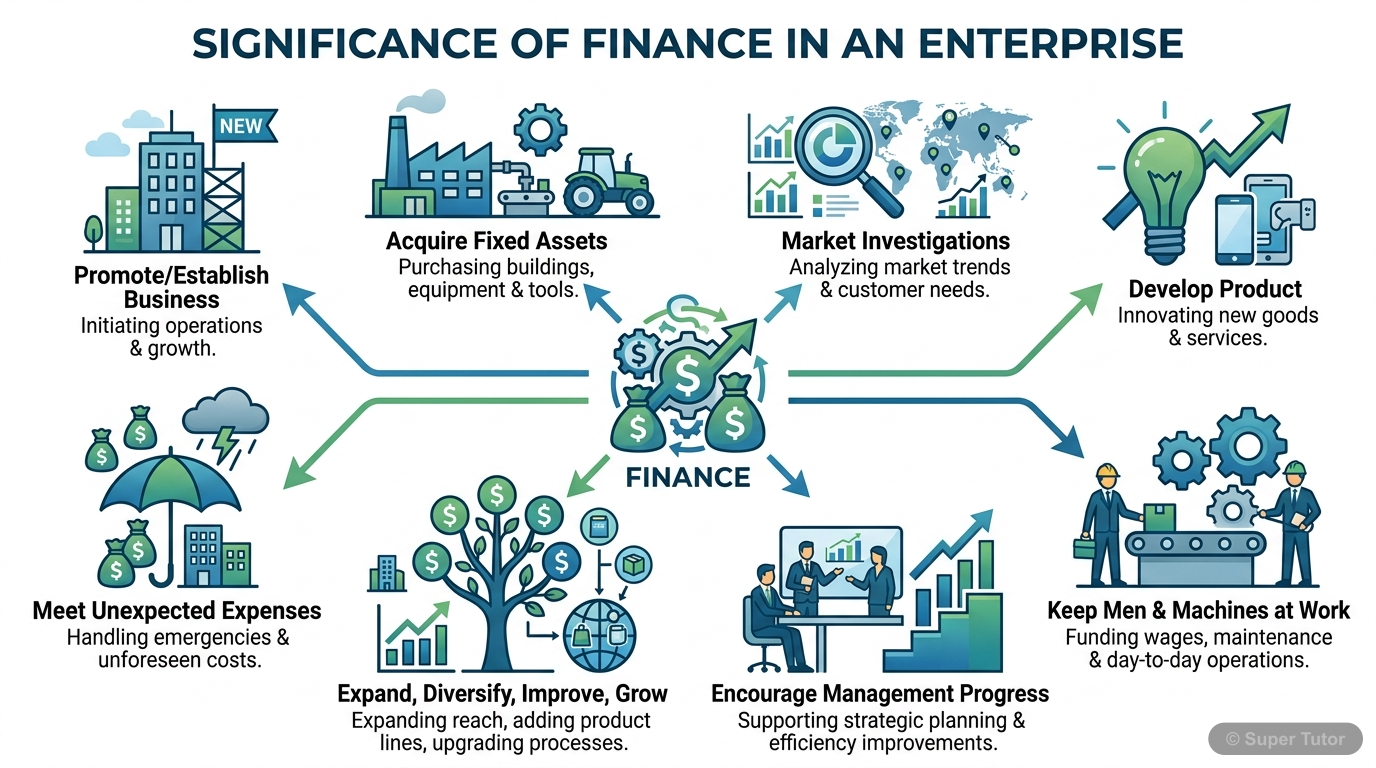
Learn better with visuals Super Tutor pairs illustrations like this with notes and quizzes for Resource Mobilization.
Study Plan
Learn the Theory
Read the textbook chapter carefully. Note down definitions, formulas and key ideas. Focus on: Introduction to Finance and Resource Mobilization, Capital Markets, Stock Exchange and SEBI.
Practise
Solve the textbook exercises and extra practice questions.
Revise & Test
Revise key points without looking at your notes. Take a practice quiz and mark weak areas for another pass.
Spaced Revision
Come back to Resource Mobilization after a week. Use flashcards for quick recall and try past exam questions on this chapter.
What to Focus On
- Finance is essential for all business activities from conception to growth
- Three critical questions must be answered before seeking funding
- Money is required for promoting business, acquiring assets, market research, and operations
- Capital markets bridge the gap between savers and investors
- Primary markets deal with new securities issues
- Secondary markets provide liquidity to existing securities
- Public issue is the most popular method of raising capital
- Rights issues are cost-effective for existing companies
- Private placement offers confidentiality advantages
Common Mistakes to Avoid
Primary market and Secondary market are just different names for the same thing - both involve buying and selling shares
SEBI, Stock Exchanges, and Merchant Bankers all perform the same regulatory functions
Angel Investors and Venture Capitalists are the same - both provide early-stage funding
Memory Tips
Three fundamental finance questions every entrepreneur must answer
Capital Markets facilitate transfer from surplus to deficit units
Methods of IPO flotation: Public Issue, Rights Issue, Private Placement, Employee Offer
SEBI was established in 1992 with quasi-legislative, quasi-judicial, quasi-executive functions
Want a personalised study plan?
Super Tutor builds a day-by-day plan for CBSE Class 12 Entrepreneurship that fits your exam date and pace.
Create My Study PlanFrequently Asked Questions
What are the important topics in Resource Mobilization for CBSE Class 12 Entrepreneurship?
Sources & Official References
- NCERT Official — ncert.nic.in
- CBSE Academic — cbseacademic.nic.in
- CBSE Official — cbse.gov.in
- National Education Policy 2020 — education.gov.in
Content is aligned to the official syllabus. Refer to the board website for the latest curriculum.
More resources for Resource Mobilization
For serious students
Get the full Resource Mobilization chapter — start free.
Quizzes, flashcards, an AI doubt solver and a study plan for CBSE Class 12 Entrepreneurship. Free to start, no card needed.