Enterprise Growth Strategies — Study Plan
CBSE · Class 12 · Entrepreneurship
A step-by-step study plan for Enterprise Growth Strategies, CBSE Class 12 Entrepreneurship: what to learn first, what to practise and when to revise.
Interactive on Super Tutor
Studying Enterprise Growth Strategies? Get the full interactive chapter.
Quizzes, flashcards, AI doubt-solver and a step-by-step study plan — built for study plan and more.
Free trial, no card needed.
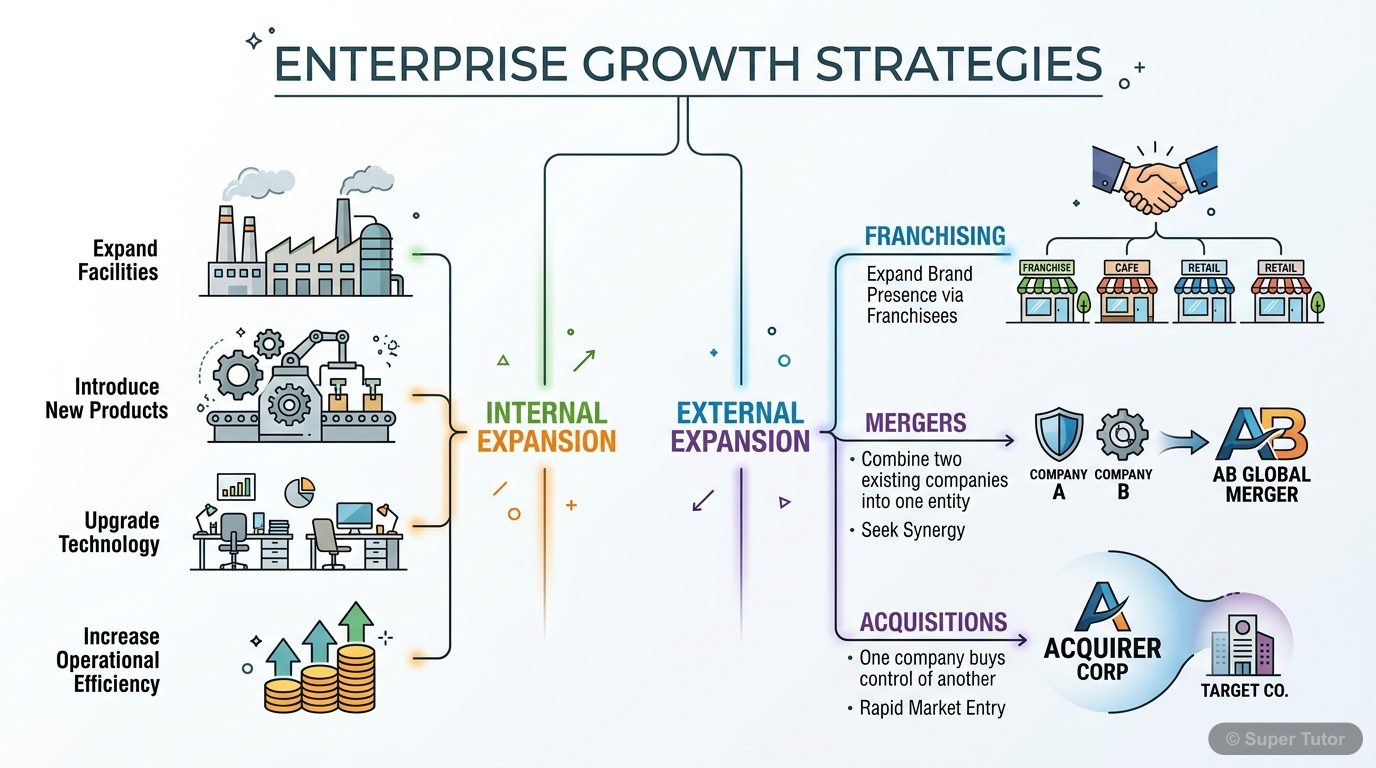
One of 12 illustrations for Enterprise Growth Strategies in Super Tutor — alongside flashcards, concept maps and practice questions.
Study Plan
Learn the Theory
Read the textbook chapter carefully. Note down definitions, formulas and key ideas. Focus on: Growth and Development of an Enterprise, Franchising, Advantages and Disadvantages of Franchising.
Practise
Solve the textbook exercises and extra practice questions.
Revise & Test
Revise key points without looking at your notes. Take a practice quiz and mark weak areas for another pass.
Spaced Revision
Come back to Enterprise Growth Strategies after a week. Use flashcards for quick recall and try past exam questions on this chapter.
What to Focus On
- Growth is essential for a business's long-term survival
- Internal expansion = growth from within the existing firm
- External expansion = growth through combining with other firms
- Franchising originated in the 1850s with Isaac Singer's sewing machine licenses
- Franchisor grants rights; Franchisee pays royalties and follows standardized procedures
- Four types: Product, Manufacturing, Business Venture, and Business Format franchising
- M&A accelerates growth by acquiring existing companies instead of building from scratch
- Merger: combination of two companies into one — at least one entity loses its identity
- Two forms of merger: Amalgamation (A+B=C) and Absorption (A+B=A)
Common Mistakes to Avoid
Mergers and Acquisitions are the same thing — both involve one company taking over another.
Franchising means the franchisee owns the brand and can run it however they like after paying the fee.
A horizontal merger and a market extension merger are the same because both involve companies in the same industry.
Memory Tips
Two types of enterprise expansion: Internal and External
Franchising definition — franchisor gives exclusive rights to franchisee in return for royalties and standard operating procedures
Four types of franchising: Product, Manufacturing, Business Opportunity Ventures, Business Format
Business Format Franchise is the most popular type
Want a personalised study plan?
Super Tutor builds a day-by-day plan for CBSE Class 12 Entrepreneurship that fits your exam date and pace.
Create My Study PlanFrequently Asked Questions
What are the important topics in Enterprise Growth Strategies for CBSE Class 12 Entrepreneurship?
Sources & Official References
- NCERT Official — ncert.nic.in
- CBSE Academic — cbseacademic.nic.in
- CBSE Official — cbse.gov.in
- National Education Policy 2020 — education.gov.in
Content is aligned to the official syllabus. Refer to the board website for the latest curriculum.
More resources for Enterprise Growth Strategies
For serious students
Get the full Enterprise Growth Strategies chapter — start free.
Quizzes, flashcards, an AI doubt solver and a study plan for CBSE Class 12 Entrepreneurship. Free to start, no card needed.