Business Arithmetic — Study Plan
CBSE · Class 12 · Entrepreneurship
A step-by-step study plan for Business Arithmetic, CBSE Class 12 Entrepreneurship: what to learn first, what to practise and when to revise.
Interactive on Super Tutor
Studying Business Arithmetic? Get the full interactive chapter.
Quizzes, flashcards, AI doubt-solver and a step-by-step study plan — built for study plan and more.
Free trial, no card needed.
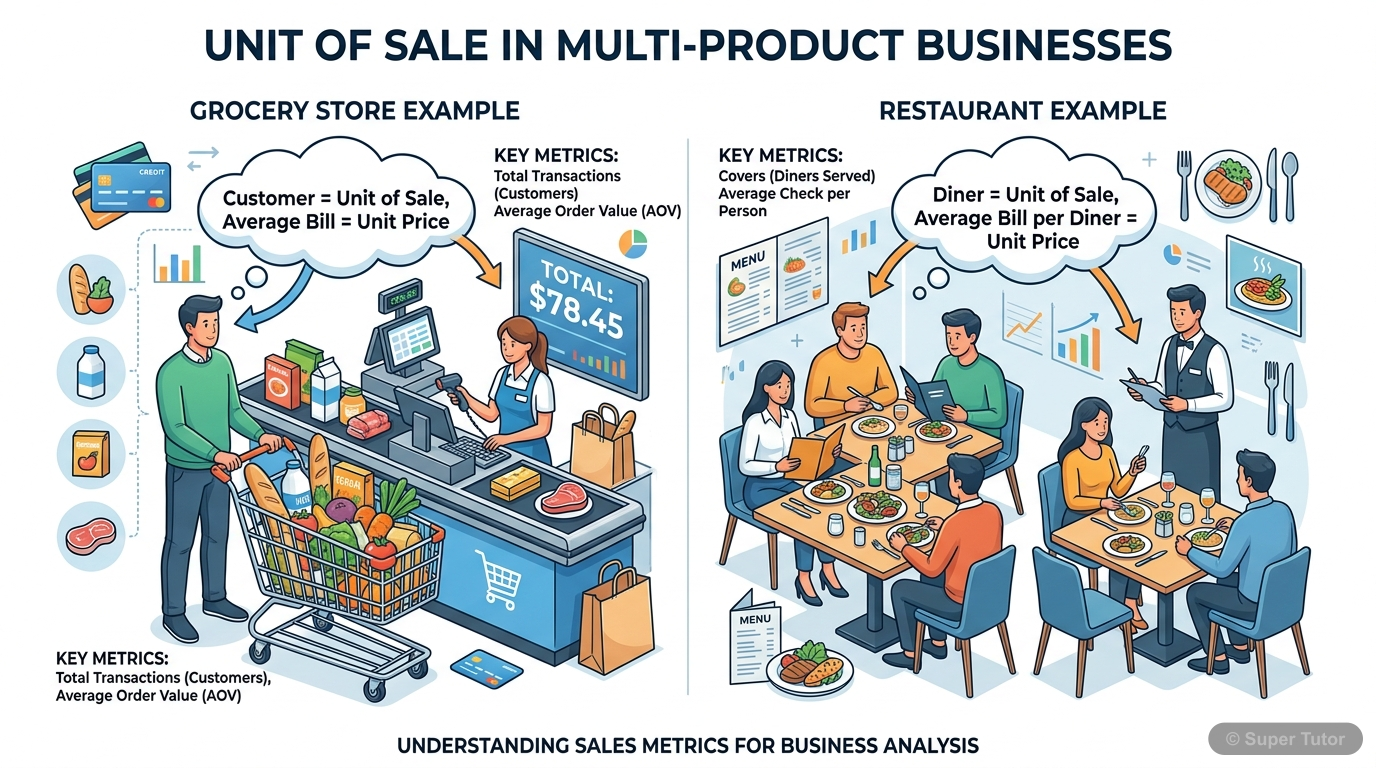
One of 21 illustrations for Business Arithmetic in Super Tutor — alongside flashcards, concept maps and practice questions.
Study Plan
Learn the Theory
Read the textbook chapter carefully. Note down definitions, formulas and key ideas. Focus on: Unit of Sale, Unit Price, and Unit Cost – Multiple Products, Break-Even Analysis – Multiple Products, Cash Flow Projection.
Practise
Solve the textbook exercises and extra practice questions.
Revise & Test
Revise key points without looking at your notes. Take a practice quiz and mark weak areas for another pass.
Spaced Revision
Come back to Business Arithmetic after a week. Use flashcards for quick recall and try past exam questions on this chapter.
What to Focus On
- Unit of Sale is a management tool to standardize measurement in multi-product businesses.
- For grocery stores and beauty parlours, 'Customer' is the unit of sale; for restaurants, 'Diner' is the unit of sale.
- Unit Price = Total Billed Amount ÷ Total Number of Customers/Diners.
- BEP for multiple products uses Weighted Average Contribution Margin (WACM).
- Sales Mix is the predetermined proportion in which multiple products are sold.
- WACM = Σ (CM per unit × Sales Mix %) for each product.
- Cash Flow = Movement of money in and out of a business.
- Cash Flow Projection is future-oriented; Cash Flow Statement is past-oriented.
- Opening Balance + Net Cash Flow = Closing Balance (which is next period's opening balance).
Common Mistakes to Avoid
Break-even quantity for multiple products is simply the sum of individual break-even quantities of each product
ROI and ROE will always give the same percentage, since both measure profitability
Unit Price means the price of one single item sold by the business
Memory Tips
Unit of Sale in Multi-Product Business
Weighted Average Unit Price Formula
Break-Even Point for Multiple Products
Sales Mix Assumptions for Break-Even
Want a personalised study plan?
Super Tutor builds a day-by-day plan for CBSE Class 12 Entrepreneurship that fits your exam date and pace.
Create My Study PlanFrequently Asked Questions
What are the important topics in Business Arithmetic for CBSE Class 12 Entrepreneurship?
Sources & Official References
- NCERT Official — ncert.nic.in
- CBSE Academic — cbseacademic.nic.in
- CBSE Official — cbse.gov.in
- National Education Policy 2020 — education.gov.in
Content is aligned to the official syllabus. Refer to the board website for the latest curriculum.
More resources for Business Arithmetic
For serious students
Get the full Business Arithmetic chapter — start free.
Quizzes, flashcards, an AI doubt solver and a study plan for CBSE Class 12 Entrepreneurship. Free to start, no card needed.