The Modern Indian Art — Concept Maps
CBSE · Class 12 · Fine Arts
4 concept maps of The Modern Indian Art for CBSE Class 12 Fine Arts, each also written out as a text outline. Part of the CBSE Class 12 Fine Arts syllabus.
Interactive on Super Tutor
Studying The Modern Indian Art? Get the full interactive chapter.
Quizzes, flashcards, AI doubt-solver and a step-by-step study plan — built for concept maps and more.
Free trial, no card needed.
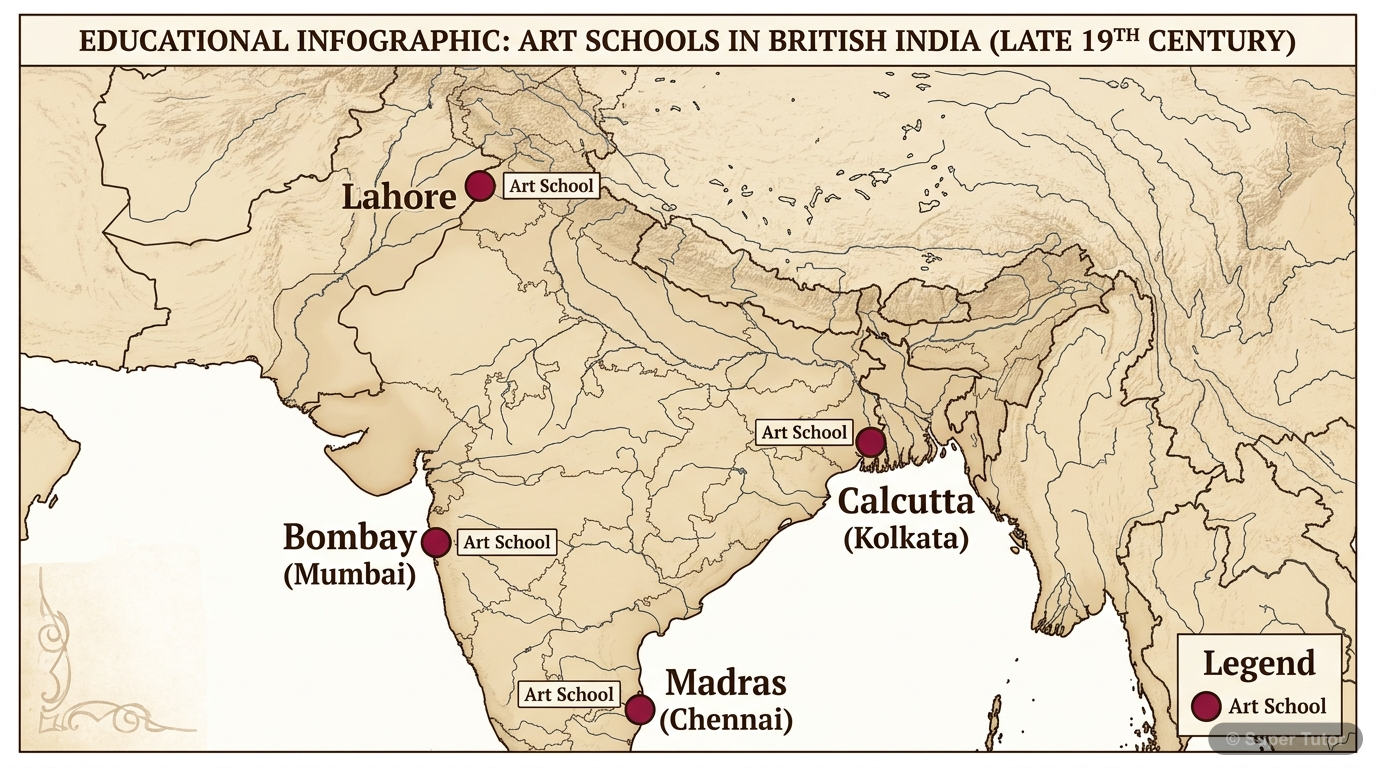
One of 14 illustrations for The Modern Indian Art in Super Tutor — alongside flashcards, concept maps and practice questions.
See them allEvolution of Modern Indian Art Movements
The map in words
- 1850s
- Colonial Art Schools Established
- Victorian Academic Training
- 1900s
- Bengal School Emerges
- Abanindranath Tagore
- 1919
- Kala Bhavana Founded
- Shantiniketan Movement
- 1930s
- Early Modernist Experiments
- Gaganendranath and Jamini Roy
- 1940s
- Progressive Artists Group
- Calcutta Group Formation
- 1960s
- Abstract and Neo-Tantric Art
- International Recognition
- 1980s
- New Figurative Movement
- Baroda School Narrative Art
- 1990s
- Contemporary New Media Art
- Globalization Impact
Modern Indian Art Movement Overview
The map in words
- Modern Indian Art
- Colonial Period
- Art Schools
- Calcutta
- Bombay
- Madras
- Lahore
- Bengal School
- Abanindranath Tagore
- E B Havell
- Nationalist Response
- Art Schools
- Early Modernists
- Tagore Family
- Gaganendranath
- Rabindranath
- Shantiniketan Artists
- Nandalal Bose
- Ramkinker Baij
- Benode Behari
- Individual Pioneers
- Jamini Roy
- Amrita Sher-Gil
- Tagore Family
- Post Independence
- Calcutta Group
- Social Realism
- Bengal Famine Impact
- Progressive Artists
- F N Souza
- M F Husain
- S H Raza
- Calcutta Group
- Contemporary Trends
- Neo-Tantric Art
- Biren De
- G R Santosh
- Narrative Painting
- Baroda School
- K G Subramanyan
- New Media
- Installation Art
- Digital Media
- Photography
- Neo-Tantric Art
- Colonial Period
Evolution of Modern Indian Art Movements
The map in words
- 1850s
- Colonial Art Schools Established
- 1890s
- Bengal School Emerges
- 1919
- Kala Bhavana Founded
- 1920s-30s
- Early Modernist Pioneers
- 1943
- Calcutta Group Formed
- 1946
- Progressive Artists Group Founded
- 1960s-70s
- Abstract and Neo-Tantric Art
- 1980s
- Narrative Revival
- 1990s
- New Media and Contemporary Art
Modern Indian art as a movement of nationalism, abstraction, political response, and new materials in painting, sculpture, and printmaking
The map in words
- Modern Indian art as a movement of nationalism, abstraction, political response, and new materials in painting, sculpture, and printmaking
- Bengal School of Art
- Kala Bhavana
- Tagore family artists
- Nandalal Bose line
- Jamini Roy
- Amrita Sher-Gil
- Political and social art
- Progressives and abstraction
Explore these maps interactively
Explore DiagramsFrequently Asked Questions
What are the important topics in The Modern Indian Art for CBSE Class 12 Fine Arts?
What do the concept maps for The Modern Indian Art show?
How should I revise The Modern Indian Art for the CBSE Class 12 board exam?
Sources & Official References
- NCERT Official — ncert.nic.in
- CBSE Academic — cbseacademic.nic.in
- CBSE Official — cbse.gov.in
- National Education Policy 2020 — education.gov.in
Content is aligned to the official syllabus. Refer to the board website for the latest curriculum.
More resources for The Modern Indian Art
Practice Quiz
Test yourself with a quick quiz
Important Questions
Exam-style questions with answers
Revision Notes
Key points for last-minute revision
Chapter Summary
Understand the chapter at a glance
Study Plan
Step-by-step plan for this chapter
Flashcards
Quick-fire cards for active recall
Syllabus
What topics to cover
NCERT Solutions
Every textbook question solved step by step
For serious students
Get the full The Modern Indian Art chapter — start free.
Quizzes, flashcards, an AI doubt solver and a study plan for CBSE Class 12 Fine Arts. Free to start, no card needed.