The Modern Indian Art — Chapter Summary
CBSE · Class 12 · Fine Arts
Summary of The Modern Indian Art for CBSE Class 12 Fine Arts. Part of the CBSE Class 12 Fine Arts syllabus. Modern Indian art emerged as a response.
Interactive on Super Tutor
Studying The Modern Indian Art? Get the full interactive chapter.
Quizzes, flashcards, AI doubt-solver and a step-by-step study plan — built for chapter summary and more.
Free trial, no card needed.
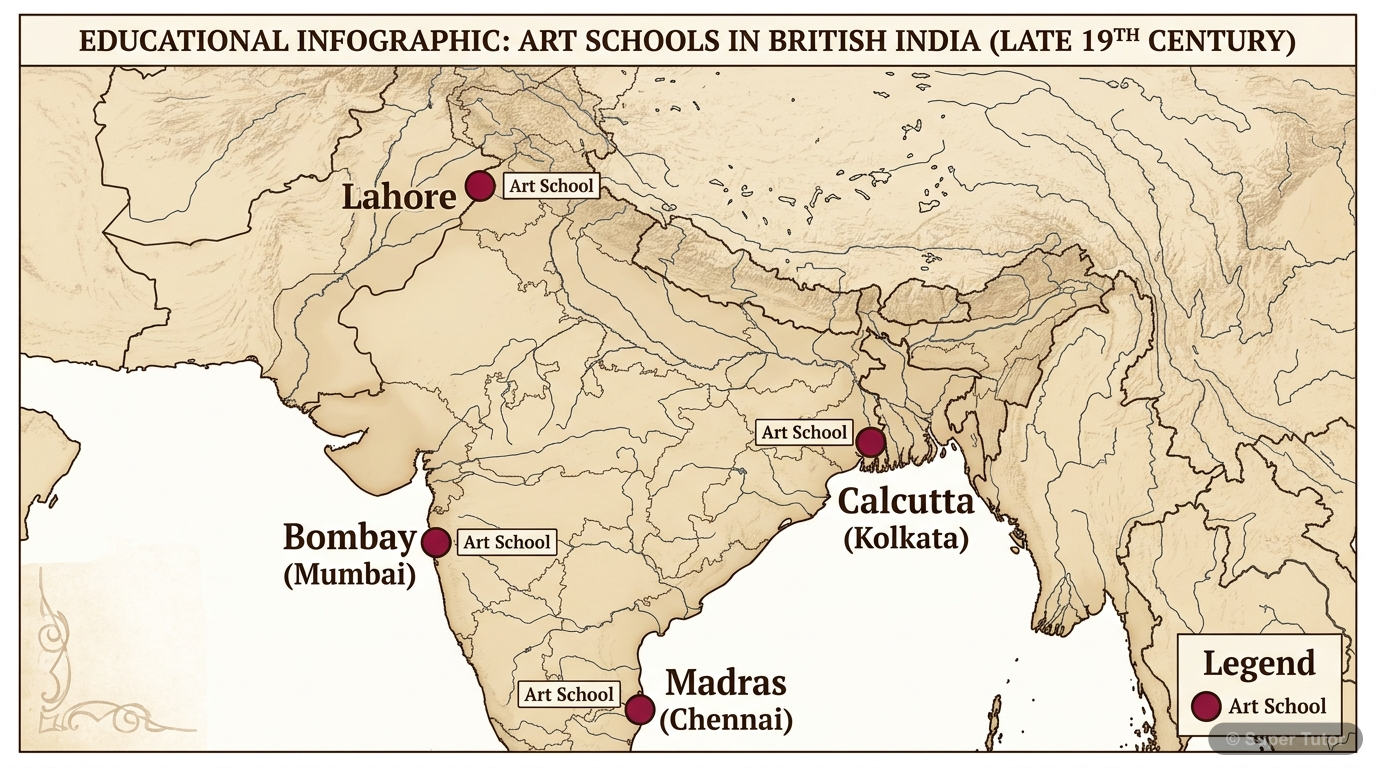
One of 14 illustrations for The Modern Indian Art in Super Tutor — alongside flashcards, concept maps and practice questions.
See them allOverview
Modern Indian art emerged as a response to colonial bias, academic realism, and the changing political and cultural life of India. The Bengal School of Art became the main nationalist artistic movement, and Kala Bhavana in Shantiniketan carried that spirit forward while also creating its own path. F
Key Concepts
British rule treated fine arts as
British rule treated fine arts as European and encouraged academic and naturalist styles in art schools of major cities. These schools often reflected
The Bengal School of Art
The Bengal School of Art was nurtured by Abanindranath Tagore and E. B. Havell. It became a major nationalist art movement that looked to Indian tradi
Kala Bhavana was set up
Kala Bhavana was set up in 1919 as part of Visva-Bharati University, conceptualised by Rabindranath Tagore. It was India’s first nationalist art schoo
Gaganendranath Tagore used the language
Gaganendranath Tagore used the language of Cubism to create a personal style. His paintings used vertical, horizontal, and diagonal lines, which were
Rabindranath Tagore turned to visual art
Rabindranath Tagore turned to visual art late in life. He developed a calligraphic doodle style from crossed-out words in his poems and created human
Learning Objectives
- Understand how modern Indian art developed against colonial attitudes and academic naturalism.
- Recognise the role of the Bengal School and Kala Bhavana in nationalist art.
- Identify major modern artists and their distinctive styles, themes, and media.
- Explain the shift from figurative art to abstraction and Neo-Tantric art.
- Relate art movements to social change, nationalism, and public concerns.
Frequently Asked Questions
What are the important topics in The Modern Indian Art for CBSE Class 12 Fine Arts?
How should I revise The Modern Indian Art for the CBSE Class 12 board exam?
Sources & Official References
- NCERT Official — ncert.nic.in
- CBSE Academic — cbseacademic.nic.in
- CBSE Official — cbse.gov.in
- National Education Policy 2020 — education.gov.in
Content is aligned to the official syllabus. Refer to the board website for the latest curriculum.
More resources for The Modern Indian Art
Practice Quiz
Test yourself with a quick quiz
Important Questions
Exam-style questions with answers
Revision Notes
Key points for last-minute revision
Concept Maps
See how topics connect
Study Plan
Step-by-step plan for this chapter
Flashcards
Quick-fire cards for active recall
Syllabus
What topics to cover
NCERT Solutions
Every textbook question solved step by step
For serious students
Get the full The Modern Indian Art chapter — start free.
Quizzes, flashcards, an AI doubt solver and a study plan for CBSE Class 12 Fine Arts. Free to start, no card needed.