Fashion Design and Merchandising — Study Plan
CBSE · Class 12 · Home Science
A step-by-step study plan for Fashion Design and Merchandising, CBSE Class 12 Home Science: what to learn first, what to practise and when to revise.
Interactive on Super Tutor
Studying Fashion Design and Merchandising? Get the full interactive chapter.
Quizzes, flashcards, AI doubt-solver and a step-by-step study plan — built for study plan and more.
Free trial, no card needed.
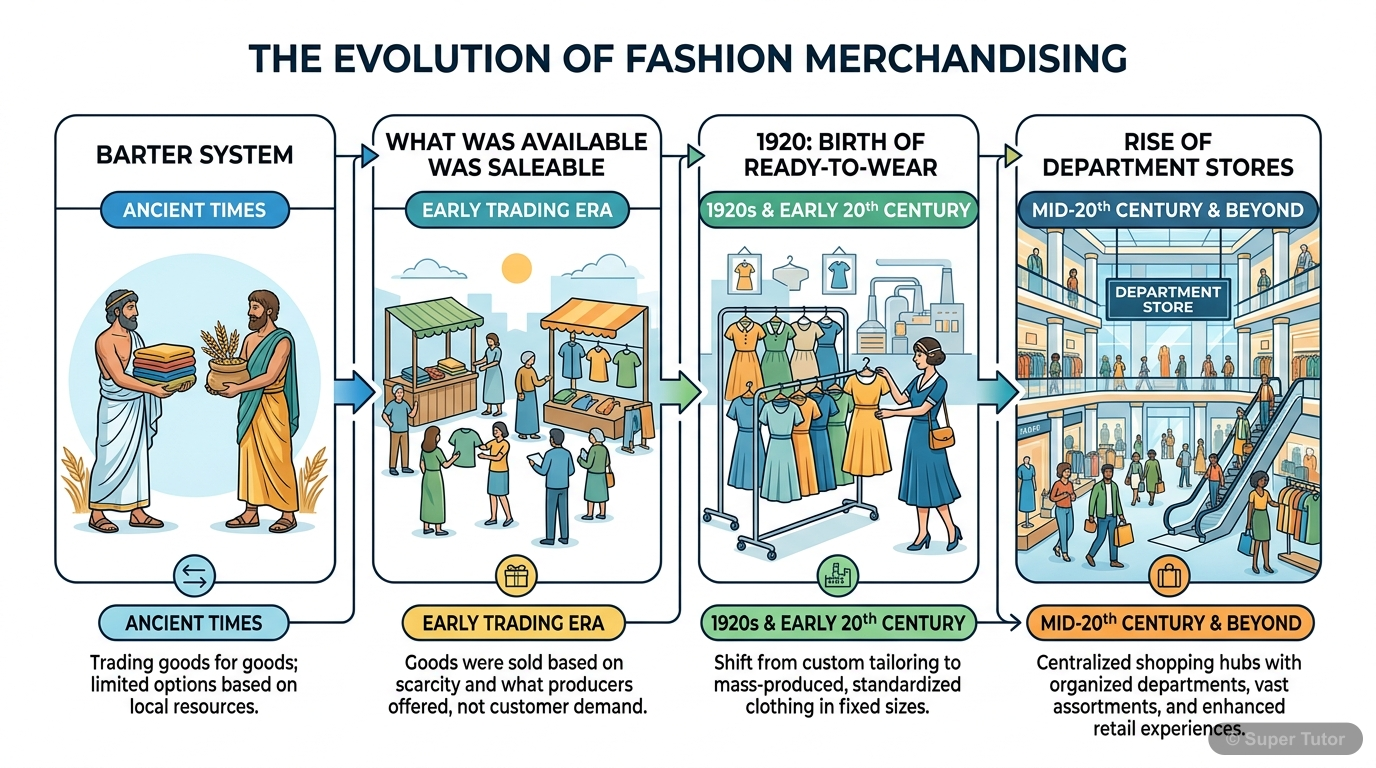
Learn better with visuals Super Tutor pairs illustrations like this with notes and quizzes for Fashion Design and Merchandising.
Get startedStudy Plan
Learn the Theory
Read the textbook chapter carefully. Note down definitions, formulas and key ideas. Focus on: 1. Basics of Fashion and Its Meaning, 2. Development of Fashion and France as the Centre of Fashion, 3. Historical Developments in Fashion and Clothing.
Practise
Solve the textbook exercises and extra practice questions. There are 55 questions available for this chapter.
Revise & Test
Revise key points without looking at your notes. Take a practice quiz and mark weak areas for another pass.
Spaced Revision
Come back to Fashion Design and Merchandising after a week. Use flashcards for quick recall and try past exam questions on this chapter.
What to Focus On
- Fashion means the most popular style at a given time.
- Style is a particular look that remains constant.
- Fads are short-lived and often disappear quickly.
- Modern fashion changed faster after the Renaissance.
- France dominated international fashion from the early 18th century.
- Royal court support and the silk industry made France the centre of fashion.
- Sewing machines made garment production faster and easier.
- Levi Strauss created durable pants in 1849 using tent and wagon-cover fabric.
- Denim jeans have stayed almost unchanged for nearly 150 years.
Common Mistakes to Avoid
Fashion and style mean the same thing.
Fads and classics are the same because both are popular styles.
Ready-to-wear and haute couture are the same thing.
Memory Tips
Fashion and style are different
Fads and classics
France became the centre of fashion
France's dominance over international fashion began in early 18th century
Want a personalised study plan?
Super Tutor builds a day-by-day plan for CBSE Class 12 Home Science that fits your exam date and pace.
Create My Study PlanFrequently Asked Questions
What are the important topics in Fashion Design and Merchandising for CBSE Class 12 Home Science?
How should I revise Fashion Design and Merchandising for the CBSE Class 12 board exam?
Sources & Official References
- NCERT Official — ncert.nic.in
- CBSE Academic — cbseacademic.nic.in
- CBSE Official — cbse.gov.in
- National Education Policy 2020 — education.gov.in
Content is aligned to the official syllabus. Refer to the board website for the latest curriculum.
More resources for Fashion Design and Merchandising
Practice Quiz
Test yourself with a quick quiz
Important Questions
Exam-style questions with answers
Revision Notes
Key points for last-minute revision
Chapter Summary
Understand the chapter at a glance
Concept Maps
See how topics connect
Flashcards
Quick-fire cards for active recall
Syllabus
What topics to cover
NCERT Solutions
Every textbook question solved step by step
For serious students
Get the full Fashion Design and Merchandising chapter — start free.
Quizzes, flashcards, an AI doubt solver and a study plan for CBSE Class 12 Home Science. Free to start, no card needed.