Fashion Design and Merchandising — Chapter Summary
CBSE · Class 12 · Home Science
Summary of Fashion Design and Merchandising for CBSE Class 12 Home Science. Part of the CBSE Class 12 Home Science syllabus.
Interactive on Super Tutor
Studying Fashion Design and Merchandising? Get the full interactive chapter.
Quizzes, flashcards, AI doubt-solver and a step-by-step study plan — built for chapter summary and more.
Free trial, no card needed.
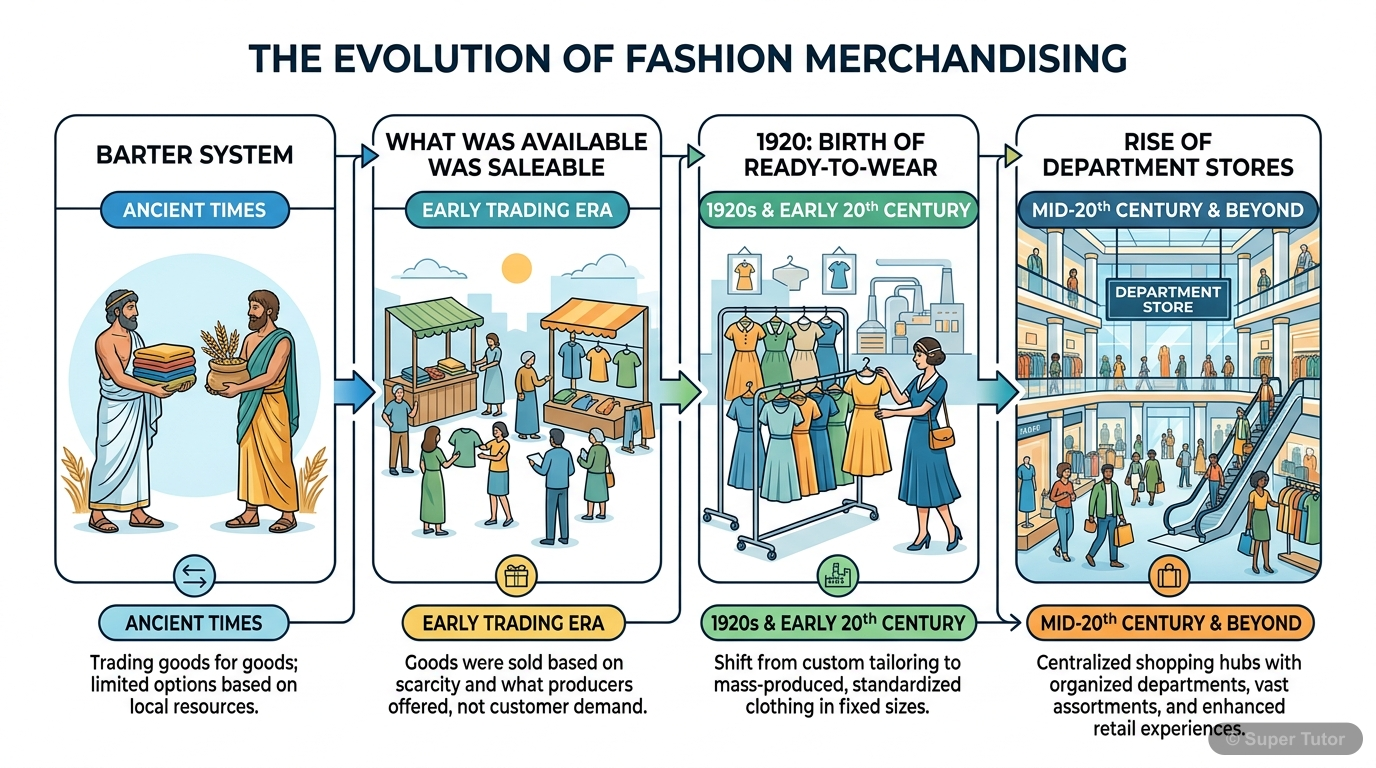
Learn better with visuals Super Tutor pairs illustrations like this with notes and quizzes for Fashion Design and Merchandising.
Get startedOverview
Fashion design and merchandising connects creativity with business. Fashion is the style most popular at a given time, while style is a particular look that remains constant. Fashion merchandising focuses on planning, buying, selling, promotion, and distribution so that the right merchandise reaches
Key Concepts
Fashion is the style or styles
Fashion is the style or styles most popular at a given time. Style is a particular look or characteristic in apparel or accessories that remains const
Fads are short
Fads are short-lived fashions that can disappear quickly, often within a single season. Classics stay accepted for a long time and do not become fully
France became the centre of fashion
France became the centre of fashion because of support from the royal court and the development of the silk industry there. By the early 18th century,
The Industrial Revolution improved textile
The Industrial Revolution improved textile and apparel production. In 1859, Issac Singer developed the foot treadle for the sewing machine, which left
In 1849
In 1849, Levi Strauss used fabric intended for tents and wagon covers to make long wearing pants with pockets for tools. These later became denims. De
Learning Objectives
- Explain the significance of fashion design and merchandising in the garment industry
- Describe the fundamentals of fashion and related terms
- Understand how fashion developed from handmade clothing to ready-to-wear
- Identify the role of merchandisers in manufacturing, buying, promotion, and selling
- Recognise the different levels of merchandising in the fashion industry
Frequently Asked Questions
What are the important topics in Fashion Design and Merchandising for CBSE Class 12 Home Science?
How should I revise Fashion Design and Merchandising for the CBSE Class 12 board exam?
Sources & Official References
- NCERT Official — ncert.nic.in
- CBSE Academic — cbseacademic.nic.in
- CBSE Official — cbse.gov.in
- National Education Policy 2020 — education.gov.in
Content is aligned to the official syllabus. Refer to the board website for the latest curriculum.
More resources for Fashion Design and Merchandising
Practice Quiz
Test yourself with a quick quiz
Important Questions
Exam-style questions with answers
Revision Notes
Key points for last-minute revision
Concept Maps
See how topics connect
Study Plan
Step-by-step plan for this chapter
Flashcards
Quick-fire cards for active recall
Syllabus
What topics to cover
NCERT Solutions
Every textbook question solved step by step
For serious students
Get the full Fashion Design and Merchandising chapter — start free.
Quizzes, flashcards, an AI doubt solver and a study plan for CBSE Class 12 Home Science. Free to start, no card needed.