Describing Motion Around Us — Practice Quiz
CBSE · Class 9 · Science
Try a 4-question quiz on Describing Motion Around Us for CBSE Class 9 Science: tap an answer to check it and see why.
Interactive on Super Tutor
Studying Describing Motion Around Us? Get the full interactive chapter.
Quizzes, flashcards, AI doubt-solver and a step-by-step study plan — built for practice quiz and more.
Free trial, no card needed.
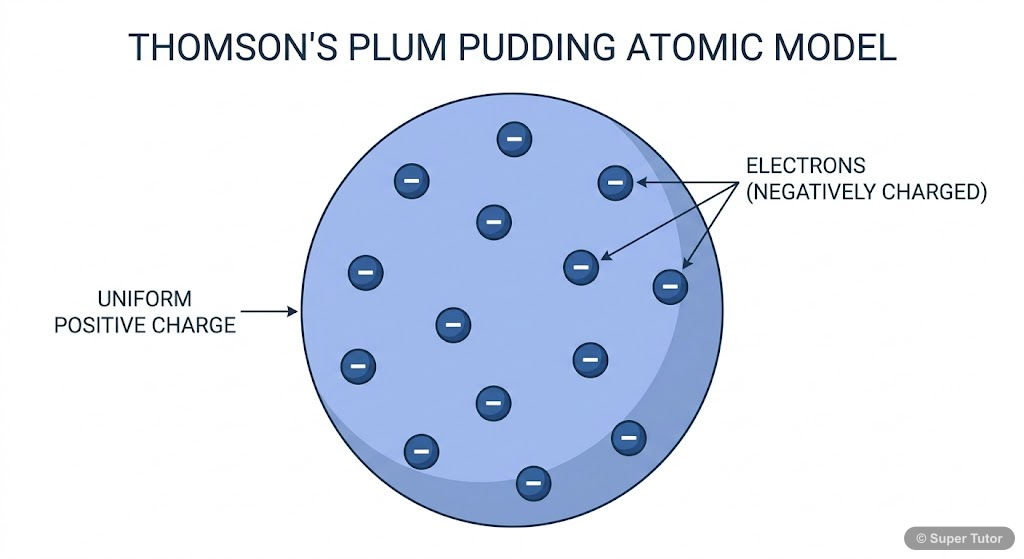
Learn better with visuals Super Tutor pairs illustrations like this with notes and quizzes for Describing Motion Around Us.
Quick Quiz: Describing Motion Around Us
0/4Tap an answer to check it instantly. No sign-up needed for these 4.
A bus starts from 36 km/h and increases its speed to 54 km/h in 10 s. What is its average acceleration?
A bus slows down from 54 km/h to rest in 5 s. What is its average acceleration?
A car moves at 54 km/h and brakes with a deceleration of 4 m s⁻². How much distance does it travel before stopping?
A car moves at 108 km/h and brakes with a deceleration of 4 m s⁻². How much distance does it travel before stopping?
Sample Questions
An athlete starts at O, reaches B at 4 s, reaches A at 10 s, and returns to B at 16 s. What are the total distance travelled and the displacement from 0 s to 16 s?
Show answer
160 m and 40 m in the positive direction
The path is O to A and then A back to B. Total distance = OA + AB = 100 m + 60 m = 160 m. Displacement is the straight-line change from O to B, which is 40 m in the positive direction.
A swimmer named Sarang takes 50 s to go from one end of a 25 m pool to the other end and back. What are his average speed and average velocity?
Show answer
1 m s⁻¹ and 0 m s⁻¹
The total distance travelled is 50 m because the swimmer goes 25 m forward and 25 m back. Average speed = 50/50 = 1 m s⁻¹. Displacement is zero because the swimmer returns to the starting point, so average velocity = 0/50 = 0 m s⁻¹.
A body in free fall starts from rest and its velocity becomes 9.8 m s⁻¹ after 1 s. What is its average acceleration?
Show answer
9.8 m s⁻²
Average acceleration = change in velocity / time interval = (9.8 - 0) / 1 = 9.8 m s⁻². In free fall, this acceleration is called g and acts downward.
A body in free fall starts from rest and its velocity becomes 19.6 m s⁻¹ after 2 s. What is its average acceleration?
Show answer
9.8 m s⁻²
Average acceleration = (19.6 - 0) / 2 = 9.8 m s⁻². The same value appears in each equal time interval for free fall.
+110 more questions on Describing Motion Around Us (CBSE Class 9 Science)
Practise AllFrequently Asked Questions
What are the important topics in Describing Motion Around Us for CBSE Class 9 Science?
How many practice questions are there for Describing Motion Around Us?
Sources & Official References
- NCERT Official — ncert.nic.in
- CBSE Academic — cbseacademic.nic.in
- CBSE Official — cbse.gov.in
- National Education Policy 2020 — education.gov.in
Content is aligned to the official syllabus. Refer to the board website for the latest curriculum.
More resources for Describing Motion Around Us
Important Questions
Exam-style questions with answers
Revision Notes
Key points for last-minute revision
Formula Sheet
The chapter's formulas in one place
Chapter Summary
Understand the chapter at a glance
Concept Maps
See how topics connect
Study Plan
Step-by-step plan for this chapter
Flashcards
Quick-fire cards for active recall
Syllabus
What topics to cover
NCERT Solutions
Every textbook question solved step by step
For serious students
Get the full Describing Motion Around Us chapter — start free.
Quizzes, flashcards, an AI doubt solver and a study plan for CBSE Class 9 Science. Free to start, no card needed.