Exploring Mixtures and their Separation — Practice Quiz
CBSE · Class 9 · Science
Try a 4-question quiz on Exploring Mixtures and their Separation for CBSE Class 9 Science: tap an answer to check it and see why.
Interactive on Super Tutor
Studying Exploring Mixtures and their Separation? Get the full interactive chapter.
Quizzes, flashcards, AI doubt-solver and a step-by-step study plan — built for practice quiz and more.
Free trial, no card needed.
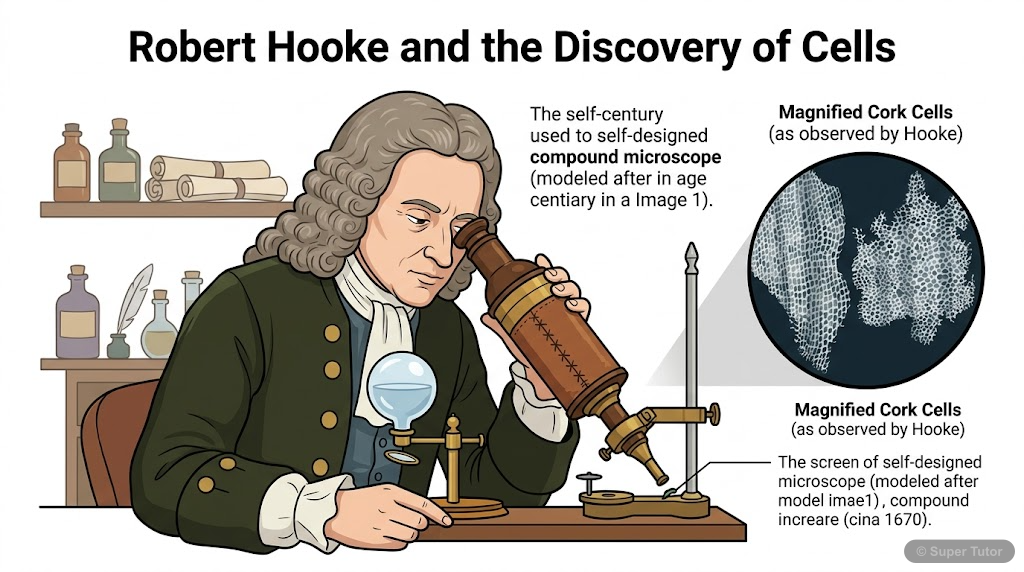
Learn better with visuals Super Tutor pairs illustrations like this with notes and quizzes for Exploring Mixtures and their Separation.
Quick Quiz: Exploring Mixtures and their Separation
0/4Tap an answer to check it instantly. No sign-up needed for these 4.
A student mixes 287 g of compound B with 100 g of water at 60°C. If the solution is cooled to 40°C, how much compound B will crystallize out?
A hot saturated solution contains 287 g of compound B dissolved in 100 g water at 60°C. After cooling to 40°C, what mass percentage of compound B remains dissolved in the solution, if the water mass stays 100 g?
A copper sulfate crystallization experiment starts with 25 mL water and 1 g copper sulfate, and more copper sulfate is added until saturation. If 7 g is added in total and the solution is then cooled, how much copper sulfate remains dissolved before any crystals form, assuming all 7 g dissolved?
A student prepares a mixture of 5 mL mustard oil and 20 mL water in a separating funnel. What is the ratio of mustard oil to water by volume?
Sample Questions
A saline drip contains 0.9% m/v sodium chloride. How many grams of sodium chloride are present in 750 mL of the solution?
Show answer
6.75 g
0.9% m/v means 0.9 g in 100 mL. For 750 mL, mass = (0.9/100) × 750 = 6.75 g.
A liquid pesticide spray is prepared by mixing 1 mL pesticide with water to make 100 mL solution. If 3 such sprays are made, what is the total volume of pesticide used?
Show answer
3 mL
Each 100 mL spray contains 1 mL pesticide. For 3 sprays, total pesticide used = 1 + 1 + 1 = 3 mL.
A sample of talcum powder contains 4% m/m zinc oxide. How much zinc oxide is present in 300 g of the powder?
Show answer
12 g
4% m/m means 4 g solute in 100 g solution. For 300 g powder, zinc oxide = (4/100) × 300 = 12 g.
A mixture of acetone and water is separated by distillation. If acetone boils at about 56°C and water boils at 100°C, what is the boiling point difference?
Show answer
44°C
Boiling point difference = 100°C - 56°C = 44°C. This is large enough for distillation.
+81 more questions on Exploring Mixtures and their Separation (CBSE Class 9 Science)
Practise AllFrequently Asked Questions
What are the important topics in Exploring Mixtures and their Separation for CBSE Class 9 Science?
How many practice questions are there for Exploring Mixtures and their Separation?
Sources & Official References
- NCERT Official — ncert.nic.in
- CBSE Academic — cbseacademic.nic.in
- CBSE Official — cbse.gov.in
- National Education Policy 2020 — education.gov.in
Content is aligned to the official syllabus. Refer to the board website for the latest curriculum.
More resources for Exploring Mixtures and their Separation
Important Questions
Exam-style questions with answers
Revision Notes
Key points for last-minute revision
Formula Sheet
The chapter's formulas in one place
Chapter Summary
Understand the chapter at a glance
Concept Maps
See how topics connect
Study Plan
Step-by-step plan for this chapter
Flashcards
Quick-fire cards for active recall
Syllabus
What topics to cover
NCERT Solutions
Every textbook question solved step by step
For serious students
Get the full Exploring Mixtures and their Separation chapter — start free.
Quizzes, flashcards, an AI doubt solver and a study plan for CBSE Class 9 Science. Free to start, no card needed.