Describing Motion Around Us — Syllabus
CBSE · Class 9 · Science
What Describing Motion Around Us covers in CBSE Class 9 Science: 4 topics, for the 2026-27 session. Part of the CBSE Class 9 Science syllabus.
Interactive on Super Tutor
Studying Describing Motion Around Us? Get the full interactive chapter.
Quizzes, flashcards, AI doubt-solver and a step-by-step study plan — built for syllabus and more.
Free trial, no card needed.
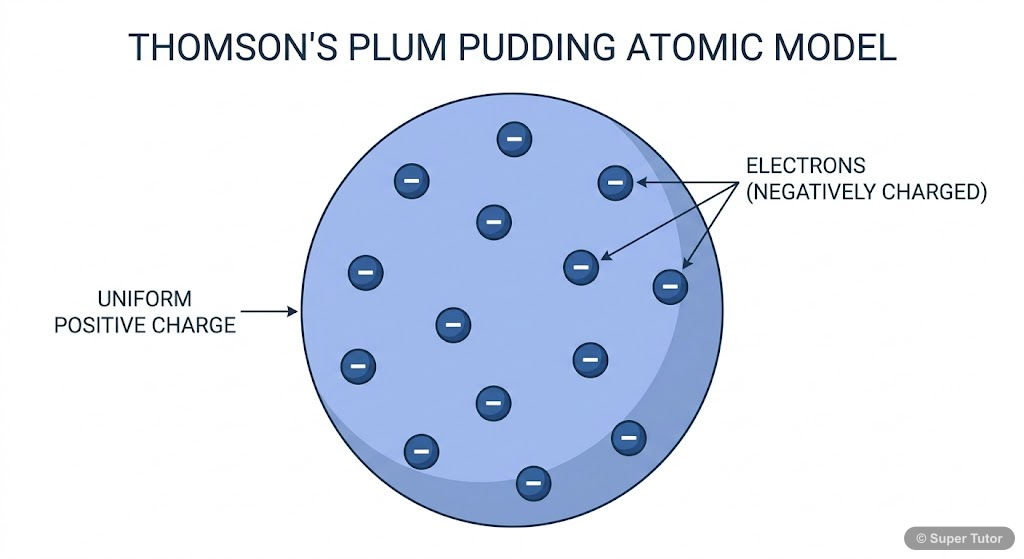
Learn better with visuals Super Tutor pairs illustrations like this with notes and quizzes for Describing Motion Around Us.
Topics in Describing Motion Around Us
1. Describing Position, Distance and Displacement
- Position is described with respect to a fixed reference point.
- For motion in a straight line, direction is shown by positive and negative signs.
- Instant of time and time interval are different: an instant is one clock reading, while a time interval is the duration between two readings.
2. Speed, Velocity and Average Values
- Average speed tells how fast an object moves without giving direction.
- Average velocity tells how fast position changes and in which direction.
- Average speed and average velocity have the same SI unit: m s⁻¹ or m/s.
3. Average Acceleration and Free Fall
- Acceleration is the rate of change of velocity.
- Average acceleration depends on change in velocity, not on speed alone.
- An object can move very fast and yet have zero acceleration if its velocity is constant.
4. Graphs of Motion
- Graphs help show how position, velocity, and acceleration change with time.
- A position-time graph for uniform motion is a straight line.
- A curved position-time graph shows non-uniform motion or accelerated motion.
Key Concepts
Central concept: Motion in straight line and motion in a plane
Work through every topic in Describing Motion Around Us with notes and quizzes
Start This ChapterFrequently Asked Questions
What are the important topics in Describing Motion Around Us for CBSE Class 9 Science?
How should I revise Describing Motion Around Us for Class 9 exams?
Sources & Official References
- NCERT Official — ncert.nic.in
- CBSE Academic — cbseacademic.nic.in
- CBSE Official — cbse.gov.in
- National Education Policy 2020 — education.gov.in
Content is aligned to the official syllabus. Refer to the board website for the latest curriculum.
More resources for Describing Motion Around Us
Practice Quiz
Test yourself with a quick quiz
Important Questions
Exam-style questions with answers
Revision Notes
Key points for last-minute revision
Formula Sheet
The chapter's formulas in one place
Chapter Summary
Understand the chapter at a glance
Concept Maps
See how topics connect
Study Plan
Step-by-step plan for this chapter
Flashcards
Quick-fire cards for active recall
NCERT Solutions
Every textbook question solved step by step
For serious students
Get the full Describing Motion Around Us chapter — start free.
Quizzes, flashcards, an AI doubt solver and a study plan for CBSE Class 9 Science. Free to start, no card needed.