Early Humans and Beginning of Civilisation — NCERT Solutions
CBSE · Class 9 · Social Science
NCERT Solutions for Early Humans and Beginning of Civilisation, CBSE Class 9 Social Science: 35 textbook questions solved step by step.
Interactive on Super Tutor
Studying Early Humans and Beginning of Civilisation? Get the full interactive chapter.
Quizzes, flashcards, AI doubt-solver and a step-by-step study plan — built for NCERT solutions and more.
Free trial, no card needed.
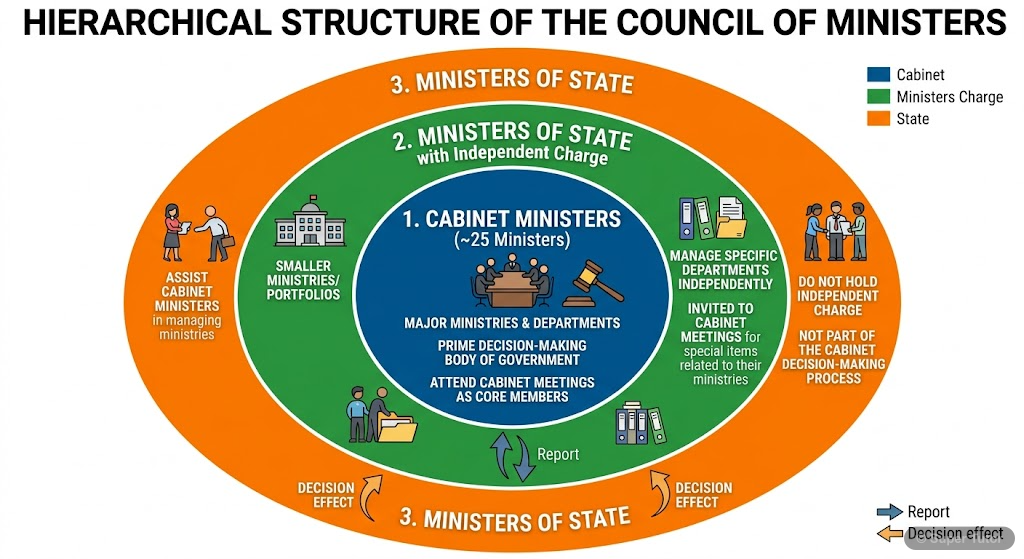
One of 2 illustrations for Early Humans and Beginning of Civilisation in Super Tutor — alongside flashcards, concept maps and practice questions.
The first 18 solutions are open to read. The other 17 are free with a Super Tutor account.
The Big Questions
1How did humans live on Earth before the beginning of civilisation?Show solution
Before civilisation, humans lived as hunter-gatherers. They moved from place to place in search of food, used stone tools, lived in caves or open camps, and later formed temporary settlements near rivers and lakes. In the Palaeolithic period they hunted animals, gathered plants, and depended directly on nature. Over time, they developed tools, techniques, and other forms of technology to survive changing environments.
2How did humans communicate before writing was invented?Show solution
Before writing was invented, humans communicated through speech, gestures, symbols, paintings, and engravings. Early humans also decorated cave walls and rock shelters with paintings and used symbols and motifs on pottery and seals. Such symbolic communication helped them express ideas before written language developed.
3How is archaeology helpful in understanding our past?Show solution
Archaeology helps us understand the past by studying material remains such as tools, bones, fossils, pottery, seals, buildings, and cave paintings. Since early history was before writing, these objects are the main sources used to reconstruct how people lived, what they ate, how they worked, and how their societies changed. Archaeologists also make and use similar tools to understand how ancient people used them.
4How did early civilisations interact with each other?Show solution
Early civilisations interacted through trade, contact between neighbouring regions, and the exchange of goods and ideas. The chapter says that Mesopotamia and the Sindhu–Sarasvatī valley were close to each other, so they had strong contacts and trade. Mesopotamian records mention trade with Dilmun, Magan, and Meluhha, and Meluhha is generally identified with the Harappan civilisation. Civilisations also influenced one another through technologies such as writing, craft production, and water management, though not all had direct contact.
Let's Explore
2Let us observe the images given above and answer the following questions.Show solution
Across the early human ancestors, the skulls show gradual changes. The earlier skulls are smaller and more sloping, while later ones become more rounded and closer to the shape of modern humans. Yes, the face also shows a gradual straightening over time. This reflects the evolutionary sequence from earlier ancestors to Homo sapiens.
3Observe the chart (Fig. 4.14) and identify the animals that were domesticated. Also try and identify the types of human habitats and objects that were used. Are any of these still used in present times?Show solution
The chart shows domesticated animals such as sheep, goats, cattle, and possibly pigs in different early farming regions. Human habitats include caves, temporary camps, huts, and village settlements. Objects used include stone tools, pottery, grinding stones, bows and arrows, and microliths. Some of these are still used today, such as village houses, pottery, bows/arrows for sport or hunting in some places, and grinding tools in modified form.
4Can you find out which countries constitute West Asia in present times?Show solution
The chapter says that modern West Asia includes mainly Iraq and Kuwait, with some parts of Turkey and southwestern Iran. So these are the countries/regions constituting West Asia in present times according to the text.
5Do you find any similarities between the temples in India and those of the Sumerian civilisation as centres of socio-cultural and economic activity?Show solution
Yes. The chapter says Sumerian temples, especially the ziggurats, were centres of social, cultural, and economic activity. Similarly, many Indian temples have also acted as places of worship and as centres where people gathered, and where economic and social activities took place. In both cases, religious institutions were closely connected with the life of the community, not just with prayer.
7Let us now learn more about how the Egyptian civilisation grew. Egypt saw the emergence of city-states around 3000 BCE as population increased and resources became available. The river Nile watered the land along its banks, and every summer the river flooded, leading to annual inundations, with rich mud, ‘kemet’, excellent for growing crops.Show solution
Egypt grew because the Nile made farming possible. Every year the river flooded and left behind rich mud called kemet, which was excellent for crops. Farmers also dug ditches to divert water into fields and stored water in reservoirs. Because of this water and fertile soil, population increased, city-states emerged around 3000 BCE, and organised government developed to manage irrigation and farming.
8Look at the social hierarchy pyramid in the image. What were the social classes of early Egypt? What were the different kinds of occupations? What could have been a typical daily routine of the people from each class?Show solution
The social hierarchy of early Egypt had the pharaohs at the top, followed by priests, nobles, officials, scribes, artisans, traders, farmers, labourers, and slaves. Different occupations included ruling, religious duties, administration, writing, craftwork, trade, farming, and manual labour. A typical daily routine would differ by class: pharaohs and nobles would govern and attend rituals; priests would perform religious duties; scribes would record information; farmers would work in fields; artisans and traders would make and sell goods; labourers would do heavy work; and slaves would perform the hardest tasks. Thus, daily life depended strongly on social rank.
12Let us observe the images given above and answer the following questions.
→ Do you notice any changes in the shape or features of the skulls across different ancestors?
→ Can you observe a gradual straightening of the face?Show solution
Yes. The skulls show changes in shape and features across ancestors. Earlier skulls look more sloping and less developed, while later skulls become more rounded and more like modern human skulls. These changes show the process of human evolution.
13Do you notice any changes in the shape or features of the skulls across different ancestors?Show solution
Yes. The skulls show gradual changes across different ancestors. The shape becomes more modern over time, with a larger and more rounded head and less pronounced features compared to earlier ancestors.
14Can you observe a gradual straightening of the face?Show solution
Yes. There is a gradual straightening of the face across the skulls. Earlier ancestors have a more projecting face, while later humans show a flatter, straighter facial profile.
Think About It
1Why do you think early humans left Africa to migrate to other regions?Show solution
Early humans likely left Africa because of changing climate and environmental conditions, and in search of food, water, and better living conditions. As populations grew and resources changed, they moved into other regions over long periods of time. The chapter says the spread happened in waves, including a major one around 125,000 years ago with early Homo sapiens.
2Why do you think the shift to farming during the Neolithic period is called a revolution rather than a simple change? Discuss with your classmates.Show solution
The shift to farming is called a revolution because it brought a major and lasting transformation in human life, not just a small change. People moved from hunting and gathering to food production, domesticated plants and animals, settled in permanent villages, made pottery and new tools, and eventually created the conditions for civilisation. Such a change affected economy, society, settlement, and technology all at once.
3Can you imagine how long-distance trade would have been affected had the Harappans not followed a standard system of weights?Show solution
Without a standard system of weights, long-distance trade would have become much harder. Buyers and sellers would not agree easily on quantity and value, so trade would be slow, unfair, and less trustworthy. The Harappans’ binary and decimal weight system made exchange and transport of goods more efficient.
4Why were rivers important in the growth of early civilisations?Show solution
Rivers were important because they provided water for farming, fertile soil through floods, and help in transport and trade. Civilisations like those of the Sindhu–Sarasvatī, Mesopotamia, Egypt, and China all grew in river valleys because rivers supported agriculture, settlement, and economic growth. Rivers also helped people manage irrigation and develop cities.
5Why do you think there is a scale with a heart on one side and a feather on the other (fig. 4.29)? What can this papyrus tell us about early Egyptian beliefs?Show solution
The scale with a heart on one side and a feather on the other shows the Egyptian belief in the judgement of the dead. They believed that after death the heart of a person would be weighed against the feather of truth. If the heart was light and pure, the person could live on after death. So the papyrus tells us that Egyptians believed in the soul, afterlife, and moral judgement.
Free with a Super Tutor account
Free with a Super Tutor account
Free with a Super Tutor account
- Which social classes do you think used these items?
- What clues in the images help you to make this guess?
Try to explain your reasoning based on the materials, designs, or accessories shown in the pictures.
Free with a Super Tutor account
Questions and activities
Free with a Super Tutor account
Free with a Super Tutor account
Free with a Super Tutor account
Free with a Super Tutor account
Free with a Super Tutor account
Free with a Super Tutor account
Free with a Super Tutor account
Free with a Super Tutor account
Free with a Super Tutor account
Free with a Super Tutor account
Free with a Super Tutor account
Don't Miss Out
Free with a Super Tutor account
Let's Recall
Free with a Super Tutor account
17 more solved questions in Early Humans and Beginning of Civilisation
They are free with a Super Tutor account, along with practice quizzes and flashcards for this chapter. Free to start, no card needed.
Frequently Asked Questions
What are the important topics in Early Humans and Beginning of Civilisation for CBSE Class 9 Social Science?
Are these NCERT Solutions for Early Humans and Beginning of Civilisation free?
How should I revise Early Humans and Beginning of Civilisation for Class 9 exams?
Sources & Official References
- NCERT Official — ncert.nic.in
- CBSE Academic — cbseacademic.nic.in
- CBSE Official — cbse.gov.in
- National Education Policy 2020 — education.gov.in
Content is aligned to the official syllabus. Refer to the board website for the latest curriculum.
More resources for Early Humans and Beginning of Civilisation
Practice Quiz
Test yourself with a quick quiz
Important Questions
Exam-style questions with answers
Revision Notes
Key points for last-minute revision
Chapter Summary
Understand the chapter at a glance
Concept Maps
See how topics connect
Study Plan
Step-by-step plan for this chapter
Flashcards
Quick-fire cards for active recall
Syllabus
What topics to cover
For serious students
Get the full Early Humans and Beginning of Civilisation chapter — start free.
Quizzes, flashcards, an AI doubt solver and a study plan for CBSE Class 9 Social Science. Free to start, no card needed.