Chapter 2 of 12
Concept Maps
Is Matter Around us Pure? — Concept Maps
Gujarat Board · Class 9 · Science
3 concept maps of Is Matter Around us Pure? for Gujarat Board Class 9 Science, each also written out as a text outline.
57 questions32 flashcards5 concepts
Interactive on Super Tutor
Studying Is Matter Around us Pure?? Get the full interactive chapter.
Quizzes, flashcards, AI doubt-solver and a step-by-step study plan — built for concept maps and more.
Free trial, no card needed.
Super Tutor
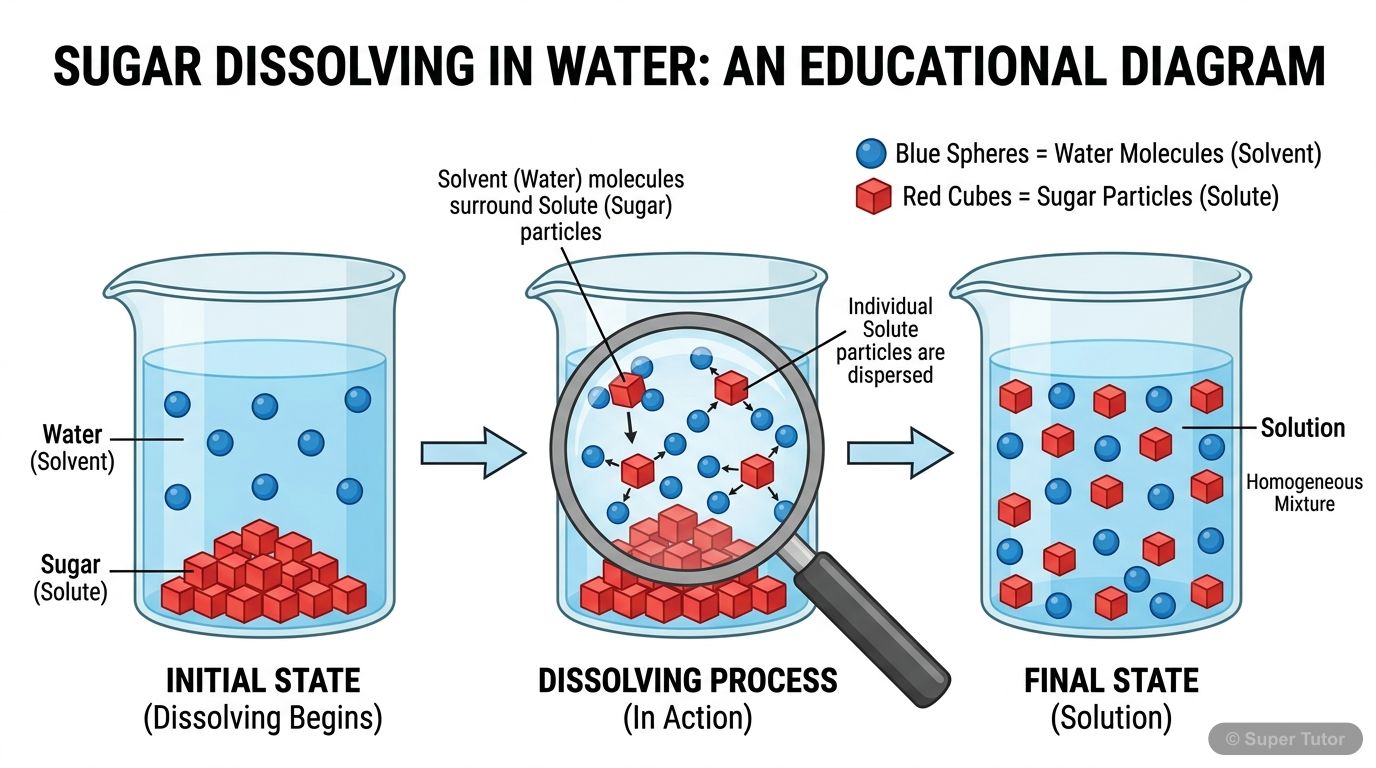
One of 2 illustrations for Is Matter Around us Pure? in Super Tutor — alongside flashcards, concept maps and practice questions.
3 Concept Maps
Chapter Overview — Is Matter Around Us Pure?
The map in words
- Is Matter Pure?
- Pure Substances
- Elements
- Metals
- Gold Silver Iron
- Non-metals
- Oxygen Carbon Sulphur
- Metalloids
- Silicon Boron Germanium
- Metals
- Compounds
- Fixed Composition
- Different Properties
- Examples
- Water H2O
- CaCO3
- NaCl
- Elements
- Mixtures
- Homogeneous
- Solution
- Solute and Solvent
- Concentration
- Saturated Solution
- Alloys
- Solution
- Heterogeneous
- Suspension
- Visible Particles
- Unstable Settles
- Colloid
- Tyndall Effect
- Stable
- Dispersed Phase
- Suspension
- Homogeneous
- Changes
- Physical Change
- No New Substance
- Reversible
- Chemical Change
- New Substance Formed
- Irreversible
- Physical Change
- Separation Techniques
- Evaporation
- Filtration
- Centrifugation
- Magnetic Separation
- Chromatography
- Sublimation
- Pure Substances
Classification of matter into pure substances and mixtures, with further subdivision into categories
The map in words
- Matter
- Pure Substances
- Elements
- Compounds
- Mixtures
- Homogeneous
- Heterogeneous
- Pure Substances
Mind map showing key characteristics, types, and separation methods for mixtures
The map in words
- Mixtures
- Characteristics
- Two or more substances
- No new substance formed
- Variable composition
- Retains original properties
- Types
- Homogeneous
- Heterogeneous
- Separation
- Physical methods
- Evaporation
- Filtration
- Distillation
- Characteristics
Explore these maps interactively
Explore DiagramsFrequently Asked Questions
What are the important topics in Is Matter Around us Pure? for Gujarat Board Class 9 Science?
Key topics in Is Matter Around us Pure? include Pure Substances vs Mixtures, Types of Mixtures — Homogeneous and Heterogeneous, Solutions — Properties and Concentration, Suspensions and Colloids — Properties and Tyndall Effect. Study these first, then practise questions on each for Class 9 exams.
What do the concept maps for Is Matter Around us Pure? show?
The 3 maps show how the ideas in Is Matter Around us Pure? connect: Chapter Overview — Is Matter Around Us Pure?; Classification of matter into pure substances and mixtures, with further subdivision into categories. Each map is also written out as an outline on this page.
How should I revise Is Matter Around us Pure? for Class 9 exams?
Learn the core ideas first, then work through the 57 practice questions on Is Matter Around us Pure?. Revise definitions regularly and use flashcards for quick recall before the exam.
Sources & Official References
Content is aligned to the official syllabus. Refer to the board website for the latest curriculum.
More resources for Is Matter Around us Pure?
For serious students
Get the full Is Matter Around us Pure? chapter — start free.
Quizzes, flashcards, an AI doubt solver and a study plan for Gujarat Board Class 9 Science. Free to start, no card needed.