Elasticity of Demand — Practice Quiz
ICSE · Class 10 · Economics
Try a 4-question quiz on Elasticity of Demand for ICSE Class 10 Economics: tap an answer to check it and see why. 41 questions in the full chapter test.
Interactive on Super Tutor
Studying Elasticity of Demand? Get the full interactive chapter.
Quizzes, flashcards, AI doubt-solver and a step-by-step study plan — built for practice quiz and more.
Free trial, no card needed.
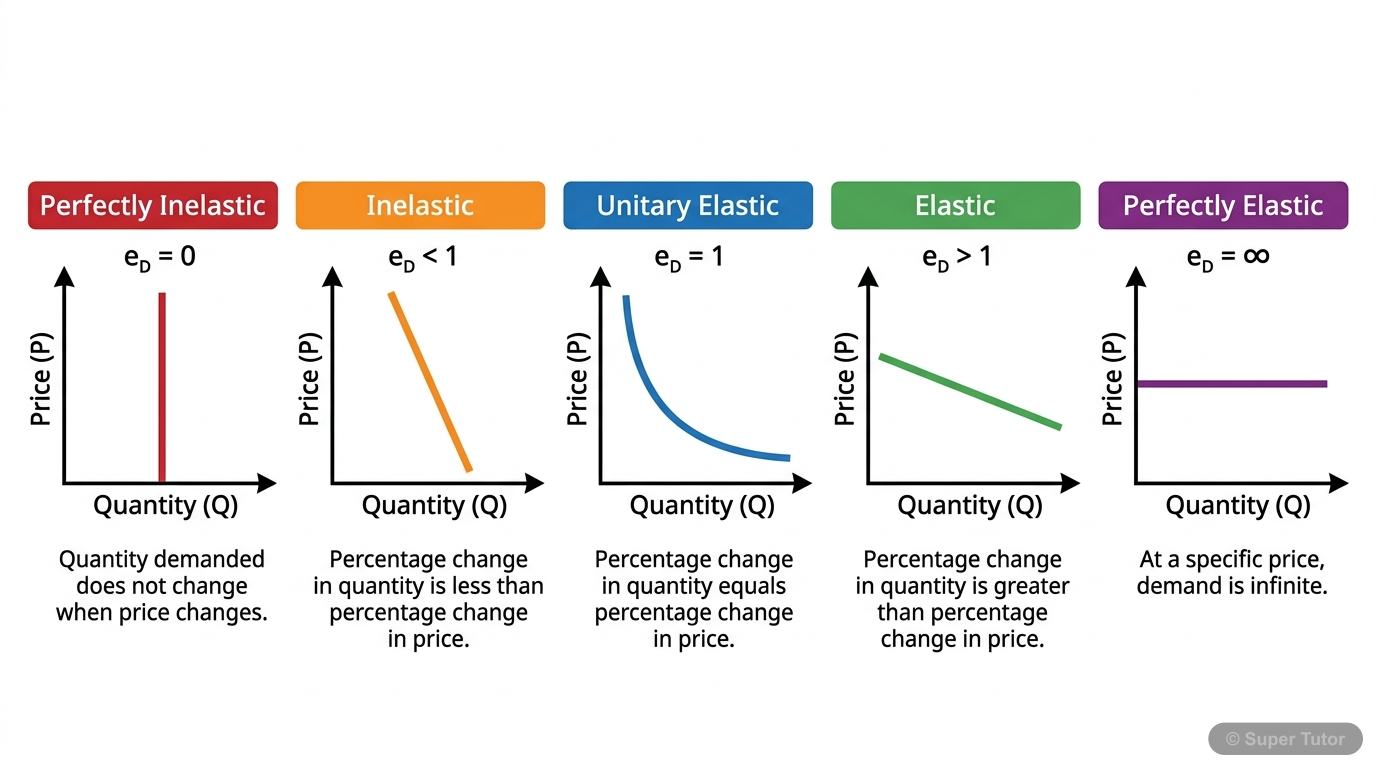
One of 3 illustrations for Elasticity of Demand in Super Tutor — alongside flashcards, concept maps and practice questions.
See them allQuick Quiz: Elasticity of Demand
0/4Tap an answer to check it instantly. No sign-up needed for these 4.
What does price elasticity of demand measure?
What is the formula for calculating price elasticity of demand using the percentage method?
When the price elasticity coefficient is exactly equal to 1, the demand is called:
What shape does a perfectly inelastic demand curve take?
Sample Questions
Which of the following goods typically have inelastic demand?
Show answer
Salt, Life-saving medicines, Basic food items like wheat
Necessities like salt, medicines, and basic food items have inelastic demand because people need them regardless of price changes. Luxury items like cars and designer clothes have elastic demand.
Which factor makes the demand for a good more elastic?
Show answer
Availability of close substitutes
When close substitutes are available, consumers can easily switch to alternatives if the price rises, making demand more elastic. Necessities, goods with no substitutes, and habit-forming goods have inelastic demand.
What does it mean when the price elasticity coefficient is greater than 1?
Show answer
Demand is elastic
According to the percentage method, when the coefficient of price elasticity (Ed) works out to be greater than 1, it means the percentage change in quantity demanded is larger than the percentage change in price, a situation classified as elastic demand. This contrasts with inelastic demand, where Ed is less than 1, and unit elastic demand, where Ed equals exactly 1.
Which of the following factors affect price elasticity of demand?
Show answer
Nature of the commodity, Availability of substitutes, Time period, Consumer's habits
All these factors influence price elasticity: nature of commodity (necessity vs luxury), substitute availability, time period for adjustment, and consumer habits all determine how responsive demand is to price changes.
+37 more questions on Elasticity of Demand (ICSE Class 10 Economics)
Practise AllFrequently Asked Questions
What are the important topics in Elasticity of Demand for ICSE Class 10 Economics?
How many practice questions are there for Elasticity of Demand?
Sources & Official References
Content is aligned to the official syllabus. Refer to the board website for the latest curriculum.
More resources for Elasticity of Demand
Important Questions
Exam-style questions with answers
Revision Notes
Key points for last-minute revision
Formula Sheet
The chapter's formulas in one place
Chapter Summary
Understand the chapter at a glance
Concept Maps
See how topics connect
Study Plan
Step-by-step plan for this chapter
Flashcards
Quick-fire cards for active recall
Syllabus
What topics to cover
For serious students
Get the full Elasticity of Demand chapter — start free.
Quizzes, flashcards, an AI doubt solver and a study plan for ICSE Class 10 Economics. Free to start, no card needed.