Agriculture in India - I: Introduction — Study Plan
ICSE · Class 10 · Geography
A step-by-step study plan for Agriculture in India - I: Introduction, ICSE Class 10 Geography: what to learn first, what to practise and when to revise.
Interactive on Super Tutor
Studying Agriculture in India - I: Introduction? Get the full interactive chapter.
Quizzes, flashcards, AI doubt-solver and a step-by-step study plan — built for study plan and more.
Free trial, no card needed.
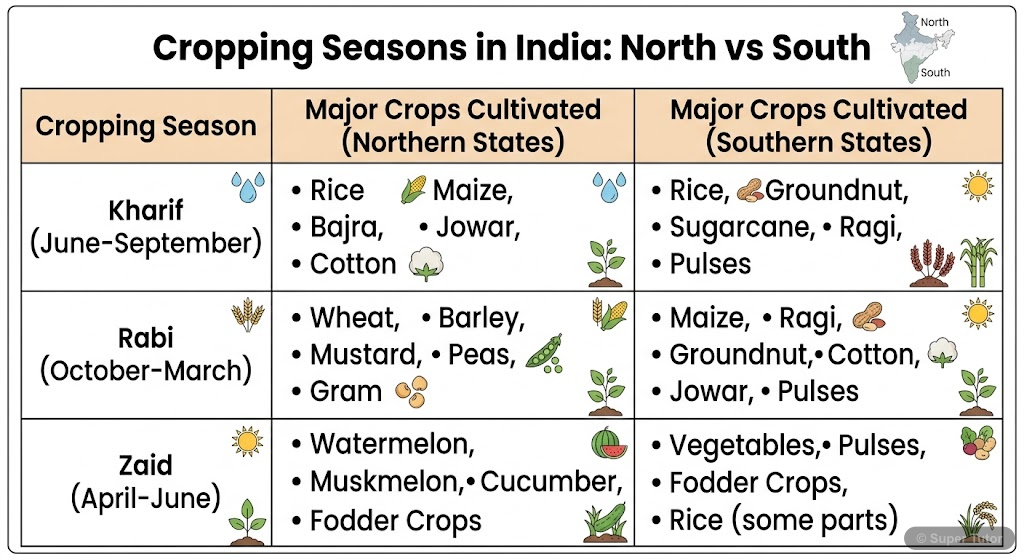
One of 7 illustrations for Agriculture in India - I: Introduction in Super Tutor — alongside flashcards, concept maps and practice questions.
See them allStudy Plan
Learn the Theory
Read the textbook chapter carefully. Note down definitions, formulas and key ideas. Focus on: 1. Importance and Salient Features of Indian Agriculture, 2. Crop Seasons in India, 3. Green Revolution.
Practise
Solve the textbook exercises and extra practice questions. There are 39 questions available for this chapter.
Revise & Test
Revise key points without looking at your notes. Take a practice quiz and mark weak areas for another pass.
Spaced Revision
Come back to Agriculture in India - I: Introduction after a week. Use flashcards for quick recall and try past exam questions on this chapter.
What to Focus On
- Agriculture is the backbone of the Indian economy.
- It provides food, fodder, raw materials, employment, and foreign exchange.
- Agriculture contributes around 17-18% to GDP.
- Indian agriculture depends heavily on monsoon rainfall.
- Large-scale irrigation serves only one-third of crop area.
- India grows many kinds of crops.
- Kharif: sowing in June, harvesting in early November.
- Rabi: ground preparation at the end of October or beginning of November, harvesting in March.
- Zaid: summer crop season.
Common Mistakes to Avoid
Agriculture in India is mainly dependent on irrigation and not on monsoon.
Subsistence farming means farming for sale in the market.
Commercial farming means using only large farms and growing only cash crops on huge estates.
Memory Tips
Meaning of agriculture
Importance of agriculture in India
Net sown area and cultivated area
Dependence of population on agriculture
Want a personalised study plan?
Super Tutor builds a day-by-day plan for ICSE Class 10 Geography that fits your exam date and pace.
Create My Study PlanFrequently Asked Questions
What are the important topics in Agriculture in India - I: Introduction for ICSE Class 10 Geography?
How should I revise Agriculture in India - I: Introduction for the ICSE Class 10 board exam?
Sources & Official References
Content is aligned to the official syllabus. Refer to the board website for the latest curriculum.
More resources for Agriculture in India - I: Introduction
Practice Quiz
Test yourself with a quick quiz
Important Questions
Exam-style questions with answers
Revision Notes
Key points for last-minute revision
Chapter Summary
Understand the chapter at a glance
Concept Maps
See how topics connect
Flashcards
Quick-fire cards for active recall
Syllabus
What topics to cover
For serious students
Get the full Agriculture in India - I: Introduction chapter — start free.
Quizzes, flashcards, an AI doubt solver and a study plan for ICSE Class 10 Geography. Free to start, no card needed.