Chemical Bonding and Molecular Structure — Study Plan
ICSE · Class 11 · Chemistry
A step-by-step study plan for Chemical Bonding and Molecular Structure, ICSE Class 11 Chemistry: what to learn first, what to practise and when to revise.
Interactive on Super Tutor
Studying Chemical Bonding and Molecular Structure? Get the full interactive chapter.
Quizzes, flashcards, AI doubt-solver and a step-by-step study plan — built for study plan and more.
Free trial, no card needed.
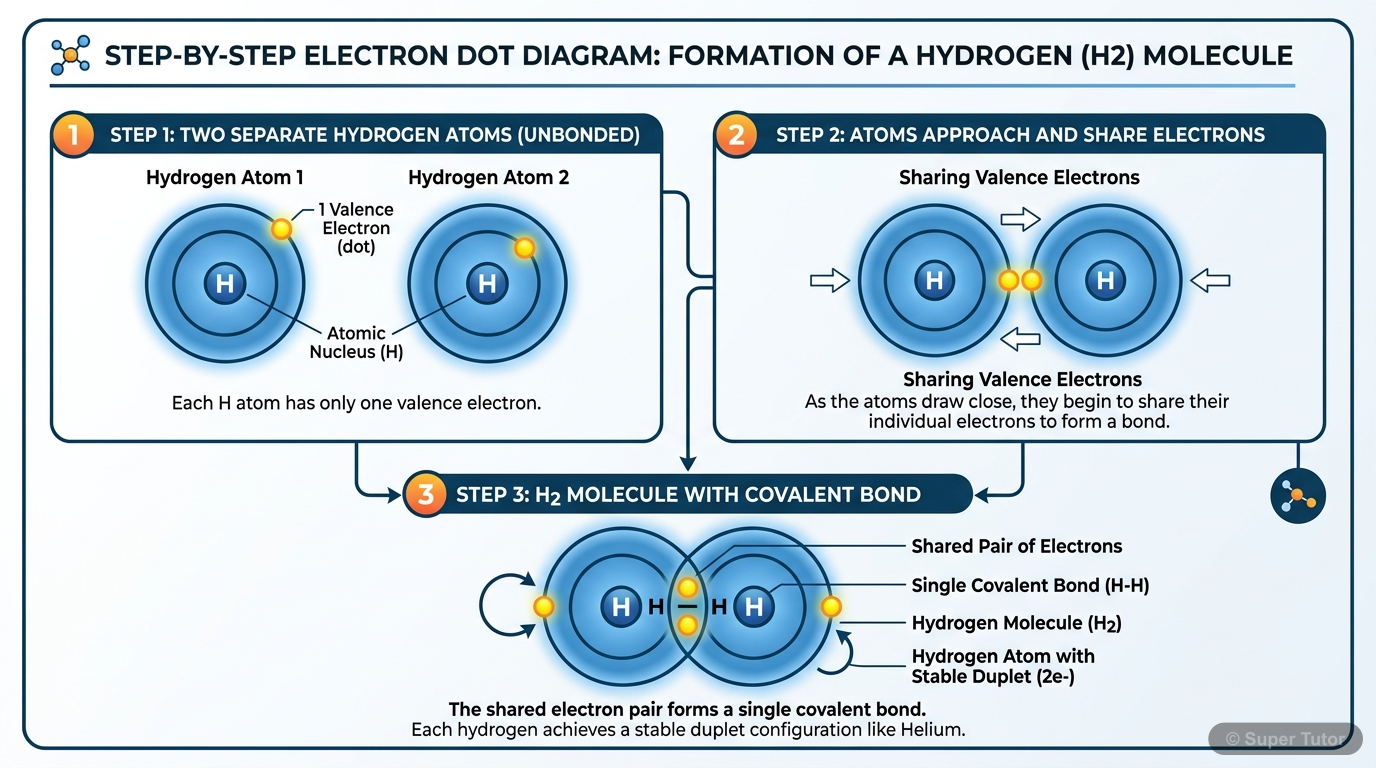
Learn better with visuals Super Tutor pairs illustrations like this with notes and quizzes for Chemical Bonding and Molecular Structure.
Study Plan
Learn the Theory
Read the textbook chapter carefully. Note down definitions, formulas and key ideas. Focus on: 1. Why Atoms Combine and the Octet Rule, 2. Ionic Bonding and Ionic Compounds, 3. Born-Haber Cycle and Lattice Energy.
Practise
Solve the textbook exercises and extra practice questions. There are 109 questions available for this chapter.
Revise & Test
Revise key points without looking at your notes. Take a practice quiz and mark weak areas for another pass.
Spaced Revision
Come back to Chemical Bonding and Molecular Structure after a week. Use flashcards for quick recall and try past exam questions on this chapter.
What to Focus On
- Atoms combine to attain stability and lower potential energy.
- Noble gases are stable because their valence shells are complete.
- Lewis octet rule is based on stable noble gas configuration.
- Ionic bond involves complete transfer of electrons.
- Ionic compounds are formed between metals and non-metals.
- Groups 1 and 2 form cations; groups 15, 16, and 17 form anions.
- Born-Haber cycle combines all energy steps in ionic bond formation.
- It helps calculate lattice energy and heat of formation.
- NaCl has a negative heat of formation, showing stable formation.
Common Mistakes to Avoid
An ionic bond is just a stronger covalent bond.
The octet rule works for every atom in every molecule.
PF5 and SF6 cannot exist because third-period atoms must always follow the octet rule.
Memory Tips
Octet rule and its basic idea
Hydrogen and lithium as octet exceptions
BeF2, BeCl2, BF3, BCl3 as incomplete octet examples
PF5, PCl5, SF6 as expanded octet examples
Want a personalised study plan?
Super Tutor builds a day-by-day plan for ICSE Class 11 Chemistry that fits your exam date and pace.
Create My Study PlanFrequently Asked Questions
What are the important topics in Chemical Bonding and Molecular Structure for ICSE Class 11 Chemistry?
How should I revise Chemical Bonding and Molecular Structure for Class 11 exams?
Sources & Official References
Content is aligned to the official syllabus. Refer to the board website for the latest curriculum.
More resources for Chemical Bonding and Molecular Structure
Practice Quiz
Test yourself with a quick quiz
Important Questions
Exam-style questions with answers
Revision Notes
Key points for last-minute revision
Formula Sheet
The chapter's formulas in one place
Chapter Summary
Understand the chapter at a glance
Concept Maps
See how topics connect
Flashcards
Quick-fire cards for active recall
Syllabus
What topics to cover
For serious students
Get the full Chemical Bonding and Molecular Structure chapter — start free.
Quizzes, flashcards, an AI doubt solver and a study plan for ICSE Class 11 Chemistry. Free to start, no card needed.