Chapter 5 of 23
Revision Notes
Sole Trader or Sole Proprietorship — Revision Notes
ICSE · Class 11 · Commerce
Sole Trader or Sole Proprietorship revision notes for ICSE Class 11 Commerce: 4 topics in quick points. Part of the ICSE Class 11 Commerce syllabus.
45 questions40 flashcards5 concepts
Interactive on Super Tutor
Studying Sole Trader or Sole Proprietorship? Get the full interactive chapter.
Quizzes, flashcards, AI doubt-solver and a step-by-step study plan — built for revision notes and more.
Free trial, no card needed.
Super Tutor
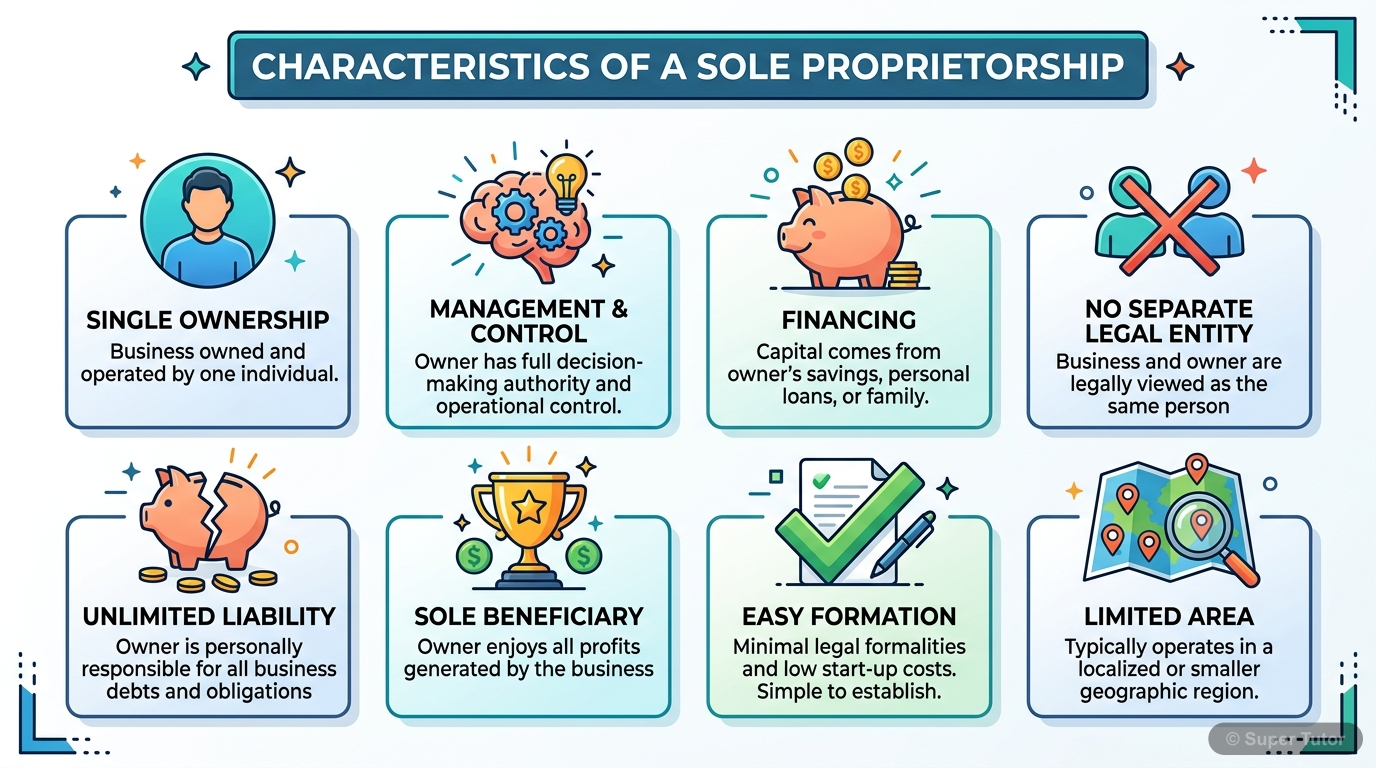
Learn better with visuals Super Tutor pairs illustrations like this with notes and quizzes for Sole Trader or Sole Proprietorship.
Key Topics to Revise
1
Meaning and Definitions
- A sole trade business is started and managed by one person.
- Only that person is responsible for profits and losses.
- A sole trader is also called an individual entrepreneur, sole organiser, sole owner, or sole proprietor.
2
Definitions by Authors
- Kimball and Kimball describe the individual proprietor as the supreme judge of business matters, subject to general laws and special legislation.
- C.W. Grestenberg describes sole proprietorship as a business enterprise owned by an individual who is usually the manager and pivot of the business.
- L.H. Haney describes it as an organisation headed by one individual who is responsible, directs operations, and alone runs the risk of failure.
3
Essential Characteristics
- Individual proprietorship: one person controls the business and is responsible for all affairs.
- Sole management: the sole trader manages the business personally, though helpers may be appointed.
- Unlimited liabilities: business debts can be paid from private property if business assets are not enough.
4
Merits of Sole Trade
- Easy to start: there are few formalities and the business can begin quickly.
- Prompt decisions: the owner does not need to consult others, so decisions are fast.
- Secrecy: business information can be kept confidential, which helps in competition.
Get complete notes with diagrams and examples
Full NotesKey Concepts
Sole trade is a business startedA sole trader is also knownKimball and Kimball describe the individualThe control of the business remainsThe sole trader is the sole
Frequently Asked Questions
What are the important topics in Sole Trader or Sole Proprietorship for ICSE Class 11 Commerce?
Key topics in Sole Trader or Sole Proprietorship include Meaning and Definitions, Definitions by Authors, Essential Characteristics, Merits of Sole Trade. Study these first, then practise questions on each for Class 11 exams.
How should I revise Sole Trader or Sole Proprietorship for Class 11 exams?
Learn the core ideas first, then work through the 45 practice questions on Sole Trader or Sole Proprietorship. Revise definitions regularly and use flashcards for quick recall before the exam.
Sources & Official References
Content is aligned to the official syllabus. Refer to the board website for the latest curriculum.
More resources for Sole Trader or Sole Proprietorship
For serious students
Get the full Sole Trader or Sole Proprietorship chapter — start free.
Quizzes, flashcards, an AI doubt solver and a study plan for ICSE Class 11 Commerce. Free to start, no card needed.