Emotions and Motivation — Chapter Summary
ICSE · Class 11 · Psychology
Summary of Emotions and Motivation for ICSE Class 11 Psychology. Key concepts: Emotion is a stirred, Emotion is subjective and Emotion is linked.
Interactive on Super Tutor
Studying Emotions and Motivation? Get the full interactive chapter.
Quizzes, flashcards, AI doubt-solver and a step-by-step study plan — built for chapter summary and more.
Free trial, no card needed.
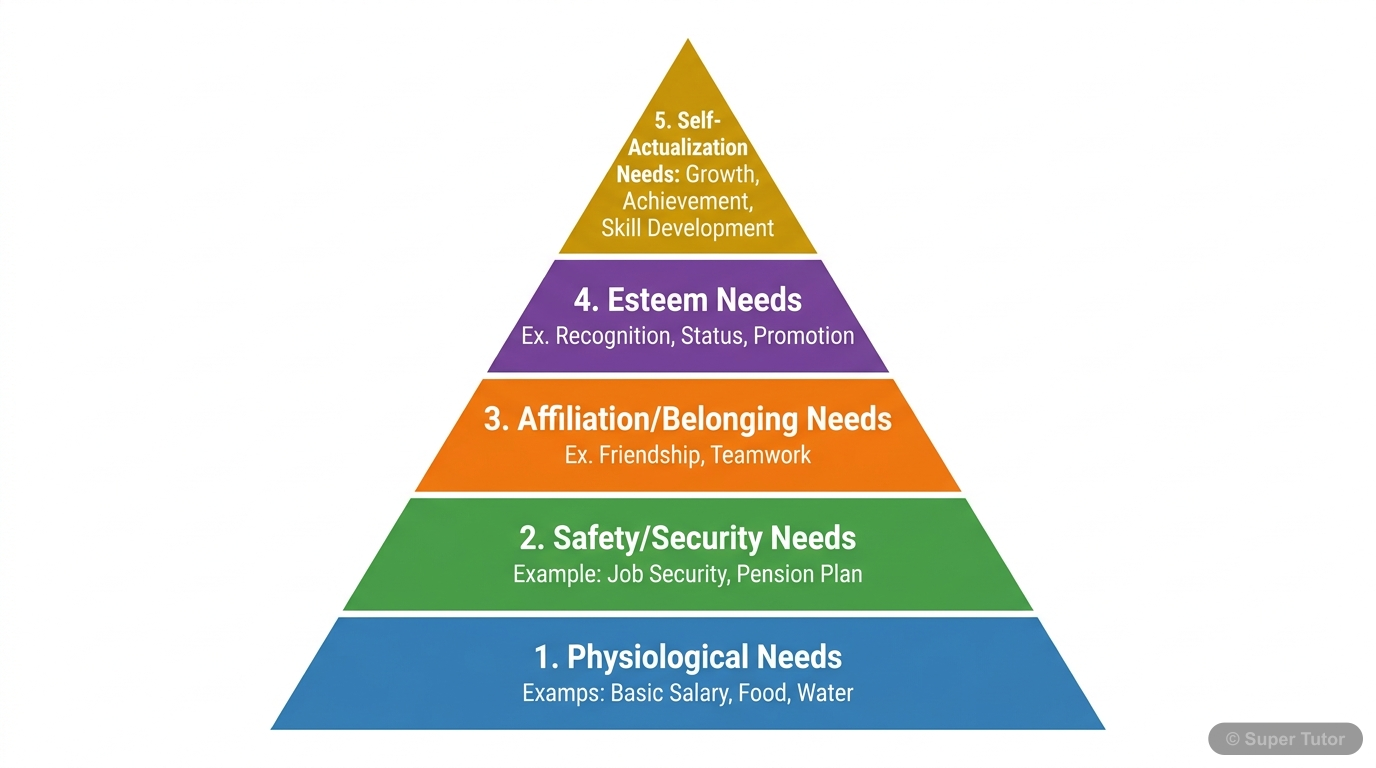
Learn better with visuals Super Tutor pairs illustrations like this with notes and quizzes for Emotions and Motivation.
Overview
Emotions and motivation are closely linked forces that shape behaviour, thinking, and goal-directed action. Emotion is an affective experience marked by bodily changes, inner feeling, and outward expression. Motivation is the mental process that activates and directs behaviour toward a goal. Togethe
Key Concepts
Emotion is a stirred
Emotion is a stirred-up state of feeling with physiological changes and visible behaviour. Common opinion holds that emotion has three foremost elemen
Emotion is subjective
Emotion is subjective, personal, and often influenced by cognition. It can be displaced from one situation to another, and intense emotion can disturb
Emotion is linked with the autonomic
Emotion is linked with the autonomic nervous system, endocrine activity, hypothalamus, and limbic system. The sympathetic division accelerates physiol
Watson identified fear
Watson identified fear, anger, and pleasure as primary emotions. Stagnar proposed pleasantness, unpleasantness, excitement, and depression. Five impor
William James and Carl Lange proposed
William James and Carl Lange proposed that physiological arousal occurs first and produces emotion. The sequence is stimulus, bodily change, then emot
Learning Objectives
- Understand the meaning and characteristics of emotion
- Identify the main components of emotion: physiological changes, subjective experience, and expressive behaviour
- Compare the major theories of emotion: James-Lange, Cannon-Bard, and Schachter-Singer
- Explain motivation, its components, and the forces behind it
- Describe instinct, unconscious motivation, intrinsic motivation, and extrinsic motivation
Frequently Asked Questions
What are the important topics in Emotions and Motivation for ICSE Class 11 Psychology?
How should I revise Emotions and Motivation for Class 11 exams?
Sources & Official References
Content is aligned to the official syllabus. Refer to the board website for the latest curriculum.
More resources for Emotions and Motivation
For serious students
Get the full Emotions and Motivation chapter — start free.
Quizzes, flashcards, an AI doubt solver and a study plan for ICSE Class 11 Psychology. Free to start, no card needed.