Emotions and Motivation — Flashcards
ICSE · Class 11 · Psychology
48 flashcards for Emotions and Motivation (ICSE Class 11 Psychology) to test yourself on key terms and facts. Sample: "What is emotion?"
Interactive on Super Tutor
Studying Emotions and Motivation? Get the full interactive chapter.
Quizzes, flashcards, AI doubt-solver and a step-by-step study plan — built for flashcards and more.
Free trial, no card needed.
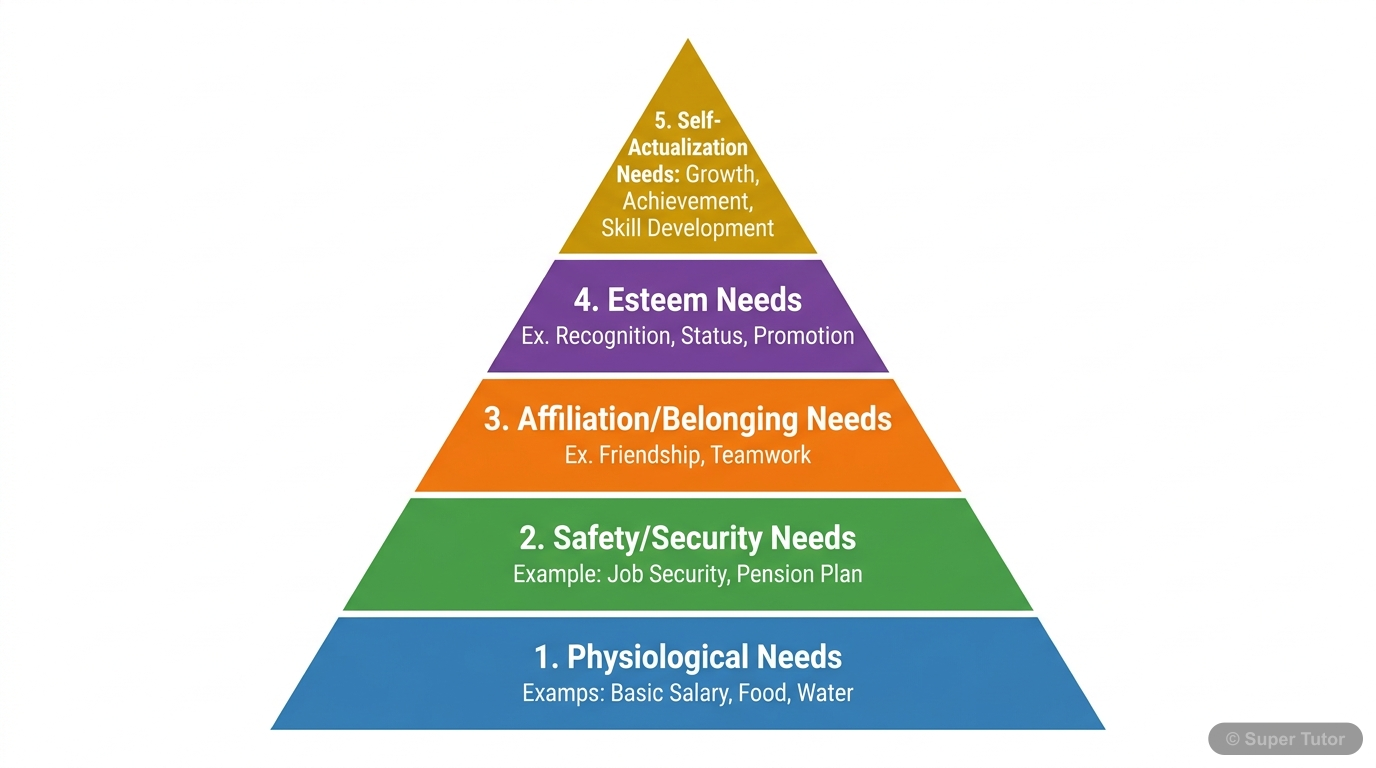
Learn better with visuals Super Tutor pairs illustrations like this with notes and quizzes for Emotions and Motivation.
What is emotion?
Answer
Emotion is the moved or stirred up state of an organism. It includes a felt experience inside the person, bodily changes, and visible behaviour outside. Emotion can be seen in actions like crying, tre…
What are the three foremost elements of emotion?
Answer
The three foremost elements of emotion are physiological changes, subjective cognitive states, and associated expressive behaviours. For example, fear may involve a fast heartbeat, the feeling of fear…
Why is emotion considered subjective?
Answer
Emotion is subjective because the same situation does not create the same feeling in every person. One person may enjoy a party, while another may feel uncomfortable or unhappy in the same setting.
What is meant by the displacement quality of emotion?
Answer
Displacement quality means that emotion is expressed in a situation different from where it began. For example, anger caused by a boss may later be expressed at home toward children or subordinates.
Define instinct.
Answer
Instinct is an innate tendency of an organism to react or respond immediately to an environmental stimulus. It helps in adjustment to the environment without foresight, learning, or previous experienc…
How did McDougall link instincts and emotions?
Answer
McDougall linked instincts and emotions by stating that emotions and behaviours arise from primary instincts. He described an invariable and inherent relation between instincts and emotions and used i…
What is meant by the physiological theory of emotion?
Answer
The physiological theory of emotion is the James-Lange theory. It states that physiological arousal comes first and produces emotion. A person feels emotion after noticing bodily changes such as tremb…
Explain the sequence in the James-Lange theory of emotion.
Answer
The sequence is: stimulus is perceived, physiological changes occur, and then emotion is recognised. For example, a person sees danger, the body reacts, and fear is felt.
+40 more flashcards
Practise AllFrequently Asked Questions
What are the important topics in Emotions and Motivation for ICSE Class 11 Psychology?
How many flashcards are available for Emotions and Motivation?
How should I revise Emotions and Motivation for Class 11 exams?
Sources & Official References
Content is aligned to the official syllabus. Refer to the board website for the latest curriculum.
More resources for Emotions and Motivation
Practice Quiz
Test yourself with a quick quiz
Important Questions
Exam-style questions with answers
Revision Notes
Key points for last-minute revision
Chapter Summary
Understand the chapter at a glance
Concept Maps
See how topics connect
Study Plan
Step-by-step plan for this chapter
Syllabus
What topics to cover
For serious students
Get the full Emotions and Motivation chapter — start free.
Quizzes, flashcards, an AI doubt solver and a study plan for ICSE Class 11 Psychology. Free to start, no card needed.