Electrochemistry — Concept Maps
ICSE · Class 12 · Chemistry
4 concept maps of Electrochemistry for ICSE Class 12 Chemistry, each also written out as a text outline. Part of the ICSE Class 12 Chemistry syllabus.
Interactive on Super Tutor
Studying Electrochemistry? Get the full interactive chapter.
Quizzes, flashcards, AI doubt-solver and a step-by-step study plan — built for concept maps and more.
Free trial, no card needed.
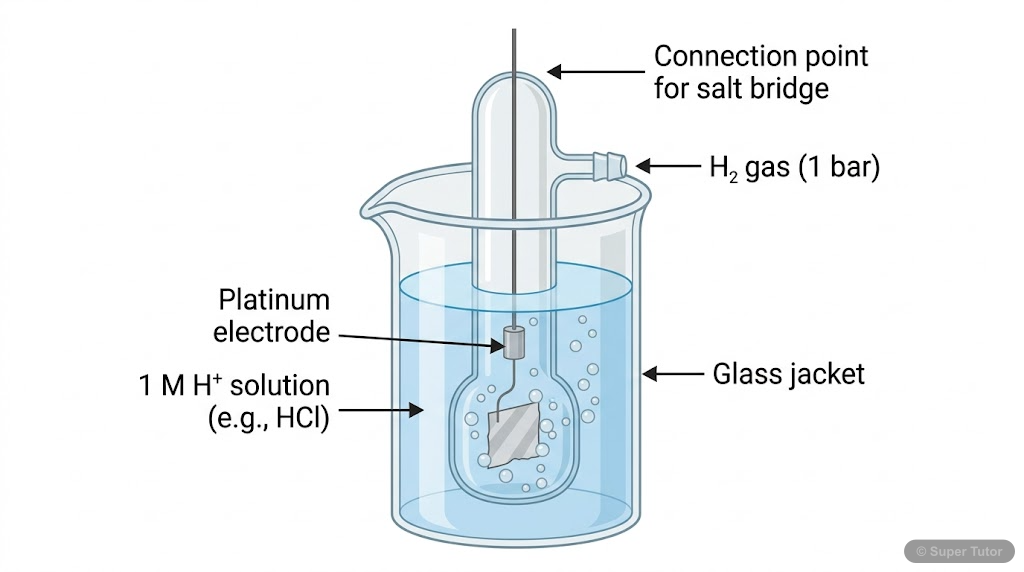
Learn better with visuals Super Tutor pairs illustrations like this with notes and quizzes for Electrochemistry.
Mind map showing the two types of electrochemical cells and their characteristics
The map in words
- Electrochemical Cells
- Galvanic Cells
- Spontaneous reaction
- Chemical to Electrical
- Examples: Batteries, Fuel cells
- Positive EMF
- Electrolytic Cells
- Non-spontaneous
- Electrical to Chemical
- Examples: Electroplating, Electrolysis
- Negative EMF
- Galvanic Cells
Flowchart showing the components and function of a galvanic cell
The map in words
- Galvanic Cell Components
- Anode (Oxidation) Negative electrode
- Loses electrons: Zn → Zn²⁺ + 2e⁻
- Cathode (Reduction) Positive electrode
- Gains electrons: Cu²⁺ + 2e⁻ → Cu
- Salt Bridge Maintains electrical neutrality
- Ion flow: Internal circuit K⁺, Cl⁻ ions
- External Circuit Electrons flow here
- Electron flow: Powers devices Galvanometer reads current
- Anode (Oxidation) Negative electrode
Sequence diagram showing ion migration through the salt bridge and restoration of electrical neutrality
The map in words
- Anode → SB: Zn²⁺ ions accumulate Excess positive charge
- SB → Anode: Cl⁻ ions migrate in
- Anode → Anode: Electrical neutrality restored
- Cathode → SB: Cu²⁺ ions consumed Excess negative charge
- SB → Cathode: K⁺ ions migrate in
- Cathode → Cathode: Electrical neutrality restored
- Cell continues to function
Electrochemistry
The map in words
- Electrochemistry
- Electrochemical cells
- Galvanic cell
- Electrolytic cell
- Daniell cell
- Electrode reactions
- Salt bridge
- Cell representation
- Electrode potential
Explore these maps interactively
Explore DiagramsFrequently Asked Questions
What are the important topics in Electrochemistry for ICSE Class 12 Chemistry?
What do the concept maps for Electrochemistry show?
How should I revise Electrochemistry for the ICSE Class 12 board exam?
Sources & Official References
Content is aligned to the official syllabus. Refer to the board website for the latest curriculum.
More resources for Electrochemistry
Practice Quiz
Test yourself with a quick quiz
Important Questions
Exam-style questions with answers
Revision Notes
Key points for last-minute revision
Chapter Summary
Understand the chapter at a glance
Study Plan
Step-by-step plan for this chapter
Flashcards
Quick-fire cards for active recall
Syllabus
What topics to cover
For serious students
Get the full Electrochemistry chapter — start free.
Quizzes, flashcards, an AI doubt solver and a study plan for ICSE Class 12 Chemistry. Free to start, no card needed.