Chapter 2 of 10
Revision Notes
Electrochemistry — Revision Notes
ICSE · Class 12 · Chemistry
Electrochemistry revision notes for ICSE Class 12 Chemistry: 4 topics in quick points. Part of the ICSE Class 12 Chemistry syllabus.
103 questions37 flashcards5 concepts
Interactive on Super Tutor
Studying Electrochemistry? Get the full interactive chapter.
Quizzes, flashcards, AI doubt-solver and a step-by-step study plan — built for revision notes and more.
Free trial, no card needed.
Super Tutor
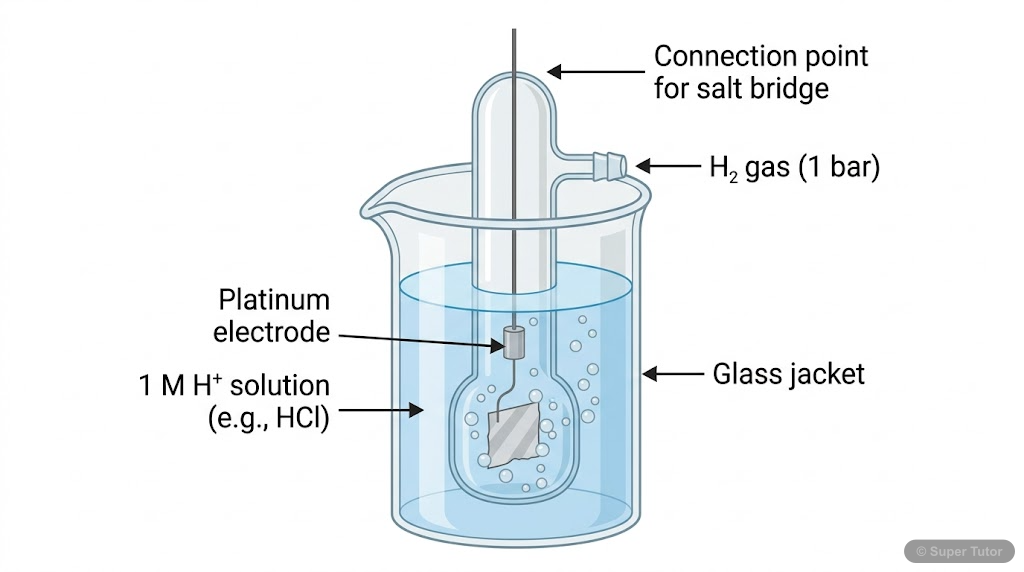
Learn better with visuals Super Tutor pairs illustrations like this with notes and quizzes for Electrochemistry.
Key Topics to Revise
1
1. Basic Ideas and Types of Electrochemical Cells
- Electrochemistry is the branch of chemistry that studies conversion of chemical energy into electrical energy and vice versa.
- An electrochemical cell is a device that can convert chemical energy into electrical energy or vice versa.
- Galvanic cells or voltaic cells convert chemical energy into electrical energy through a spontaneous redox reaction.
2
2. Construction and Representation of a Galvanic Cell
- A galvanic cell has two half cells: one oxidation half cell and one reduction half cell.
- The oxidation electrode is written on the left and the reduction electrode on the right in cell representation.
- A single vertical line separates phases, and double vertical lines show a salt bridge.
3
3. Electrode Potential and Standard Hydrogen Electrode
- Electrode potential is the tendency of an electrode to lose or gain electrons when it is in contact with its own ions in solution.
- If metal atoms lose electrons, oxidation potential develops and the electrode becomes negative.
- If metal ions gain electrons, reduction potential develops and the electrode becomes positive.
4
4. Electrochemical Series and Its Applications
- The electrochemical series is the arrangement of electrode systems in increasing order of their standard reduction potentials.
- Higher reduction potential means greater tendency to get reduced.
- Lower reduction potential means greater tendency to get oxidised.
Get complete notes with diagrams and examples
Full NotesKey Concepts
Electrochemistry deals with the studyA galvanic cell converts chemical energyAn electrolytic cell converts electrical energyOxidation takes place at the anodeA salt bridge is a U
Frequently Asked Questions
What are the important topics in Electrochemistry for ICSE Class 12 Chemistry?
Key topics in Electrochemistry include Basic Ideas and Types of Electrochemical Cells, Construction and Representation of a Galvanic Cell, Electrode Potential and Standard Hydrogen Electrode, Electrochemical Series and Its Applications. Study these first, then practise questions on each for the ICSE Class 12 board exam.
How should I revise Electrochemistry for the ICSE Class 12 board exam?
Learn the core ideas first, then work through the 103 practice questions on Electrochemistry. Revise definitions regularly and use flashcards for quick recall before the exam.
Sources & Official References
Content is aligned to the official syllabus. Refer to the board website for the latest curriculum.
More resources for Electrochemistry
For serious students
Get the full Electrochemistry chapter — start free.
Quizzes, flashcards, an AI doubt solver and a study plan for ICSE Class 12 Chemistry. Free to start, no card needed.