Water Bodies — Chapter Summary
ICSE · Class 6 · Geography
Summary of Water Bodies for ICSE Class 6 Geography. Key concepts: Oceans are the largest water, Seas are smaller than oceans and Lakes are large bodies.
Interactive on Super Tutor
Studying Water Bodies? Get the full interactive chapter.
Quizzes, flashcards, AI doubt-solver and a step-by-step study plan — built for chapter summary and more.
Free trial, no card needed.
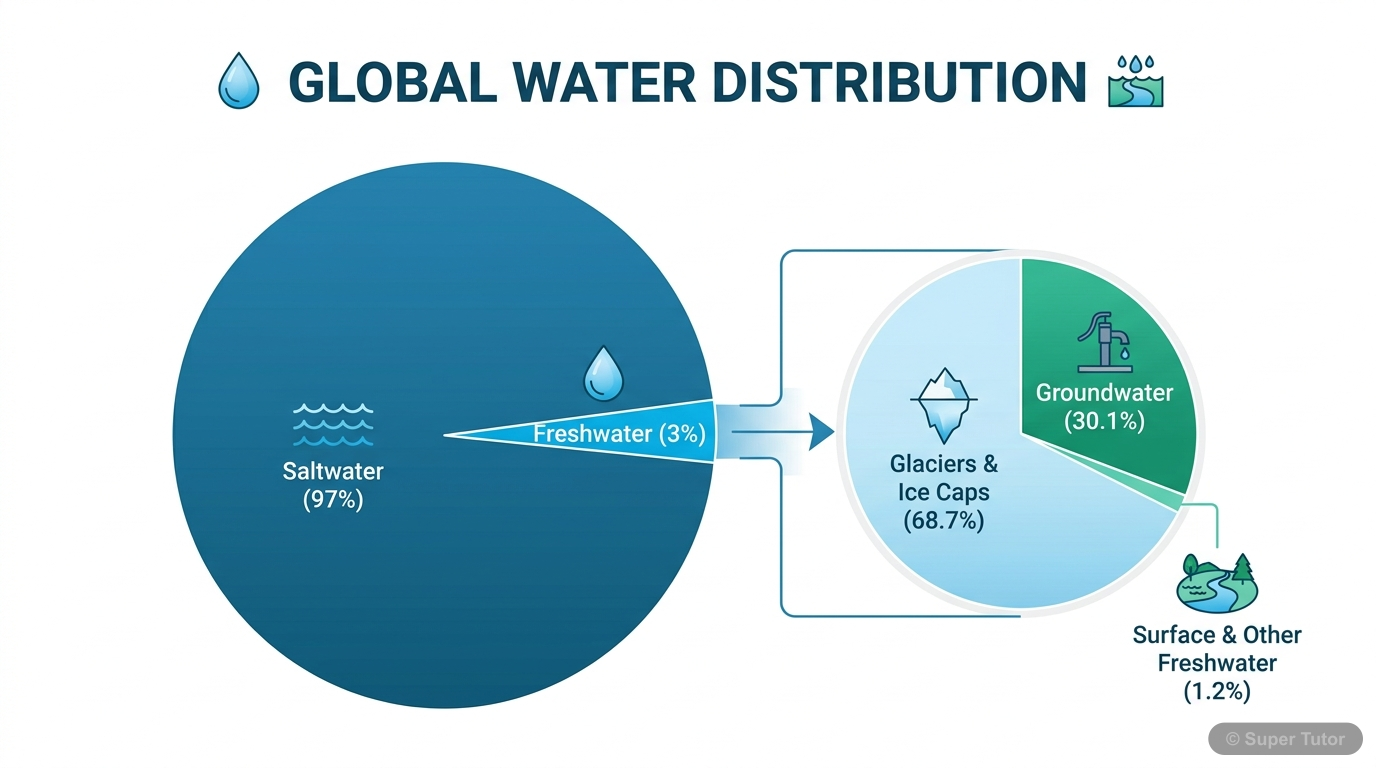
An illustration from Super Tutor's Water Bodies chapter — alongside flashcards, concept maps and practice questions.
Overview
The Earth is often called the 'Blue Planet' because about 71% of its surface is covered with water. These water bodies include oceans, seas, lakes, and rivers. They play a vital role in supporting life, regulating climate, and helping in transportation and trade. This chapter introduces different ty
Key Concepts
Oceans are the largest water bodies
Oceans are the largest water bodies on Earth. There are five major oceans: Pacific, Atlantic, Indian, Arctic, and Southern Oceans. The Pacific is the
Seas are smaller than oceans
Seas are smaller than oceans and are partially surrounded by land. They can be marginal (like the Arabian Sea) or inland (like the Caspian Sea).
Lakes are large bodies of water
Lakes are large bodies of water surrounded by land. They can be freshwater (like Lake Baikal) or saline (like the Dead Sea). Lakes are formed by glaci
Rivers are flowing water bodies
Rivers are flowing water bodies that start from a source (like mountains or glaciers) and end at a mouth (like an ocean or lake). They can be perennia
Water pollution occurs when harmful substances
Water pollution occurs when harmful substances like sewage, industrial waste, oil, and agricultural chemicals enter water bodies.
Learning Objectives
- Locate major oceans, seas, lakes, and rivers on the world map
- Understand the characteristics and importance of different water bodies
- Explain the role of water bodies in human life and the environment
- Recognize the causes and effects of water pollution
Frequently Asked Questions
What are the important topics in Water Bodies for ICSE Class 6 Geography?
How should I revise Water Bodies for Class 6 exams?
Sources & Official References
Content is aligned to the official syllabus. Refer to the board website for the latest curriculum.
More resources for Water Bodies
For serious students
Get the full Water Bodies chapter — start free.
Quizzes, flashcards, an AI doubt solver and a study plan for ICSE Class 6 Geography. Free to start, no card needed.