Pollination and Fertilization
ICSE · Class 9 · Biology
All formulas from Pollination and Fertilization in ICSE Class 9 Biology. Key equations, constants, and identities for board exam preparation.
Interactive on Super Tutor
Studying Pollination and Fertilization? Get the full interactive chapter.
Quizzes, flashcards, AI doubt-solver and a step-by-step study plan — built for formula sheet and more.
1,000+ Class 9 students started this chapter today
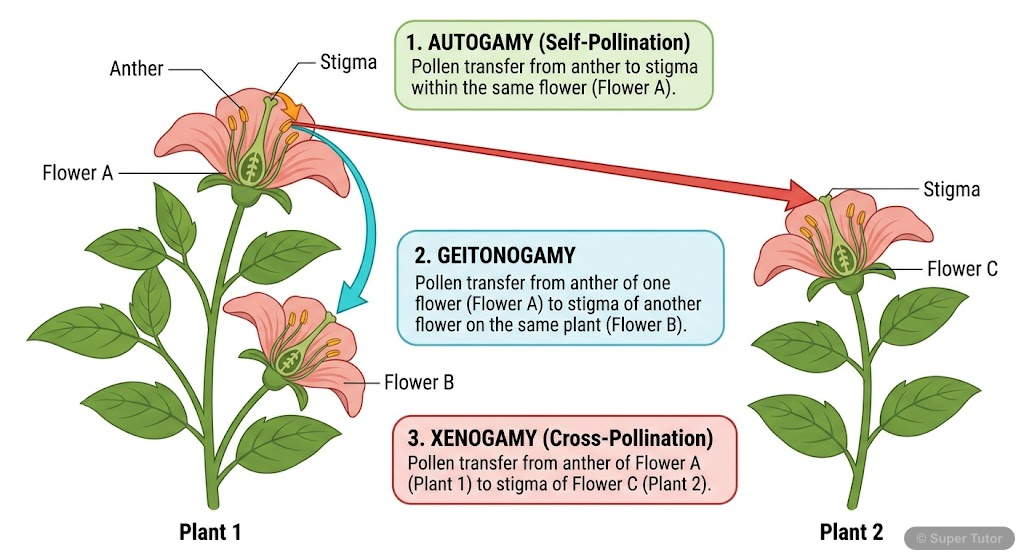
Learn better with visuals Super Tutor has hundreds of illustrations like this across every chapter — all free to try.
Get startedFormula Sheet
Key formulas, equations, and identities from Pollination and Fertilization for ICSE Class 9 Biology.
Get Formula SheetFrequently Asked Questions
What are the important topics in Pollination and Fertilization for ICSE Class 9 Biology?
How to score full marks in Pollination and Fertilization — ICSE Class 9 Biology?
Sources & Official References
Content is aligned to the official syllabus. Refer to the board website for the latest curriculum.
More resources for Pollination and Fertilization
Practice Quiz
Test yourself with a quick quiz
Important Questions
Practice with board exam-style questions
Revision Notes
Key points for last-minute revision
Chapter Summary
Understand the chapter at a glance
Concept Maps
See how topics connect visually
Study Plan
Step-by-step plan to ace this chapter
Flashcards
Quick-fire cards for active recall
Syllabus
What topics to cover
NCERT Solutions
Every textbook question solved step by step
For serious students
Get the full Pollination and Fertilization chapter — for free.
Quizzes, flashcards, AI doubt-solver and a step-by-step study plan for ICSE Class 9 Biology.