Waste Generation and Management — Study Plan
ICSE · Class 9 · Biology
A step-by-step study plan for Waste Generation and Management, ICSE Class 9 Biology: what to learn first, what to practise and when to revise.
Interactive on Super Tutor
Studying Waste Generation and Management? Get the full interactive chapter.
Quizzes, flashcards, AI doubt-solver and a step-by-step study plan — built for study plan and more.
Free trial, no card needed.
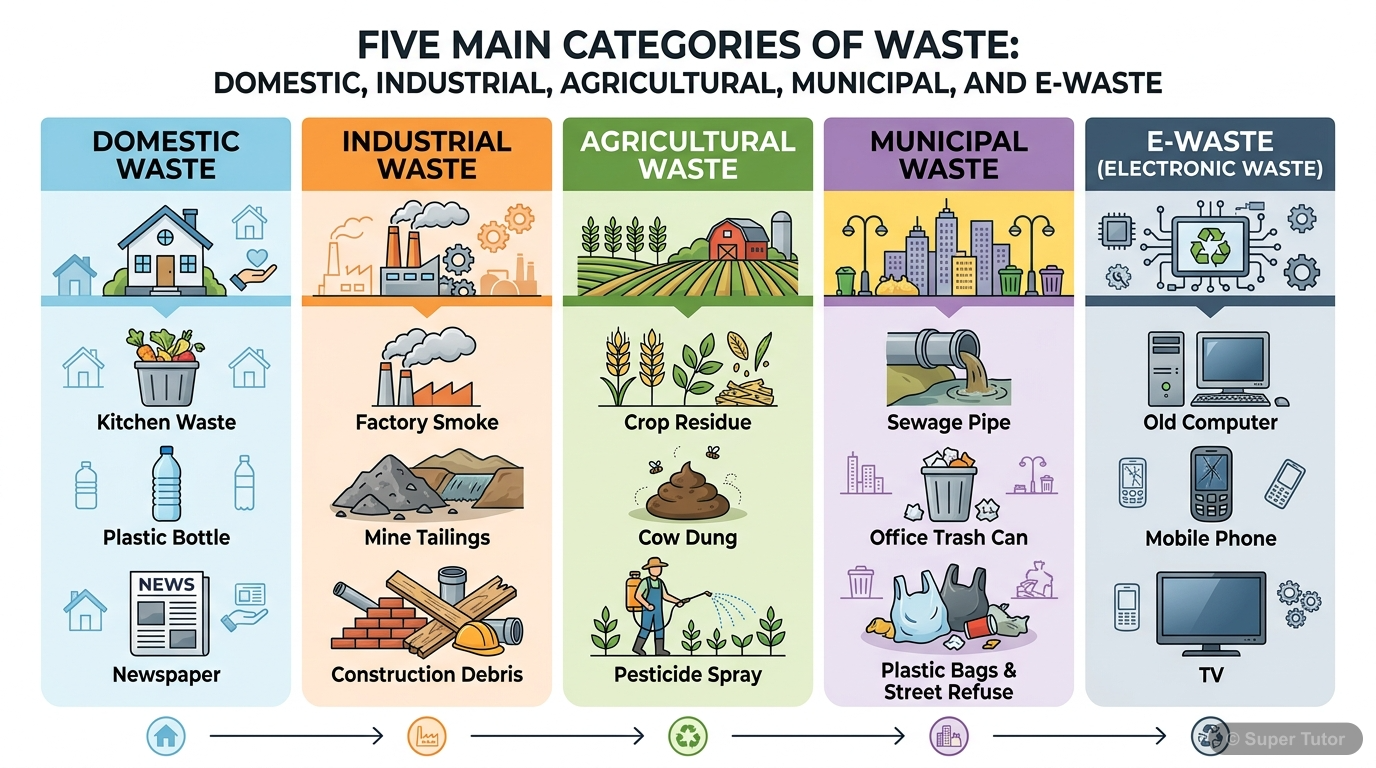
Learn better with visuals Super Tutor pairs illustrations like this with notes and quizzes for Waste Generation and Management.
Study Plan
Learn the Theory
Read the textbook chapter carefully. Note down definitions, formulas and key ideas. Focus on: 1. Major Categories of Waste, 2. Domestic, Industrial, and Agricultural Waste, 3. Municipal Waste, Sewage, and Septic Tanks.
Practise
Solve the textbook exercises and extra practice questions. There are 43 questions available for this chapter.
Revise & Test
Revise key points without looking at your notes. Take a practice quiz and mark weak areas for another pass.
Spaced Revision
Come back to Waste Generation and Management after a week. Use flashcards for quick recall and try past exam questions on this chapter.
What to Focus On
- Waste is broadly divided into five major categories.
- Domestic waste comes from homes and includes kitchen waste, plastics, glass, rags, and paper.
- Industrial waste comes from factories, thermal plants, mining, cement industries, oil refineries, and construction units.
- Domestic waste is mainly household waste.
- Kitchen waste is usually organic and degradable.
- Paper waste is often reused or recycled.
- Industrial waste can be solid, liquid, or gaseous.
- Mine tailing is the left-over waste from mining operations.
- Cement industry liquid waste is treated before release into water bodies.
Common Mistakes to Avoid
All waste means the same thing and can be grouped into just biodegradable and non-biodegradable waste.
Municipal waste means only garbage from houses.
Sewage is treated completely in septic tanks.
Memory Tips
Definition of waste
Five major categories of waste
Domestic waste examples
Domestic paper and rag reuse
Want a personalised study plan?
Super Tutor builds a day-by-day plan for ICSE Class 9 Biology that fits your exam date and pace.
Create My Study PlanFrequently Asked Questions
What are the important topics in Waste Generation and Management for ICSE Class 9 Biology?
How should I revise Waste Generation and Management for Class 9 exams?
Sources & Official References
Content is aligned to the official syllabus. Refer to the board website for the latest curriculum.
More resources for Waste Generation and Management
Practice Quiz
Test yourself with a quick quiz
Important Questions
Exam-style questions with answers
Revision Notes
Key points for last-minute revision
Chapter Summary
Understand the chapter at a glance
Concept Maps
See how topics connect
Flashcards
Quick-fire cards for active recall
Syllabus
What topics to cover
For serious students
Get the full Waste Generation and Management chapter — start free.
Quizzes, flashcards, an AI doubt solver and a study plan for ICSE Class 9 Biology. Free to start, no card needed.