Waste Generation and Management — Chapter Summary
ICSE · Class 9 · Biology
Summary of Waste Generation and Management for ICSE Class 9 Biology. Part of the ICSE Class 9 Biology syllabus.
Interactive on Super Tutor
Studying Waste Generation and Management? Get the full interactive chapter.
Quizzes, flashcards, AI doubt-solver and a step-by-step study plan — built for chapter summary and more.
Free trial, no card needed.
Learn better with visuals Super Tutor pairs illustrations like this with notes and quizzes for Waste Generation and Management.
Overview
Waste is any substance that is discarded after primary use, or it is worthless, defective and of no use. Waste is a major environmental issue because growing human activity produces more domestic, industrial, agricultural, municipal, and electronic waste. Safe handling depends on correct classificat
Key Concepts
Waste is any substance discarded after
Waste is any substance discarded after primary use or something that is worthless, defective, and of no use.
Waste can be broadly divided into
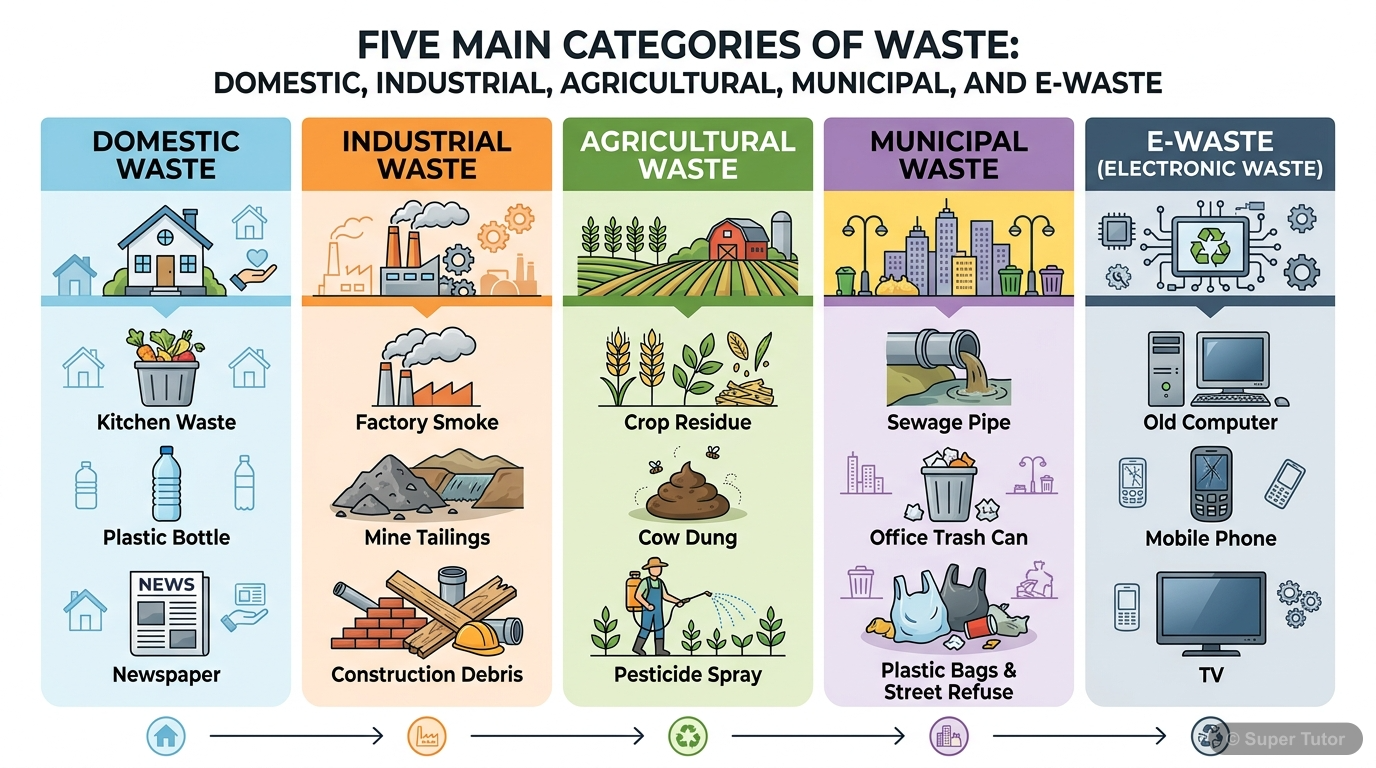
Waste can be broadly divided into five major categories: domestic, industrial, agricultural, municipal, and e-waste.
Domestic waste comes from homes
Domestic waste comes from homes and includes kitchen waste, plastics, glass, rags, and paper. Some rag and paper waste is reused or sold to raddiwalas
Industrial waste comes from factories
Industrial waste comes from factories, thermal plants, and related units. It includes waste from mining operations, cement industries, oil refineries,
Agricultural waste is left behind after
Agricultural waste is left behind after obtaining consumable parts of crops and livestock. It includes agricultural residues, bagasse, pesticide and f
Learning Objectives
- Understand the meaning of waste and the main categories of waste
- Identify common examples of domestic, industrial, agricultural, municipal, and e-waste
- Explain safe methods of waste disposal, including segregation, dumping, composting, drainage, effluent treatment, incineration, scrubbers, and electrostatic precipitators
- Recognize the health and environmental risks caused by careless waste disposal
- Understand the role of recycling, composting, and pollution-control devices in waste management
Frequently Asked Questions
What are the important topics in Waste Generation and Management for ICSE Class 9 Biology?
How should I revise Waste Generation and Management for Class 9 exams?
Sources & Official References
Content is aligned to the official syllabus. Refer to the board website for the latest curriculum.
More resources for Waste Generation and Management
For serious students
Get the full Waste Generation and Management chapter — start free.
Quizzes, flashcards, an AI doubt solver and a study plan for ICSE Class 9 Biology. Free to start, no card needed.