Listening Skills — Chapter Summary
ICSE · Class 9 · English Language - Archer
Summary of Listening Skills for ICSE Class 9 English Language - Archer. Part of the ICSE Class 9 English Language - Archer syllabus.
Interactive on Super Tutor
Studying Listening Skills? Get the full interactive chapter.
Quizzes, flashcards, AI doubt-solver and a step-by-step study plan — built for chapter summary and more.
Free trial, no card needed.
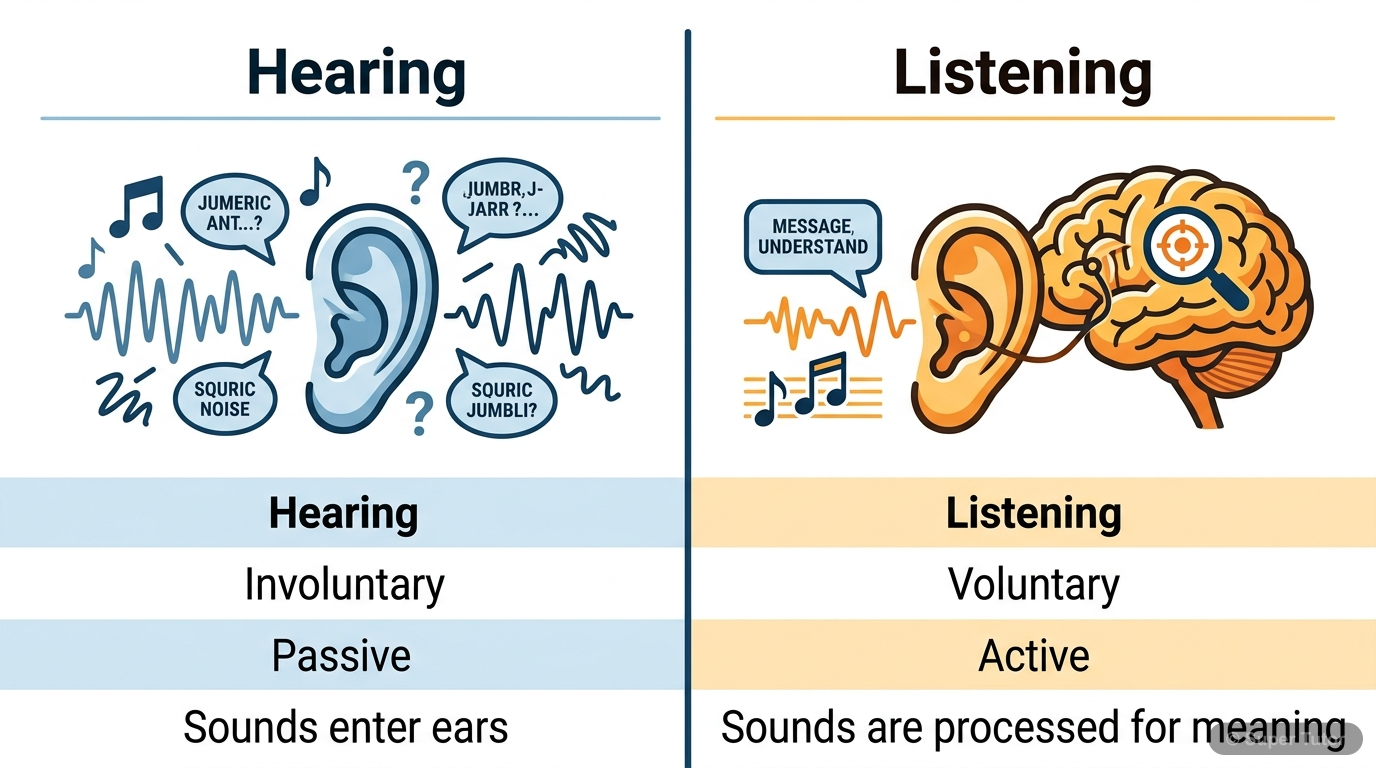
Learn better with visuals Super Tutor pairs illustrations like this with notes and quizzes for Listening Skills.
Overview
Listening is an active process of paying attention to sounds, speech, and meaning. Hearing is involuntary and includes all sounds that enter the ears, but listening is voluntary and requires focus. Good listening helps in understanding, responding, following instructions, and improving communication
Key Concepts
Hearing is an involuntary process
Hearing is an involuntary process. All sounds, noises, music, and speech that enter the ears are part of hearing.
Listening is a voluntary and active
Listening is a voluntary and active process. It means paying attention, trying to understand each sound, and making sense of what is heard.
People listen to comprehend
People listen to comprehend, respond appropriately, communicate better, resolve conflicts, enjoy what others say, empathise, reflect, and follow instr
Good listening needs concentration
Good listening needs concentration, removal of distractions, eye contact with the speaker, and note-taking of important details.
Common mistakes include letting the mind
Common mistakes include letting the mind wander, listening half-heartedly, scribbling unnecessarily, getting distracted by noise, and becoming nervous
Learning Objectives
- Understand the difference between hearing and listening
- Recognise listening as an active and voluntary skill
- Identify the purpose of listening in communication
- Learn the correct way to listen with concentration and note-making
- Avoid common mistakes such as distraction and unnecessary scribbling
Frequently Asked Questions
What are the important topics in Listening Skills for ICSE Class 9 English Language - Archer?
How should I revise Listening Skills for Class 9 exams?
Sources & Official References
Content is aligned to the official syllabus. Refer to the board website for the latest curriculum.
More resources for Listening Skills
For serious students
Get the full Listening Skills chapter — start free.
Quizzes, flashcards, an AI doubt solver and a study plan for ICSE Class 9 English Language - Archer. Free to start, no card needed.