Medieval India (C) The Mughal Empire — Study Plan
ICSE · Class 9 · History & Civics
A step-by-step study plan for Medieval India (C) The Mughal Empire, ICSE Class 9 History & Civics: what to learn first, what to practise and when.
Interactive on Super Tutor
Studying Medieval India (C) The Mughal Empire? Get the full interactive chapter.
Quizzes, flashcards, AI doubt-solver and a step-by-step study plan — built for study plan and more.
Free trial, no card needed.
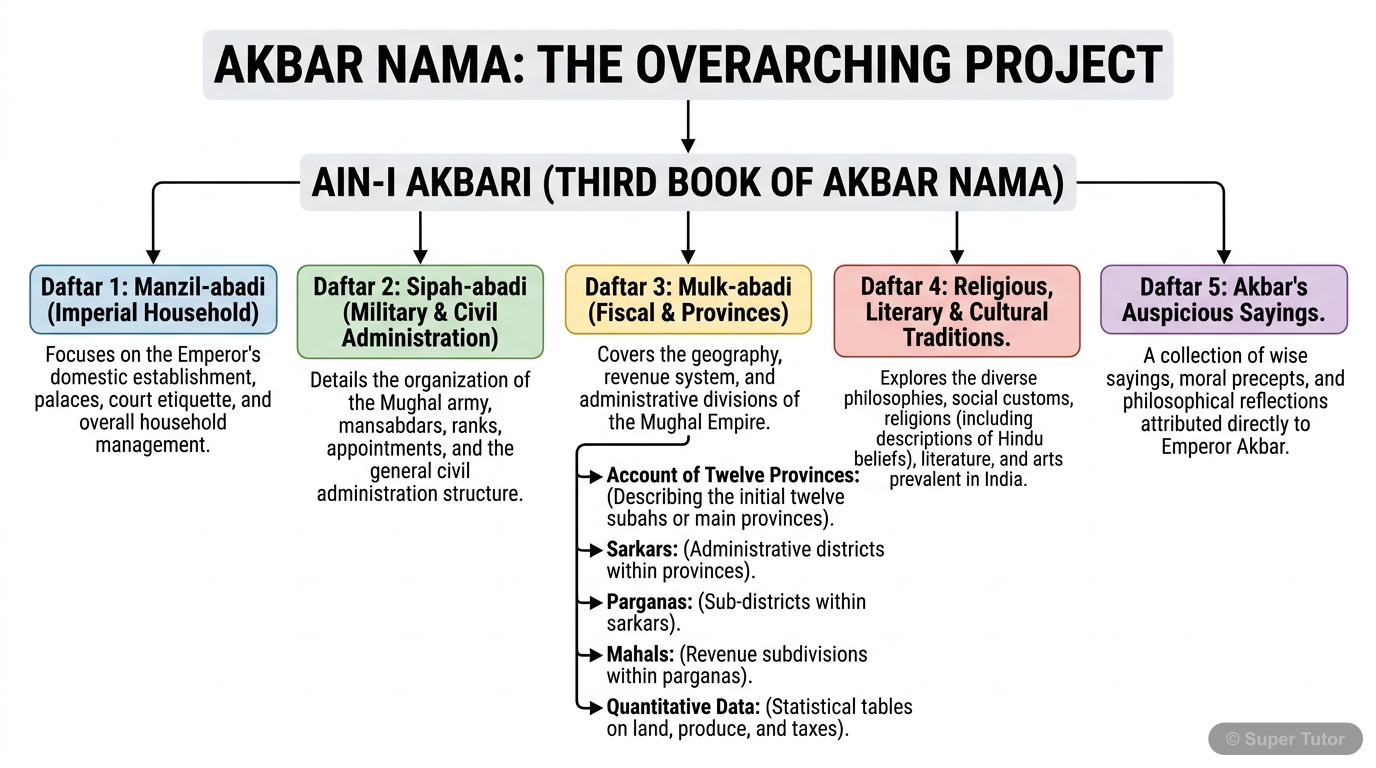
One of 8 illustrations for Medieval India (C) The Mughal Empire in Super Tutor — alongside flashcards, concept maps and practice questions.
Study Plan
Learn the Theory
Read the textbook chapter carefully. Note down definitions, formulas and key ideas. Focus on: Sources of Mughal History, Babur and the Foundation of Mughal Rule, Akbar: Expansion, Rajput Policy, and Religious Measures.
Practise
Solve the textbook exercises and extra practice questions. There are 51 questions available for this chapter.
Revise & Test
Revise key points without looking at your notes. Take a practice quiz and mark weak areas for another pass.
Spaced Revision
Come back to Medieval India (C) The Mughal Empire after a week. Use flashcards for quick recall and try past exam questions on this chapter.
What to Focus On
- India on Babur's arrival had many independent regional kingdoms.
- Ain-i-Akbari is a major source for Akbar's administration and culture.
- Ain-i-Akbari has five books.
- Babur was a descendant of Timur.
- Babur defeated Ibrahim Lodhi at Panipat in 1526.
- Babur fought Rana Sanga at Khanwa in 1527.
- Akbar became ruler at the age of thirteen.
- Bairam Khan guided Akbar in his early years.
- Hemu was defeated at the Second Battle of Panipat.
Common Mistakes to Avoid
Babur became the founder of the Mughal Empire by peacefully settling in India.
Rana Sanga was defeated at the First Battle of Panipat.
The Battle of Haldighati was fought between Maharana Pratap and Humayun.
Memory Tips
Ain-i-Akbari as a source of Mughal history
Five books of Ain-i-Akbari
Babur as founder of the Mughal empire
First Battle of Panipat in 1526
Want a personalised study plan?
Super Tutor builds a day-by-day plan for ICSE Class 9 History & Civics that fits your exam date and pace.
Create My Study PlanFrequently Asked Questions
What are the important topics in Medieval India (C) The Mughal Empire for ICSE Class 9 History & Civics?
How should I revise Medieval India (C) The Mughal Empire for Class 9 exams?
Sources & Official References
Content is aligned to the official syllabus. Refer to the board website for the latest curriculum.
More resources for Medieval India (C) The Mughal Empire
Practice Quiz
Test yourself with a quick quiz
Important Questions
Exam-style questions with answers
Revision Notes
Key points for last-minute revision
Chapter Summary
Understand the chapter at a glance
Concept Maps
See how topics connect
Flashcards
Quick-fire cards for active recall
Syllabus
What topics to cover
For serious students
Get the full Medieval India (C) The Mughal Empire chapter — start free.
Quizzes, flashcards, an AI doubt solver and a study plan for ICSE Class 9 History & Civics. Free to start, no card needed.