Medieval India (C) The Mughal Empire — Chapter Summary
ICSE · Class 9 · History & Civics
Summary of Medieval India (C) The Mughal Empire for ICSE Class 9 History & Civics. Key concepts: Ain, Babur and Akbar ascended the throne at.
Interactive on Super Tutor
Studying Medieval India (C) The Mughal Empire? Get the full interactive chapter.
Quizzes, flashcards, AI doubt-solver and a step-by-step study plan — built for chapter summary and more.
Free trial, no card needed.
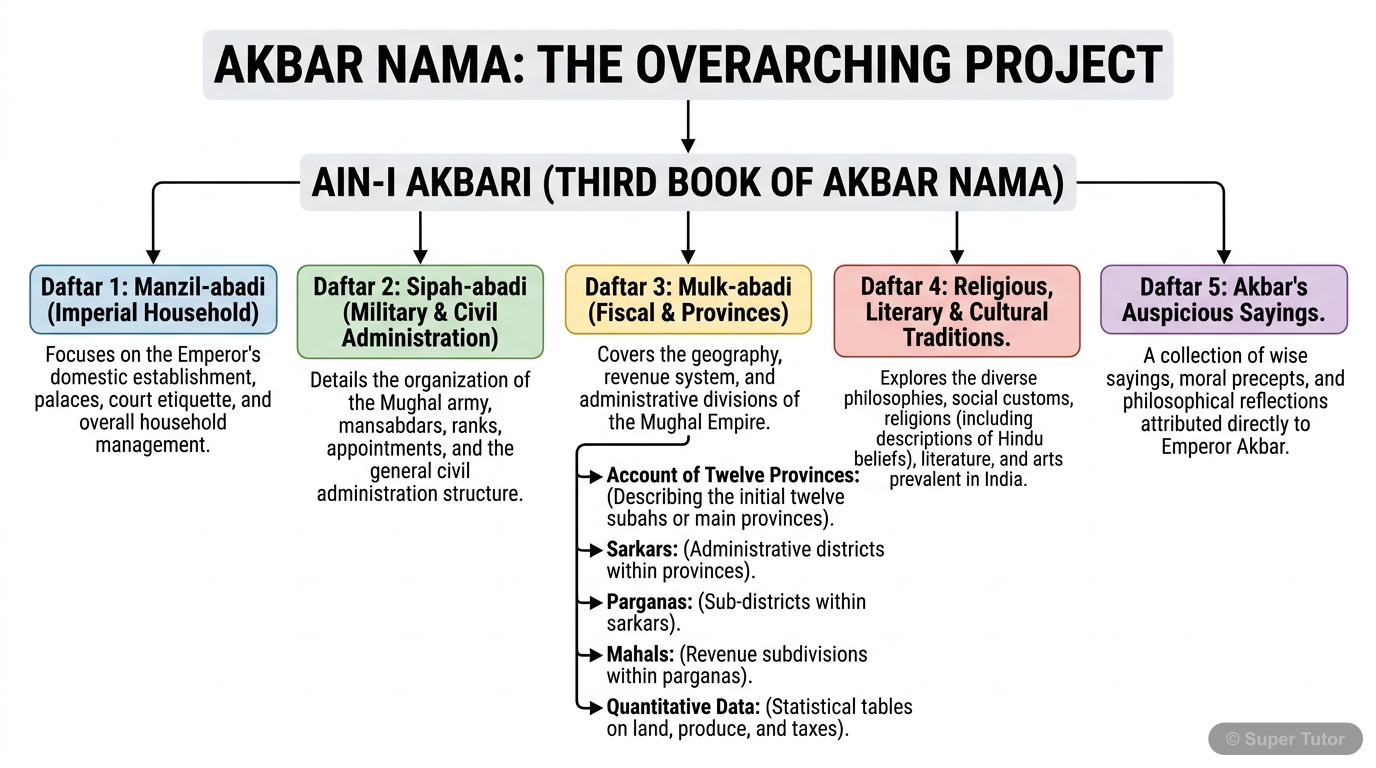
One of 8 illustrations for Medieval India (C) The Mughal Empire in Super Tutor — alongside flashcards, concept maps and practice questions.
Overview
The Mughal Empire became a major power in India after Babur defeated Ibrahim Lodhi at the First Battle of Panipat in 1526. The chapter covers the rise of Mughal rule, the important reigns of Babur, Akbar and Aurangzeb, the administrative system, and the great monuments linked with Mughal culture. It
Key Concepts
Ain
Ain-i-Akbari was written by Abul Fazl, a minister and one of the nine jewels at Akbar's court. It is an important source for the administration and cu
Babur
Babur, whose full name was Zahir-ud-din Muhammad Babur, was a descendant of Timur. He defeated Ibrahim Lodhi at the First Battle of Panipat in 1526, o
Akbar ascended the throne at
Akbar ascended the throne at the age of thirteen under the guidance of Bairam Khan. He defeated Hemu at the Second Battle of Panipat, expanded the emp
Akbar abolished jizyah and the pilgrim
Akbar abolished jizyah and the pilgrim tax, built the Ibadat Khana in 1575 at Fatehpur Sikri, issued the mahzar, set up a translation department, chec
Din
Din-i-Illahi was a new faith promulgated by Akbar. It stressed oneness of God, courage, loyalty and justice, and its main purpose was Sulh-kul or univ
Learning Objectives
- Understand how the Mughal Empire was established in India.
- Identify the major Mughal rulers and their achievements.
- Explain the importance of sources such as Ain-i-Akbari, the Taj Mahal, the Jama Masjid and the Red Fort.
- Describe Akbar's policies of expansion, tolerance and reform.
- Explain the Mughal administrative system, including the mansabdari system.
Frequently Asked Questions
What are the important topics in Medieval India (C) The Mughal Empire for ICSE Class 9 History & Civics?
How should I revise Medieval India (C) The Mughal Empire for Class 9 exams?
Sources & Official References
Content is aligned to the official syllabus. Refer to the board website for the latest curriculum.
More resources for Medieval India (C) The Mughal Empire
For serious students
Get the full Medieval India (C) The Mughal Empire chapter — start free.
Quizzes, flashcards, an AI doubt solver and a study plan for ICSE Class 9 History & Civics. Free to start, no card needed.