Measurements and Experimentation — Revision Notes
ICSE · Class 9 · Physics
Measurements and Experimentation revision notes for ICSE Class 9 Physics: 4 topics in quick points. Part of the ICSE Class 9 Physics syllabus.
Interactive on Super Tutor
Studying Measurements and Experimentation? Get the full interactive chapter.
Quizzes, flashcards, AI doubt-solver and a step-by-step study plan — built for revision notes and more.
Free trial, no card needed.
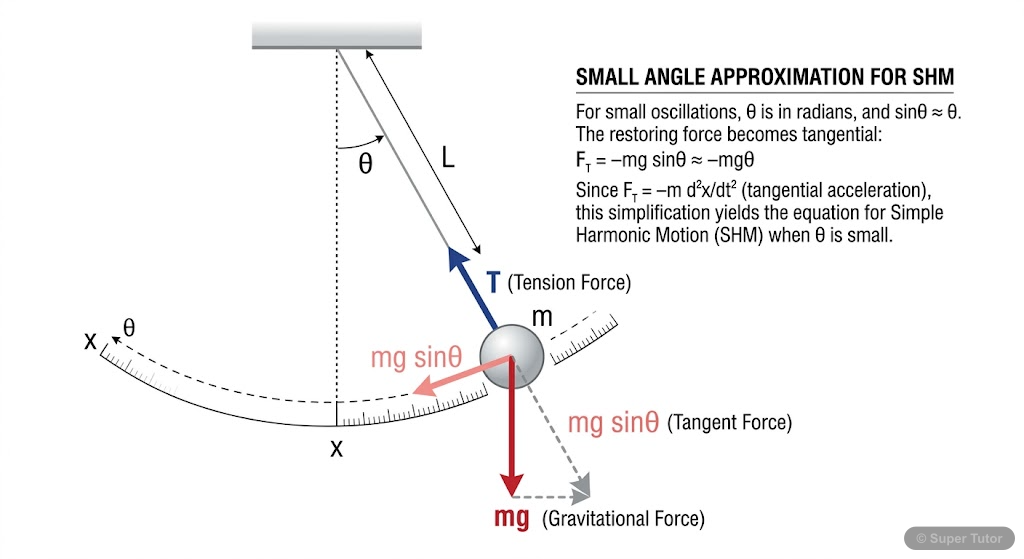
One of 21 illustrations for Measurements and Experimentation in Super Tutor — alongside flashcards, concept maps and practice questions.
Key Topics to Revise
1. Systems of Units and S.I. Units
- Measurement means comparison of a physical quantity with a known standard of the same nature.
- A unit is a constant quantity used to measure other quantities of the same nature.
- The result of measurement is written as physical quantity = numerical value × unit.
2. Units of Length, Mass and Time
- The S.I. unit of length is metre (m).
- The metre was originally defined using a platinum-iridium rod, later using Krypton-86, and finally using the speed of light.
- The least count of a metre rule is 1 mm or 0.1 cm.
3. Derived Units and Writing Units Correctly
- Area, volume, density, speed, acceleration, force, work, momentum, power, pressure, frequency, charge, potential difference, resistance, and electrical power are derived quantities.
- Some derived units have special names such as newton, joule, watt, pascal, hertz, coulomb, volt, and ohm.
- The full name of every unit is written in lowercase.
4. Least Count, Vernier Callipers and Zero Error
- The least count of an instrument is the smallest measurement that can be taken accurately with it.
- Smaller least count means more precise measurement.
- The least count of vernier is x/n, where x is one main scale division and n is the number of vernier divisions.
Get complete notes with diagrams and examples
Full NotesKey Concepts
Frequently Asked Questions
What are the important topics in Measurements and Experimentation for ICSE Class 9 Physics?
How should I revise Measurements and Experimentation for Class 9 exams?
Sources & Official References
Content is aligned to the official syllabus. Refer to the board website for the latest curriculum.
More resources for Measurements and Experimentation
Practice Quiz
Test yourself with a quick quiz
Important Questions
Exam-style questions with answers
Formula Sheet
The chapter's formulas in one place
Chapter Summary
Understand the chapter at a glance
Concept Maps
See how topics connect
Study Plan
Step-by-step plan for this chapter
Flashcards
Quick-fire cards for active recall
Syllabus
What topics to cover
For serious students
Get the full Measurements and Experimentation chapter — start free.
Quizzes, flashcards, an AI doubt solver and a study plan for ICSE Class 9 Physics. Free to start, no card needed.