Measurements and Experimentation — Chapter Summary
ICSE · Class 9 · Physics
Summary of Measurements and Experimentation for ICSE Class 9 Physics. Part of the ICSE Class 9 Physics syllabus.
Interactive on Super Tutor
Studying Measurements and Experimentation? Get the full interactive chapter.
Quizzes, flashcards, AI doubt-solver and a step-by-step study plan — built for chapter summary and more.
Free trial, no card needed.
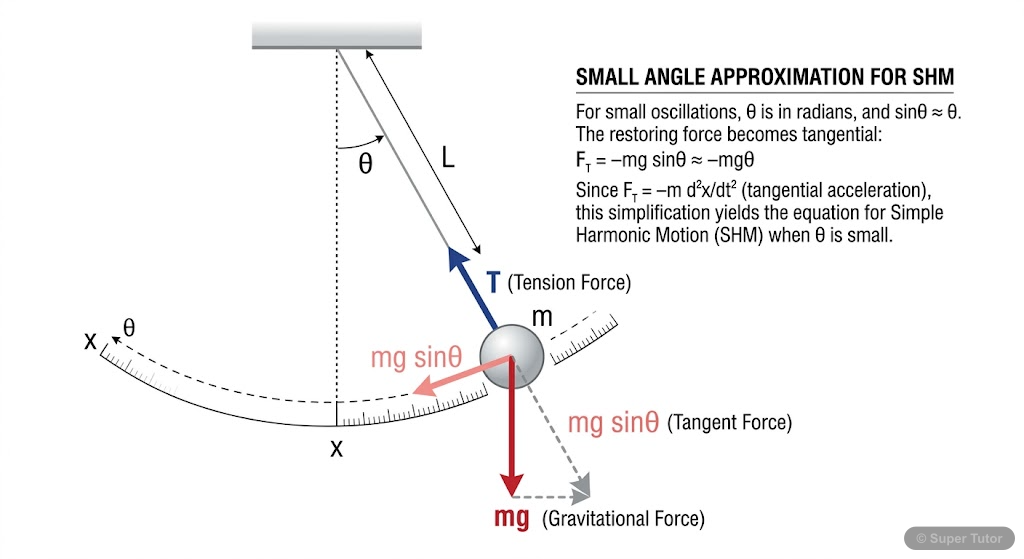
One of 21 illustrations for Measurements and Experimentation in Super Tutor — alongside flashcards, concept maps and practice questions.
Overview
Measurement is the comparison of a physical quantity with a known standard of the same kind. The chapter explains why units are needed, how the SI system is organised, how length, mass, and time are measured using standard units and instruments, and how accuracy improves when the least count becomes
Key Concepts
Measurement is the process of comparison
Measurement is the process of comparison of a physical quantity with a known standard quantity of the same nature. The result is written as numerical
Fundamental units are independent units such
Fundamental units are independent units such as metre, kilogram, and second. Derived units are formed from fundamental units, such as area, volume, sp
The SI system includes seven fundamental
The SI system includes seven fundamental units: metre, kilogram, second, kelvin, candela, ampere, and mole. Radian and steradian are complementary fun
Prefixes like kilo
Prefixes like kilo, milli, micro, and nano are used to write large or small quantities neatly. Unit symbols named after scientists use capital letters
Least count is the smallest measurement
Least count is the smallest measurement that can be taken accurately with an instrument. Smaller least count means greater precision.
Learning Objectives
- Understand the meaning of measurement and unit
- Distinguish between fundamental and derived units
- Recognise the SI base quantities and complementary units
- Use prefixes for large and small measurements
- Convert between common units of length, mass, and time
Frequently Asked Questions
What are the important topics in Measurements and Experimentation for ICSE Class 9 Physics?
How should I revise Measurements and Experimentation for Class 9 exams?
Sources & Official References
Content is aligned to the official syllabus. Refer to the board website for the latest curriculum.
More resources for Measurements and Experimentation
Practice Quiz
Test yourself with a quick quiz
Important Questions
Exam-style questions with answers
Revision Notes
Key points for last-minute revision
Formula Sheet
The chapter's formulas in one place
Concept Maps
See how topics connect
Study Plan
Step-by-step plan for this chapter
Flashcards
Quick-fire cards for active recall
Syllabus
What topics to cover
For serious students
Get the full Measurements and Experimentation chapter — start free.
Quizzes, flashcards, an AI doubt solver and a study plan for ICSE Class 9 Physics. Free to start, no card needed.