Our Environment — Chapter Summary
Madhya Pradesh Board · Class 10 · Science
Summary of Our Environment for Madhya Pradesh Board Class 10 Science. Part of the Madhya Pradesh Board Class 10 Science syllabus.
Interactive on Super Tutor
Studying Our Environment? Get the full interactive chapter.
Quizzes, flashcards, AI doubt-solver and a step-by-step study plan — built for chapter summary and more.
Free trial, no card needed.
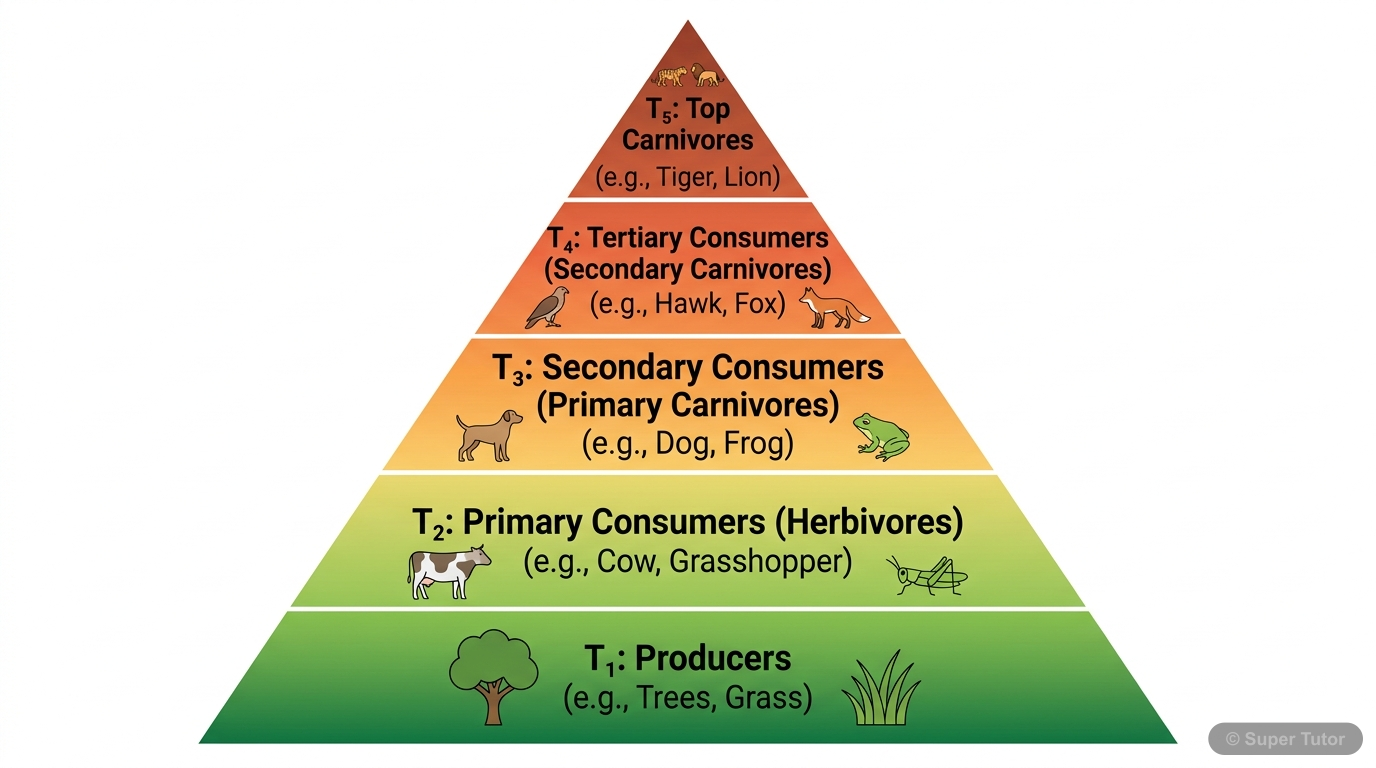
One of 10 illustrations for Our Environment in Super Tutor — alongside flashcards, concept maps and practice questions.
Overview
An environment contains living organisms and non-living factors that interact and maintain balance in nature. An ecosystem is formed by all the interacting organisms in an area together with the non-living constituents of the environment. Ecosystems may be natural, such as forests, ponds and lakes,
Key Concepts
An ecosystem consists of biotic components
An ecosystem consists of biotic components, which are living organisms, and abiotic components, which are physical factors such as temperature, rainfa
Producers are autotrophs
Producers are autotrophs. Green plants and certain bacteria make food like sugar and starch from inorganic substances using solar energy in the presen
Consumers are heterotrophs that depend directly
Consumers are heterotrophs that depend directly or indirectly on producers for food. They include herbivores, carnivores, omnivores and parasites.
Decomposers are microorganisms such as bacteria
Decomposers are microorganisms such as bacteria and fungi that break down dead remains and waste products into simple inorganic substances that return
A food chain is a sequence
A food chain is a sequence of organisms that eat one another. Each step or level in a food chain is called a trophic level. Producers are at the first
Learning Objectives
- Understand the meaning of ecosystem and its biotic and abiotic components
- Distinguish between producers, consumers and decomposers
- Explain food chains, trophic levels and food webs
- Describe the flow of energy in an ecosystem and the 10% law
- Understand biological magnification and its effects
Frequently Asked Questions
What are the important topics in Our Environment for Madhya Pradesh Board Class 10 Science?
How should I revise Our Environment for the Madhya Pradesh Board Class 10 board exam?
Sources & Official References
Content is aligned to the official syllabus. Refer to the board website for the latest curriculum.
More resources for Our Environment
Practice Quiz
Test yourself with a quick quiz
Important Questions
Exam-style questions with answers
Revision Notes
Key points for last-minute revision
Concept Maps
See how topics connect
Study Plan
Step-by-step plan for this chapter
Flashcards
Quick-fire cards for active recall
Syllabus
What topics to cover
NCERT Solutions
Every textbook question solved step by step
For serious students
Get the full Our Environment chapter — start free.
Quizzes, flashcards, an AI doubt solver and a study plan for Madhya Pradesh Board Class 10 Science. Free to start, no card needed.