Security in the Contemporary World — Study Plan
Madhya Pradesh Board · Class 12 · Political Science
A step-by-step study plan for Security in the Contemporary World, Madhya Pradesh Board Class 12 Political Science: what to learn first, what to practise.
Interactive on Super Tutor
Studying Security in the Contemporary World? Get the full interactive chapter.
Quizzes, flashcards, AI doubt-solver and a step-by-step study plan — built for study plan and more.
Free trial, no card needed.
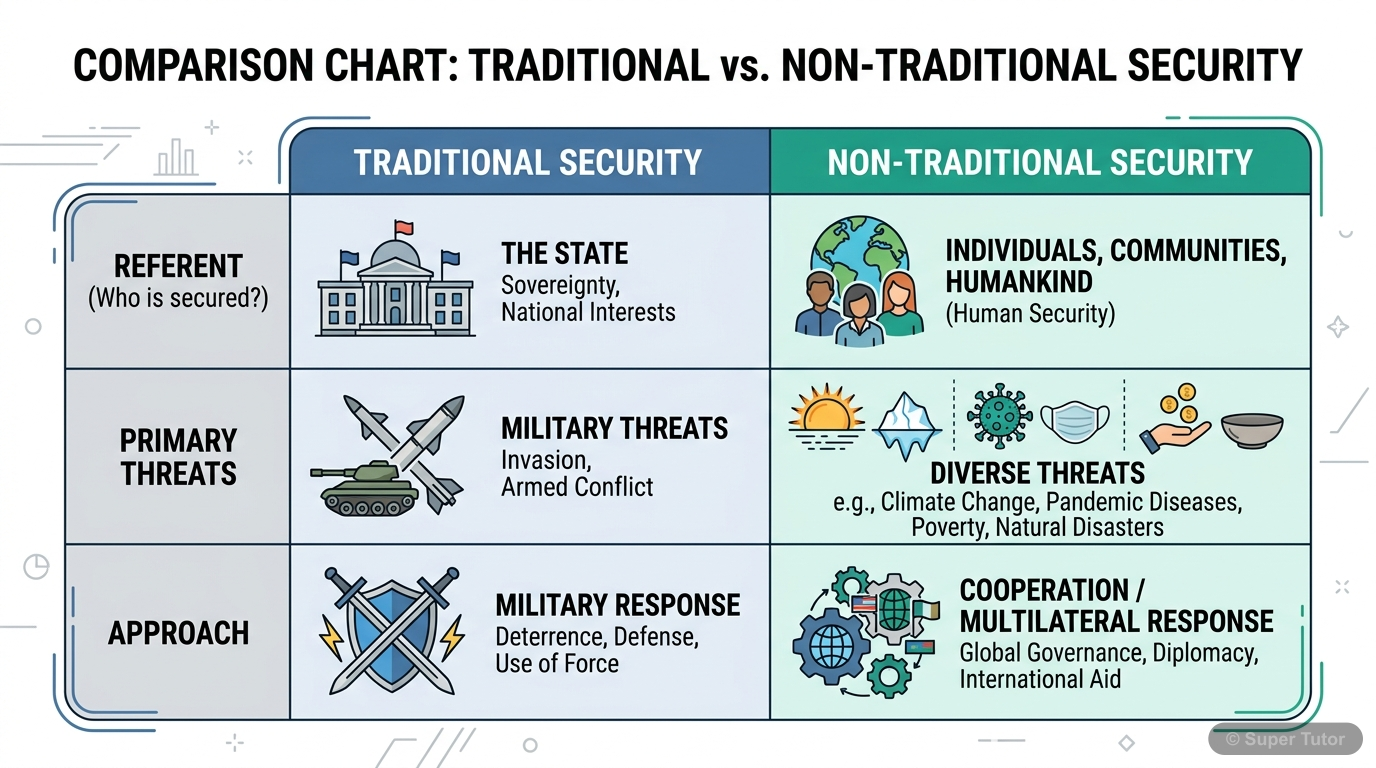
One of 7 illustrations for Security in the Contemporary World in Super Tutor — alongside flashcards, concept maps and practice questions.
Study Plan
Learn the Theory
Read the textbook chapter carefully. Note down definitions, formulas and key ideas. Focus on: 1. Meaning and Nature of Security, 2. Traditional Security, 3. Components of Traditional Security Policy.
Practise
Solve the textbook exercises and extra practice questions. There are 47 questions available for this chapter.
Revise & Test
Revise key points without looking at your notes. Take a practice quiz and mark weak areas for another pass.
Spaced Revision
Come back to Security in the Contemporary World after a week. Use flashcards for quick recall and try past exam questions on this chapter.
What to Focus On
- Security deals only with severe threats, not every danger.
- Core values are the most important values of a state or society.
- Human security shifts attention from the state to people.
- Traditional security focuses mainly on military threats.
- The main concern is protection of sovereignty, independence, and territorial integrity.
- Deterrence prevents war; defence limits or ends war.
- The Cold War caused about one-third of post-Second World War wars.
- Most Cold War-linked wars were fought in the Third World.
- Internal wars now make up more than 95% of armed conflicts.
Common Mistakes to Avoid
Security means protection from every kind of problem, danger, or discomfort.
Traditional security deals only with external war between states, so internal violence is not part of it.
Deterrence and defence mean the same thing.
Memory Tips
Security means freedom from threats, but only extremely dangerous threats to core values count
Traditional security focuses mainly on military threats from other states
The three basic responses to war are deterrence, defence, and surrender
Balance of power is used to prevent one country from becoming too strong
Want a personalised study plan?
Super Tutor builds a day-by-day plan for Madhya Pradesh Board Class 12 Political Science that fits your exam date and pace.
Create My Study PlanFrequently Asked Questions
What are the important topics in Security in the Contemporary World for Madhya Pradesh Board Class 12 Political Science?
How should I revise Security in the Contemporary World for the Madhya Pradesh Board Class 12 board exam?
Sources & Official References
Content is aligned to the official syllabus. Refer to the board website for the latest curriculum.
More resources for Security in the Contemporary World
Practice Quiz
Test yourself with a quick quiz
Important Questions
Exam-style questions with answers
Revision Notes
Key points for last-minute revision
Chapter Summary
Understand the chapter at a glance
Concept Maps
See how topics connect
Flashcards
Quick-fire cards for active recall
Syllabus
What topics to cover
NCERT Solutions
Every textbook question solved step by step
For serious students
Get the full Security in the Contemporary World chapter — start free.
Quizzes, flashcards, an AI doubt solver and a study plan for Madhya Pradesh Board Class 12 Political Science. Free to start, no card needed.