Security in the Contemporary World — Syllabus
Madhya Pradesh Board · Class 12 · Political Science
What Security in the Contemporary World covers in Madhya Pradesh Board Class 12 Political Science: 4 topics, for the 2026-27 session.
Interactive on Super Tutor
Studying Security in the Contemporary World? Get the full interactive chapter.
Quizzes, flashcards, AI doubt-solver and a step-by-step study plan — built for syllabus and more.
Free trial, no card needed.
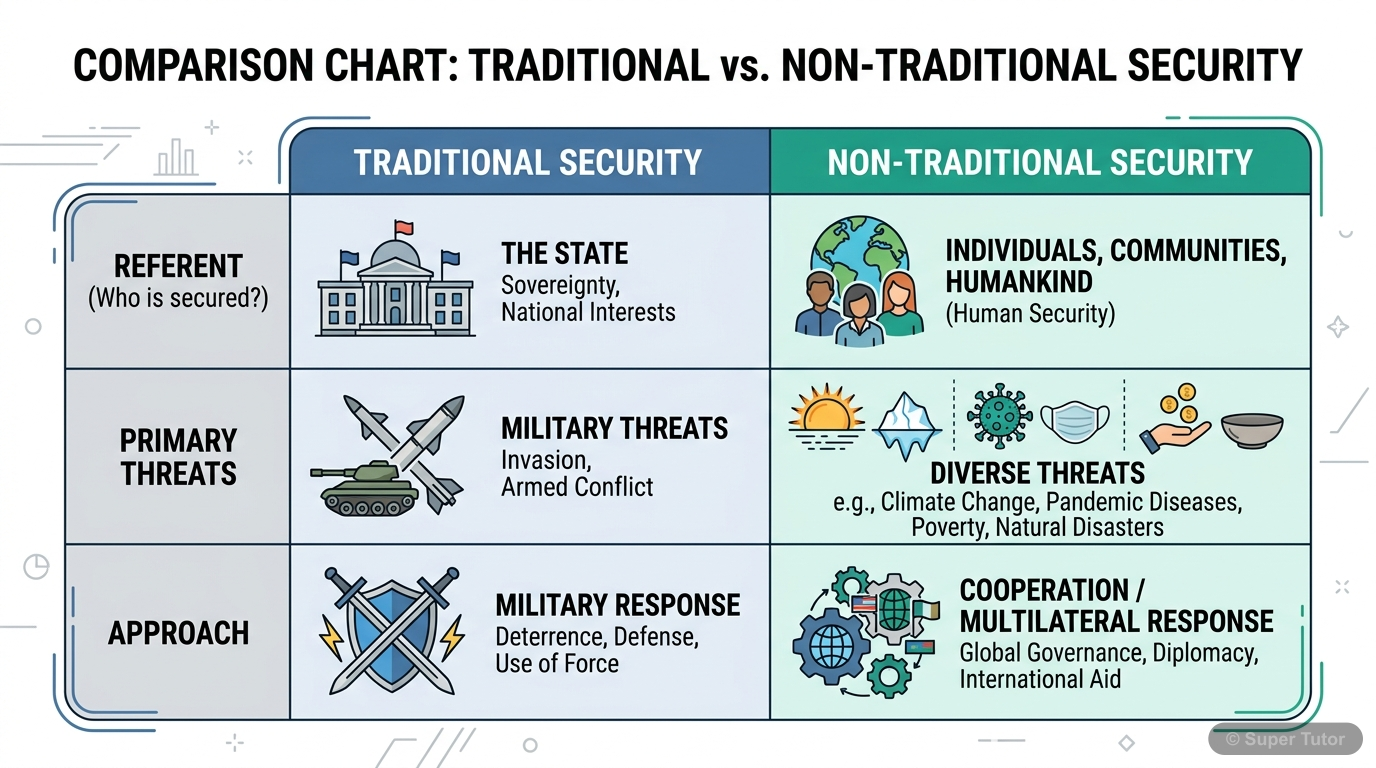
One of 7 illustrations for Security in the Contemporary World in Super Tutor — alongside flashcards, concept maps and practice questions.
Topics in Security in the Contemporary World
1. Meaning and Nature of Security
- Security is freedom from threats, but not every threat is a security threat.
- Only extremely dangerous threats that can damage core values beyond repair are treated as security threats.
- Core values include sovereignty, independence, territorial integrity, and the safety of people.
2. Traditional Security
- Traditional security mainly deals with external military threats between states.
- The source of threat is another country.
- Military action threatens sovereignty, independence, and territorial integrity.
3. Components of Traditional Security Policy
- Preventing war is called deterrence.
- Limiting or ending war is called defence.
- Balance of power is a major part of traditional security policy.
4. Traditional Security and Cooperation
- Traditional security does not reject cooperation.
- Countries cooperate in limiting the ends and means of war.
- War should be fought only for right reasons, mainly self-defence or to protect people from genocide.
Key Concepts
Central concept: Security in the Contemporary World
Work through every topic in Security in the Contemporary World with notes and quizzes
Start This ChapterFrequently Asked Questions
What are the important topics in Security in the Contemporary World for Madhya Pradesh Board Class 12 Political Science?
How should I revise Security in the Contemporary World for the Madhya Pradesh Board Class 12 board exam?
Sources & Official References
Content is aligned to the official syllabus. Refer to the board website for the latest curriculum.
More resources for Security in the Contemporary World
Practice Quiz
Test yourself with a quick quiz
Important Questions
Exam-style questions with answers
Revision Notes
Key points for last-minute revision
Chapter Summary
Understand the chapter at a glance
Concept Maps
See how topics connect
Study Plan
Step-by-step plan for this chapter
Flashcards
Quick-fire cards for active recall
NCERT Solutions
Every textbook question solved step by step
For serious students
Get the full Security in the Contemporary World chapter — start free.
Quizzes, flashcards, an AI doubt solver and a study plan for Madhya Pradesh Board Class 12 Political Science. Free to start, no card needed.