The Demographic Structure of the Indian Society — Practice Quiz
Madhya Pradesh Board · Class 12 · Sociology
Try a 4-question quiz on The Demographic Structure of the Indian Society for Madhya Pradesh Board Class 12 Sociology: tap an answer to check it and see.
Interactive on Super Tutor
Studying The Demographic Structure of the Indian Society? Get the full interactive chapter.
Quizzes, flashcards, AI doubt-solver and a step-by-step study plan — built for practice quiz and more.
Free trial, no card needed.
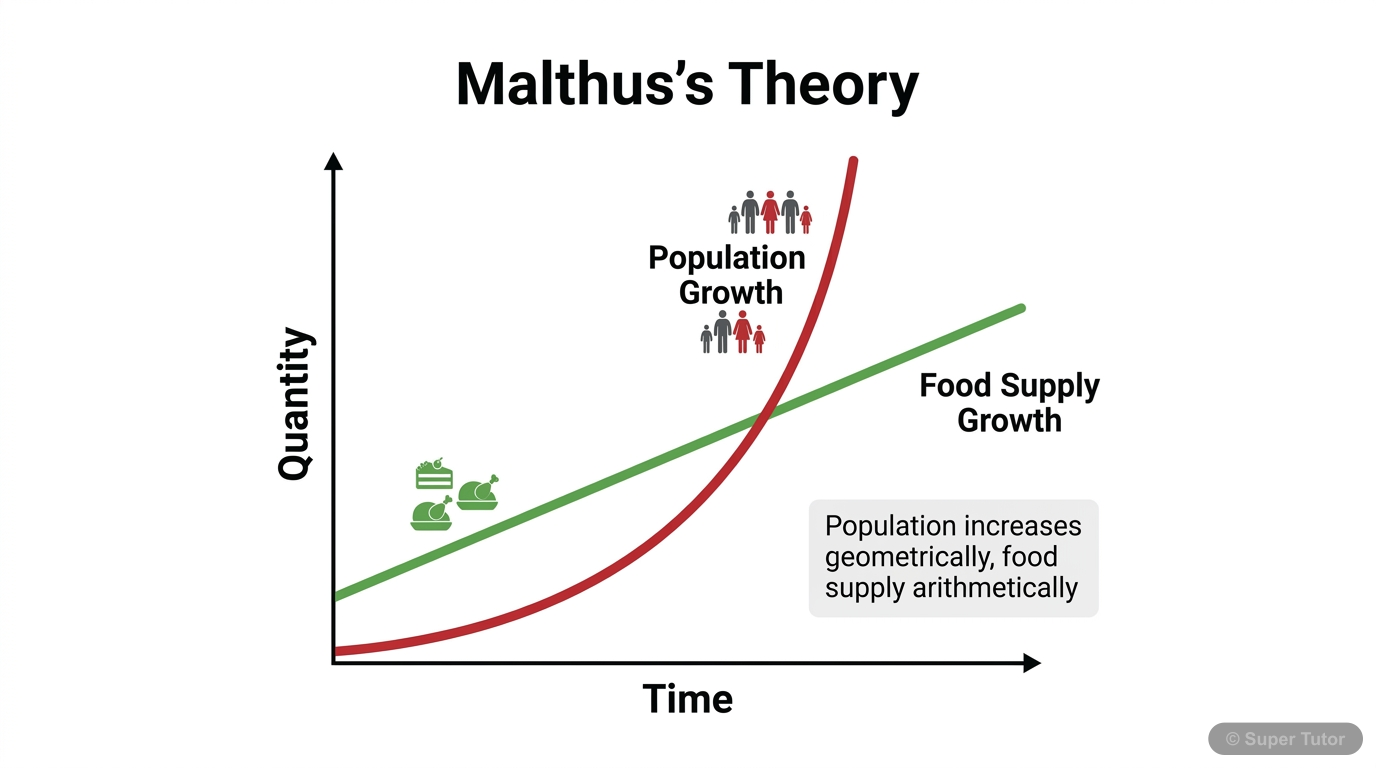
Learn better with visuals Super Tutor pairs illustrations like this with notes and quizzes for The Demographic Structure of the Indian Society.
Quick Quiz: The Demographic Structure of the Indian Society
0/4Tap an answer to check it instantly. No sign-up needed for these 4.
What does the term 'demography' literally mean?
According to Census 2011, what is India's total population?
What was the major epidemic that caused negative population growth in India during 1911-1921?
According to Malthus's theory, population grows in _______ progression while food production grows in _______ progression.
Sample Questions
Which factors contributed to India's demographic transition after 1921? (Select all correct answers)
Show answer
Control over famines, Control over epidemic diseases, Improved public health, Better nutrition
The demographic transition after 1921 was primarily due to reduced death rates caused by better control over famines and epidemics, improved public health measures, and better nutrition. Birth rates remained high initially.
What is the current sex ratio in India according to Census 2011?
Show answer
943 females per 1000 males
According to Census 2011, India's sex ratio improved to 943 females per 1000 males, showing an increase from the 2001 figure of 933.
Which states have achieved Total Fertility Rate (TFR) below replacement level? (Select all correct answers)
Show answer
Kerala, Tamil Nadu, Andhra Pradesh
States like Kerala, Tamil Nadu, Andhra Pradesh, Punjab, Himachal Pradesh, and West Bengal have achieved TFR of 1.7 or below, which is below the replacement level of 2.1.
What does 'demographic dividend' refer to?
Show answer
Economic benefit from large working-age population
Demographic dividend refers to the economic benefit arising from having a large proportion of working-age people relative to dependents (children and elderly).
+31 more questions on The Demographic Structure of the Indian Society (Madhya Pradesh Board Class 12 Sociology)
Practise AllFrequently Asked Questions
What are the important topics in The Demographic Structure of the Indian Society for Madhya Pradesh Board Class 12 Sociology?
How many practice questions are there for The Demographic Structure of the Indian Society?
Sources & Official References
Content is aligned to the official syllabus. Refer to the board website for the latest curriculum.
More resources for The Demographic Structure of the Indian Society
Important Questions
Exam-style questions with answers
Revision Notes
Key points for last-minute revision
Formula Sheet
The chapter's formulas in one place
Chapter Summary
Understand the chapter at a glance
Concept Maps
See how topics connect
Study Plan
Step-by-step plan for this chapter
Flashcards
Quick-fire cards for active recall
Syllabus
What topics to cover
NCERT Solutions
Every textbook question solved step by step
For serious students
Get the full The Demographic Structure of the Indian Society chapter — start free.
Quizzes, flashcards, an AI doubt solver and a study plan for Madhya Pradesh Board Class 12 Sociology. Free to start, no card needed.