The Demographic Structure of the Indian Society — Syllabus
Madhya Pradesh Board · Class 12 · Sociology
What The Demographic Structure of the Indian Society covers in Madhya Pradesh Board Class 12 Sociology: 4 topics, for the 2026-27 session.
Interactive on Super Tutor
Studying The Demographic Structure of the Indian Society? Get the full interactive chapter.
Quizzes, flashcards, AI doubt-solver and a step-by-step study plan — built for syllabus and more.
Free trial, no card needed.
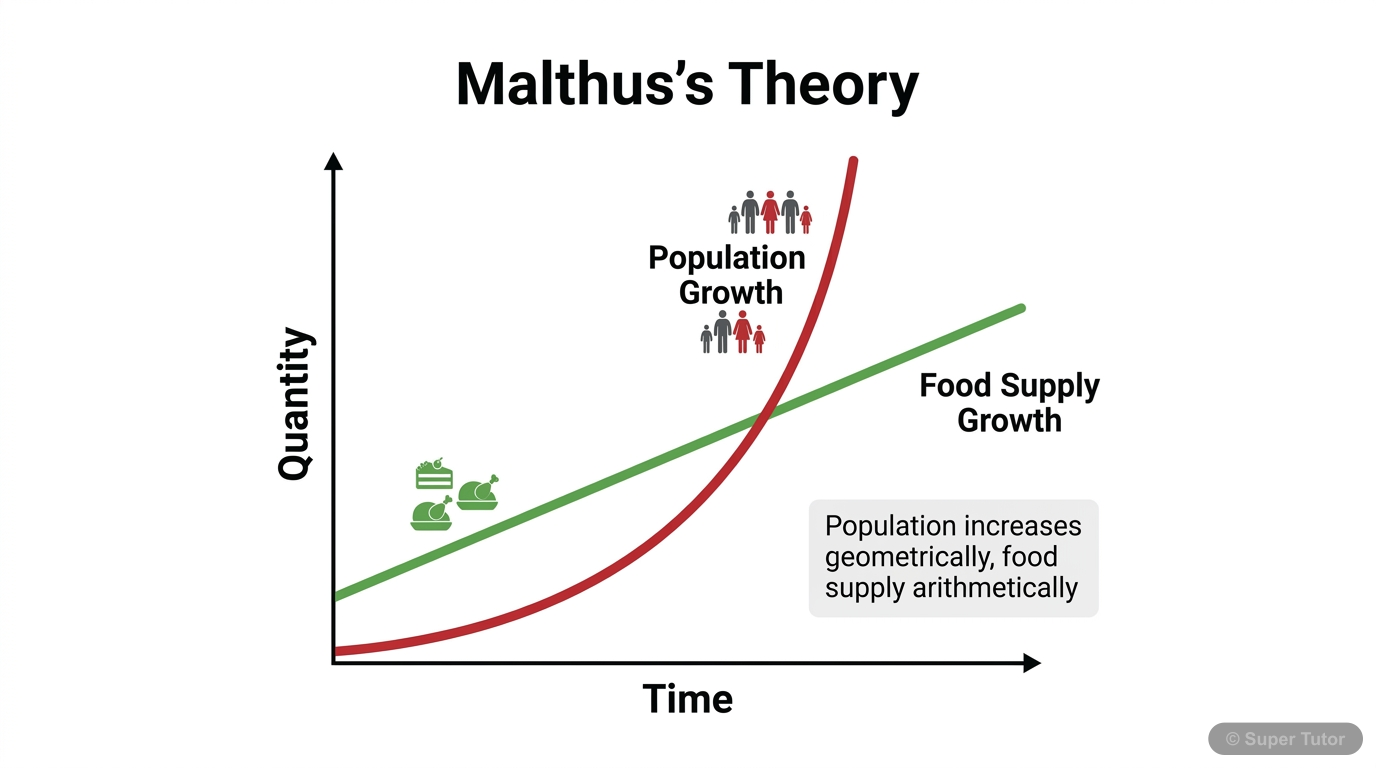
Learn better with visuals Super Tutor pairs illustrations like this with notes and quizzes for The Demographic Structure of the Indian Society.
Topics in The Demographic Structure of the Indian Society
1. Demography and its branches
- Demography means the systematic study of population.
- The word comes from Greek roots: demos meaning people and graphein meaning describe.
- Demography studies changes in population size, births, deaths, migration, and the structure of population by age and sex.
2. Census and demographic measurement in India
- India began censuses between 1867 and 1872.
- Decennial censuses have been conducted since 1881.
- Seven decennial censuses have been conducted in independent India since 1951, the most recent being 2011.
3. Important demographic rates and ratios
- Birth rate, death rate, fertility rate, infant mortality rate, maternal mortality rate, sex ratio, and dependency ratio are key demographic indicators.
- Birth rate is a crude rate because it is calculated for the total population.
- Fertility rate is also a crude rate, but it is specific to women aged 15 to 49.
4. Demographic transition and Malthusian theory
- Malthus proposed that population grows geometrically while food production grows arithmetically.
- His view was pessimistic because he believed population would always outstrip subsistence.
- He described preventive checks such as postponing marriage, abstinence, and celibacy.
Key Concepts
Central concept: Demography and the changing structure of India’s population
Work through every topic in The Demographic Structure of the Indian Society with notes and quizzes
Start This ChapterFrequently Asked Questions
What are the important topics in The Demographic Structure of the Indian Society for Madhya Pradesh Board Class 12 Sociology?
How should I revise The Demographic Structure of the Indian Society for the Madhya Pradesh Board Class 12 board exam?
Sources & Official References
Content is aligned to the official syllabus. Refer to the board website for the latest curriculum.
More resources for The Demographic Structure of the Indian Society
Practice Quiz
Test yourself with a quick quiz
Important Questions
Exam-style questions with answers
Revision Notes
Key points for last-minute revision
Formula Sheet
The chapter's formulas in one place
Chapter Summary
Understand the chapter at a glance
Concept Maps
See how topics connect
Study Plan
Step-by-step plan for this chapter
Flashcards
Quick-fire cards for active recall
NCERT Solutions
Every textbook question solved step by step
For serious students
Get the full The Demographic Structure of the Indian Society chapter — start free.
Quizzes, flashcards, an AI doubt solver and a study plan for Madhya Pradesh Board Class 12 Sociology. Free to start, no card needed.