The Constitution and Social Change — Revision Notes
Madhya Pradesh Board · Class 12 · Sociology
The Constitution and Social Change revision notes for Madhya Pradesh Board Class 12 Sociology: 4 topics in quick points.
Interactive on Super Tutor
Studying The Constitution and Social Change? Get the full interactive chapter.
Quizzes, flashcards, AI doubt-solver and a step-by-step study plan — built for revision notes and more.
Free trial, no card needed.
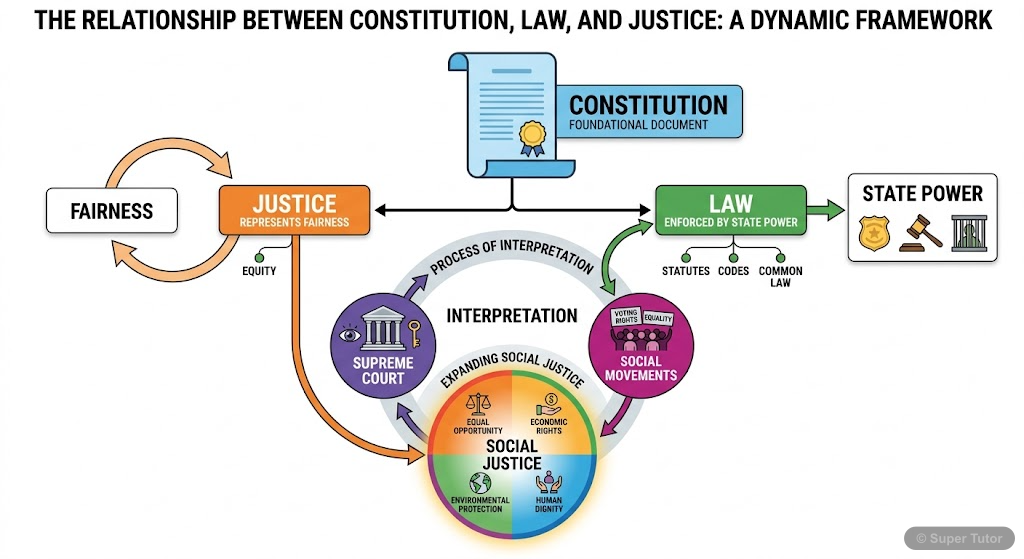
One of 11 illustrations for The Constitution and Social Change in Super Tutor — alongside flashcards, concept maps and practice questions.
Key Topics to Revise
Constitution, Law, and Social Justice
- The Constitution is the basic norm of India and the basis of all rules and authorities.
- Law and justice are not the same. Law has force, while justice means fairness.
- The Supreme Court is the highest court and the ultimate interpreter of the Constitution.
Panchayati Raj and Grassroot Democracy
- Panchayati Raj means governance by five individuals and aims at grassroot democracy.
- Panchayats did not find a mention in the Constitution when it was originally drafted.
- K. Santhanam moved the Directive Principle on Village Panchayats as an amendment in the Constituent Assembly.
Powers, Funding, and Accountability of Panchayats
- Panchayats should be given powers and authority to function as institutions of self-government.
- Their responsibilities include preparing plans for economic development and promoting social justice.
- They can levy, collect, and appropriate taxes, duties, tolls, and fees.
Women, Participation, and Local Leadership
- The 73rd and 74th amendments ensured reservation of one-third of the total seats for women in elected offices of local bodies in rural and urban areas.
- Out of this, 17 per cent seats are reserved for women belonging to scheduled castes and tribes.
- This amendment brought women into elected bodies and gave them decision-making powers.
Get complete notes with diagrams and examples
Full NotesKey Concepts
Frequently Asked Questions
What are the important topics in The Constitution and Social Change for Madhya Pradesh Board Class 12 Sociology?
How should I revise The Constitution and Social Change for the Madhya Pradesh Board Class 12 board exam?
Sources & Official References
Content is aligned to the official syllabus. Refer to the board website for the latest curriculum.
More resources for The Constitution and Social Change
Practice Quiz
Test yourself with a quick quiz
Important Questions
Exam-style questions with answers
Chapter Summary
Understand the chapter at a glance
Concept Maps
See how topics connect
Study Plan
Step-by-step plan for this chapter
Flashcards
Quick-fire cards for active recall
Syllabus
What topics to cover
NCERT Solutions
Every textbook question solved step by step
For serious students
Get the full The Constitution and Social Change chapter — start free.
Quizzes, flashcards, an AI doubt solver and a study plan for Madhya Pradesh Board Class 12 Sociology. Free to start, no card needed.