Human Impact on Environment — Concept Maps
NIOS · Class 10 · Science & Tech
4 concept maps of Human Impact on Environment for NIOS Class 10 Science & Tech, each also written out as a text outline.
Interactive on Super Tutor
Studying Human Impact on Environment? Get the full interactive chapter.
Quizzes, flashcards, AI doubt-solver and a step-by-step study plan — built for concept maps and more.
Free trial, no card needed.
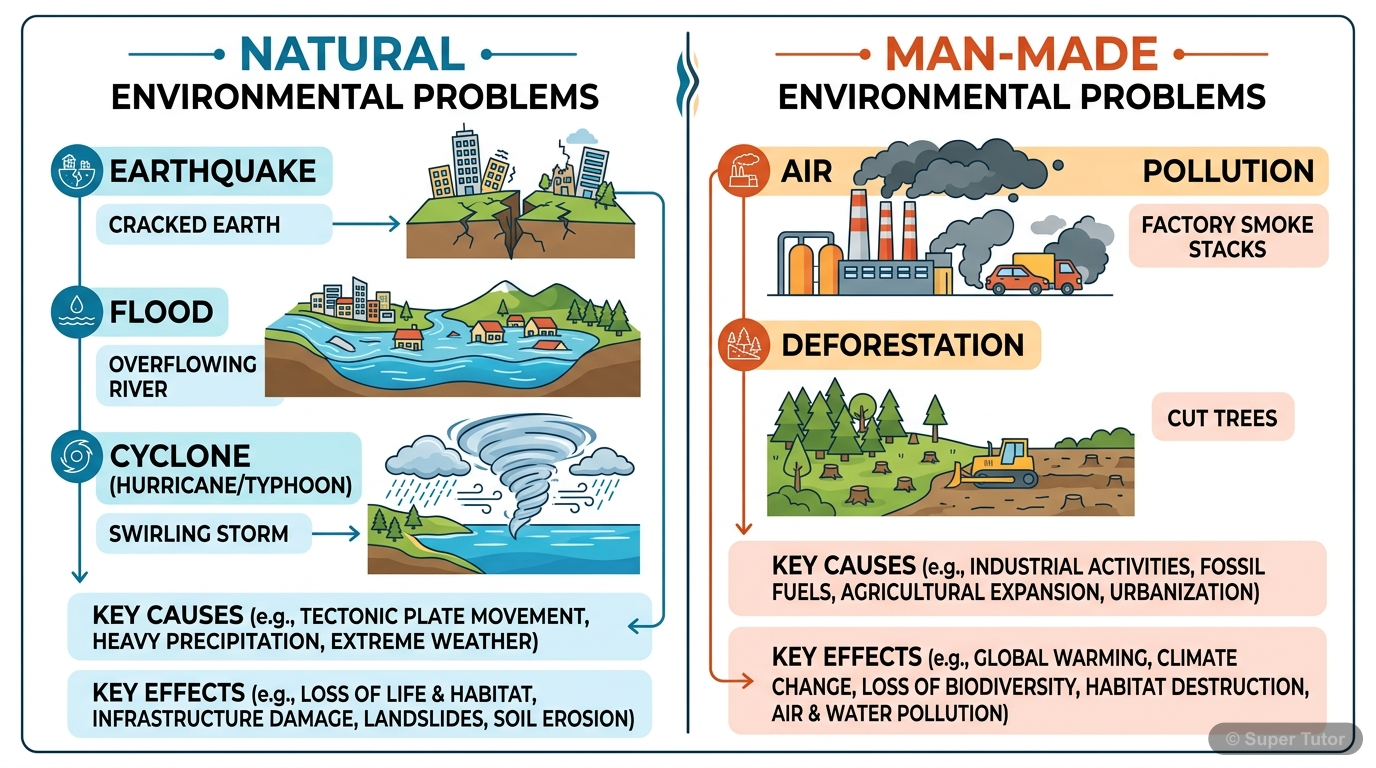
One of 19 illustrations for Human Impact on Environment in Super Tutor — alongside flashcards, concept maps and practice questions.
Human Impact on Environment - Concept Overview
The map in words
- Human Impact on Environment
- Natural Disasters
- Floods
- Heavy rainfall
- Poor drainage
- Earthquakes
- Richter scale
- Building collapse
- Cyclones
- Bay of Bengal
- Wind damage
- Forest Fires
- Lightning
- Human negligence
- Tsunamis
- Underwater earthquakes
- Coastal damage
- Landslides
- Slope instability
- Deforestation effect
- Floods
- Human Activities
- Deforestation
- Habitat loss
- Climate change
- Pollution
- Air pollution
- Water pollution
- Soil pollution
- Noise pollution
- Waste Generation
- Biodegradable
- Non-biodegradable
- Deforestation
- Global Issues
- Ozone Depletion
- CFCs
- UV radiation
- Global Warming
- Greenhouse gases
- Rising temperatures
- Acid Rain
- Industrial emissions
- Environmental damage
- Ozone Depletion
- Natural Disasters
Human Impact on Environment - Complete Chapter Overview
The map in words
- Human Impact on Environment
- Natural Disasters
- Floods
- Heavy rainfall
- Poor drainage
- 75 lakh hectares affected
- Cyclones
- Bay of Bengal
- Pre and post monsoon
- Wind speeds 270-300 kmph
- Earthquakes
- Richter scale
- Seismograph measurement
- Building collapse
- Forest Fires
- Lightning strikes
- Human negligence
- Loss of biodiversity
- Tsunamis
- Underwater earthquakes
- Harbor waves
- Coastal devastation
- Landslides
- Heavy rainfall
- Deforestation
- Slope instability
- Floods
- Human Population Impact
- Deforestation
- Agriculture expansion
- Housing needs
- Industrial growth
- Resource Depletion
- Water scarcity
- Food demand
- Energy needs
- Forest Management
- Reforestation
- Afforestation
- Silviculture
- Deforestation
- Pollution Types
- Air Pollution
- Automobile exhaust
- Industrial emissions
- Global warming
- Water Pollution
- Sewage discharge
- Industrial waste
- Eutrophication
- Biomagnification
- Soil Pollution
- Chemical residues
- Plastic waste
- Metal contamination
- Noise Pollution
- Traffic sounds
- Industrial noise
- Health impacts
- Air Pollution
- Waste Management
- Biodegradable
- Organic matter
- Natural decomposition
- Composting
- Non-biodegradable
- Plastics
- Metals
- Glass
- Management Methods
- 4 Rs principle
- Recycling
- Incineration
- Landfills
- Biodegradable
- Global Problems
- Ozone Depletion
- CFC chemicals
- UV radiation
- Skin cancer
- Global Warming
- Greenhouse gases
- Temperature rise
- Climate change
- Acid Rain
- SO2 reactions
- pH below 5
- Monument damage
- Photochemical Smog
- Sunlight reactions
- Respiratory problems
- Visibility reduction
- Ozone Depletion
- Natural Disasters
Human Impact on Environment - Concept Overview
The map in words
- Human Impact on Environment
- Natural Disasters
- Floods
- Monsoon rivers
- Poor drainage
- Early warning CWC
- Cyclones
- Bay of Bengal
- Arabian Sea
- IMD forecasting
- Earthquakes
- Richter scale
- Building collapse
- Seismograph
- Forest Fires
- Lightning
- Human negligence
- Biomass burning
- Tsunamis
- Underwater earthquakes
- Coastal devastation
- INCOIS warning
- Landslides
- Heavy rainfall
- Deforestation
- Slope instability
- Floods
- Human Made Problems
- Deforestation
- Habitat loss
- Reduced rainfall
- Soil erosion
- CO2 increase
- Pollution
- Air pollution
- Vehicle emissions
- Industrial smoke
- Water pollution
- Sewage discharge
- Chemical waste
- Eutrophication
- Soil pollution
- Plastic waste
- Chemical residues
- Noise pollution
- Traffic noise
- Industrial noise
- Air pollution
- Waste Management
- Biodegradable
- Food scraps
- Paper waste
- Non-biodegradable
- Plastic bottles
- Metal cans
- 4 Rs principle
- Reduce
- Reuse
- Repair
- Recycle
- Biodegradable
- Deforestation
- Global Problems
- Ozone Depletion
- CFC chemicals
- UV radiation
- Skin cancer
- Global Warming
- Greenhouse gases
- Temperature rise
- Sea level rise
- Acid Rain
- SO2 emissions
- Crop damage
- Monument damage
- Photochemical Smog
- Sunlight reactions
- Visibility reduction
- Respiratory problems
- Ozone Depletion
- Natural Disasters
Human activities and natural disasters change the environment, damage life and property, and require prevention, management, and conservation.
The map in words
- Human activities and natural disasters change the environment, damage life and property, and require prevention, management, and conservation.
- Environmental problems
- Natural disasters
- Population growth
- Deforestation
- Pollution
- Water pollution
- Waste management
- Global environmental problems
Explore these maps interactively
Explore DiagramsFrequently Asked Questions
What are the important topics in Human Impact on Environment for NIOS Class 10 Science & Tech?
What do the concept maps for Human Impact on Environment show?
How should I revise Human Impact on Environment for the NIOS Class 10 board exam?
Sources & Official References
Content is aligned to the official syllabus. Refer to the board website for the latest curriculum.
More resources for Human Impact on Environment
Practice Quiz
Test yourself with a quick quiz
Important Questions
Exam-style questions with answers
Revision Notes
Key points for last-minute revision
Chapter Summary
Understand the chapter at a glance
Study Plan
Step-by-step plan for this chapter
Flashcards
Quick-fire cards for active recall
Syllabus
What topics to cover
For serious students
Get the full Human Impact on Environment chapter — start free.
Quizzes, flashcards, an AI doubt solver and a study plan for NIOS Class 10 Science & Tech. Free to start, no card needed.