Natural Environment — Concept Maps
NIOS · Class 10 · Science & Tech
4 concept maps of Natural Environment for NIOS Class 10 Science & Tech, each also written out as a text outline. Covers Population Growth and Dispersal.
Interactive on Super Tutor
Studying Natural Environment? Get the full interactive chapter.
Quizzes, flashcards, AI doubt-solver and a step-by-step study plan — built for concept maps and more.
Free trial, no card needed.
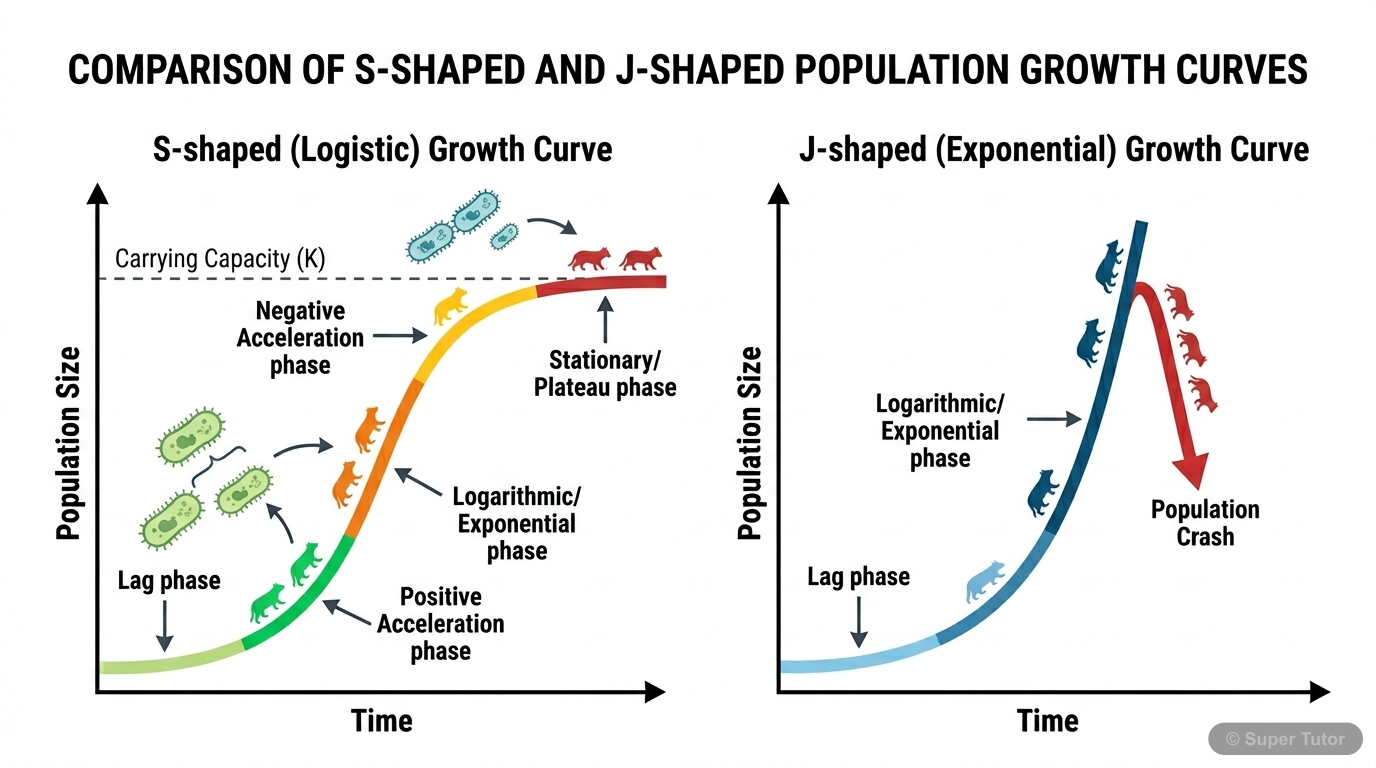
Learn better with visuals Super Tutor pairs illustrations like this with notes and quizzes for Natural Environment.
Natural Environment Components and Relationships
The map in words
- Natural Environment
- Ecosystem
- Components
- Biotic
- Autotrophs
- Heterotrophs
- Saprophytes
- Abiotic
- Sunlight
- Water
- Temperature
- Soil
- Biotic
- Types
- Aquatic
- Terrestrial
- Artificial
- Components
- Energy Flow
- Food Chain
- Producers
- Primary Consumers
- Secondary Consumers
- Tertiary Consumers
- Food Web
- Interconnected Chains
- Energy Transfer
- Food Chain
- Nutrient Cycles
- Carbon Cycle
- Photosynthesis
- Respiration
- Decomposition
- Nitrogen Cycle
- Fixation
- Nitrification
- Denitrification
- Water Cycle
- Evaporation
- Precipitation
- Transpiration
- Carbon Cycle
- Adaptations
- Aquatic
- Streamlined Body
- Gills
- Webbed Feet
- Terrestrial
- Root Systems
- Leaf Modifications
- Desert
- Water Storage
- Reduced Transpiration
- Aerial
- Wings
- Hollow Bones
- Aquatic
- Population Dynamics
- Interactions
- Mutualism
- Commensalism
- Parasitism
- Growth Patterns
- Birth Rate
- Death Rate
- Migration
- Environmental Resistance
- Interactions
- Ecosystem
Natural Environment Overview
The map in words
- Natural Environment
- Ecosystem
- Components
- Abiotic factors
- Biotic factors
- Types
- Terrestrial
- Aquatic
- Components
- Biotic Community
- Autotrophs
- Producers
- Photosynthesis
- Heterotrophs
- Primary consumers
- Secondary consumers
- Saprotrophs
- Decomposers
- Nutrient recycling
- Autotrophs
- Energy Flow
- Food chains
- Food webs
- Trophic levels
- 10 percent rule
- Biogeochemical Cycles
- Carbon cycle
- Nitrogen cycle
- Water cycle
- Adaptations
- Aquatic adaptations
- Desert adaptations
- Cold climate adaptations
- Population Interactions
- Mutualism
- Commensalism
- Parasitism
- Population growth
- Ecosystem
Natural Environment - Complete Chapter Overview
The map in words
- Natural Environment
- Ecosystem
- Components
- Biotic
- Producers
- Consumers
- Decomposers
- Abiotic
- Temperature
- Water
- Soil
- Light
- Biotic
- Types
- Natural
- Artificial
- Components
- Energy Flow
- Unidirectional
- 10 Percent Rule
- Trophic Levels
- Heat Loss
- Food Relationships
- Food Chains
- Grazing
- Detritus
- Food Webs
- Energy Transfer
- Food Chains
- Biogeochemical Cycles
- Carbon Cycle
- Nitrogen Cycle
- Water Cycle
- Nutrient Recycling
- Adaptations
- Aquatic
- Streamlined Body
- Gills
- Fins
- Desert
- Water Storage
- Reduced Leaves
- Heat Tolerance
- Arctic
- Thick Fur
- Fat Layers
- Aquatic
- Population Dynamics
- Interactions
- Mutualism
- Commensalism
- Parasitism
- Growth Patterns
- S-shaped Curve
- J-shaped Curve
- Carrying Capacity
- Interactions
- Ecosystem
Natural Environment and Ecosystem Relationships
The map in words
- Natural Environment and Ecosystem Relationships
- Ecosystem
- Abiotic components
- Biotic components
- Biotic community
- Food chain and food web
- Biogeochemical cycles
- Adaptations
- Population interaction
Explore these maps interactively
Explore DiagramsFrequently Asked Questions
What are the important topics in Natural Environment for NIOS Class 10 Science & Tech?
What do the concept maps for Natural Environment show?
How should I revise Natural Environment for the NIOS Class 10 board exam?
Sources & Official References
Content is aligned to the official syllabus. Refer to the board website for the latest curriculum.
More resources for Natural Environment
Practice Quiz
Test yourself with a quick quiz
Important Questions
Exam-style questions with answers
Revision Notes
Key points for last-minute revision
Chapter Summary
Understand the chapter at a glance
Study Plan
Step-by-step plan for this chapter
Flashcards
Quick-fire cards for active recall
Syllabus
What topics to cover
For serious students
Get the full Natural Environment chapter — start free.
Quizzes, flashcards, an AI doubt solver and a study plan for NIOS Class 10 Science & Tech. Free to start, no card needed.