Human Impact on Environment — Flashcards
NIOS · Class 10 · Science & Tech
44 flashcards for Human Impact on Environment (NIOS Class 10 Science & Tech) to test yourself on key terms and facts.
Interactive on Super Tutor
Studying Human Impact on Environment? Get the full interactive chapter.
Quizzes, flashcards, AI doubt-solver and a step-by-step study plan — built for flashcards and more.
Free trial, no card needed.
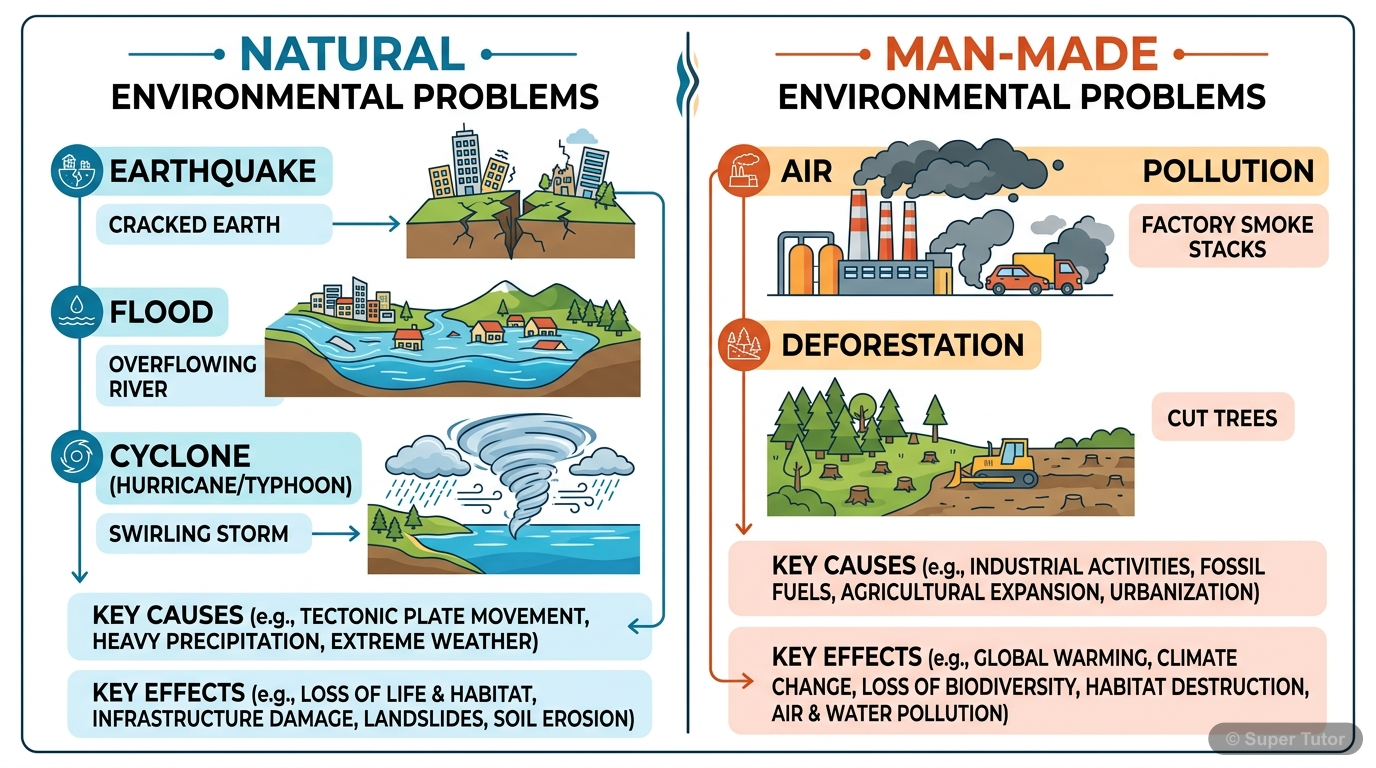
One of 19 illustrations for Human Impact on Environment in Super Tutor — alongside flashcards, concept maps and practice questions.
What is an environmental problem?
Answer
An environmental problem is any harmful change in nature that affects living beings and their surroundings. It may happen due to natural disasters or human activities.
Why is a large human population a problem for the environment?
Answer
A large population needs more land, water, food, energy, and space. This increases pressure on natural resources and leads to deforestation, pollution, and waste generation.
How do floods damage life and property?
Answer
Floods can destroy crops, houses, roads, and public utilities. They also affect human and animal life and may spread epidemics because water becomes dirty and unsafe.
What are two important ways to prevent damage during floods?
Answer
Important measures include cleaning and desilting water channels, avoiding construction in river beds, building flood-safe structures, and keeping an evacuation plan ready.
Why are cyclones dangerous in coastal areas?
Answer
Cyclones are intense low-pressure storms with very strong winds and heavy rain. They can damage houses, crops, livestock, transport, and coastal settlements.
Which are the two cyclone seasons in India?
Answer
The two cyclone seasons in India are the pre-monsoon season from April to May and the post-monsoon season from October to December.
What happened in the Orissa super cyclone of 29 October 1999?
Answer
It struck Orissa on 29 October 1999 with wind speeds of 270 to 300 km per hour. It caused heavy damage to agriculture, livestock, infrastructure, industries, and the environment.
Why is Balasore district important in cyclone studies?
Answer
Balasore district in Orissa is the most vulnerable district for cyclone landfall.
+36 more flashcards
Practise AllFrequently Asked Questions
What are the important topics in Human Impact on Environment for NIOS Class 10 Science & Tech?
How many flashcards are available for Human Impact on Environment?
How should I revise Human Impact on Environment for the NIOS Class 10 board exam?
Sources & Official References
Content is aligned to the official syllabus. Refer to the board website for the latest curriculum.
More resources for Human Impact on Environment
Practice Quiz
Test yourself with a quick quiz
Important Questions
Exam-style questions with answers
Revision Notes
Key points for last-minute revision
Chapter Summary
Understand the chapter at a glance
Concept Maps
See how topics connect
Study Plan
Step-by-step plan for this chapter
Syllabus
What topics to cover
For serious students
Get the full Human Impact on Environment chapter — start free.
Quizzes, flashcards, an AI doubt solver and a study plan for NIOS Class 10 Science & Tech. Free to start, no card needed.